Lecithin
Discover how lecithin improves cannabis edibles by boosting bioavailability and consistency.
What Is Lecithin in Cannabis Edibles?
If you have ever browsed a cannabis edible recipe or scanned the ingredient list on a gummy package, you have almost certainly encountered lecithin. This unassuming ingredient quietly does a lot of heavy lifting in the world of infused foods, yet most consumers have only a vague sense of what it actually is or why it earns a place in nearly every serious recipe. Lecithin is a naturally occurring group of fatty compounds called phospholipids, found in everything from egg yolks to soybeans, and it has become a cornerstone of homemade and commercial cannabis production alike.
In the context of cannabis, lecithin is prized for its ability to bind together substances that would otherwise refuse to mix — namely the fat-soluble cannabinoids like THC and CBD and the water-based ingredients in a recipe. Without an emulsifier, oil and water separate predictably. Lecithin bridges that divide.
Why home cooks adopted lecithin: The shift toward lecithin in cannabis kitchens happened largely because it solves two problems at once. It keeps potency evenly distributed throughout a batch, so one gummy is not twice as strong as the next, and it helps the body absorb the cannabinoids more efficiently. That combination of consistency and improved uptake is why a single teaspoon can transform a finicky recipe into a reliable one.
How Lecithin Works as an Emulsifier
The science of phospholipids: Every lecithin molecule has a fascinating dual personality. One end is hydrophilic, meaning it is attracted to water, while the other end is lipophilic, meaning it bonds readily with fats and oils. This split structure is the entire secret to emulsification. When you add lecithin to a mixture of cannabis-infused oil and a water-based liquid, the molecules arrange themselves at the boundary between the two, anchoring oil droplets within the water and preventing them from clumping back together.
The result is a stable emulsion — a smooth, uniform blend where microscopic droplets of infused fat stay suspended evenly throughout. This matters enormously for cannabis edibles because cannabinoids are not water soluble. Left to their own devices, they cling to the fattiest part of a recipe and pool there, creating hot spots of concentrated potency and other bites with almost nothing.
By reducing the surface tension between oil and water, lecithin also shrinks the size of those fat droplets. Smaller droplets mean more total surface area exposed to your digestive system, which sets the stage for the absorption benefits that make this ingredient so popular among makers who care about consistent results.
Types of Lecithin Used in Cannabis Products
Not all lecithin is created equal, and the source you choose can influence flavour, texture, and dietary suitability. The three most common varieties each bring their own character to a recipe, and understanding the differences helps you match the ingredient to the project at hand.
- 🌱 Soy lecithin: The most widely available and affordable option, soy lecithin comes in both liquid and granule form. It is a workhorse for gummies and baked goods but is unsuitable for anyone avoiding soy.
- 🌻 Sunflower lecithin: A favourite among health-conscious makers, sunflower lecithin is allergen-friendly, GMO-free, and extracted without harsh chemical solvents. Its neutral taste makes it ideal for delicate recipes.
- 🥚 Egg lecithin: Less common in cannabis work, egg-derived lecithin is occasionally used in specialty preparations but carries a shorter shelf life and obvious dietary limitations.
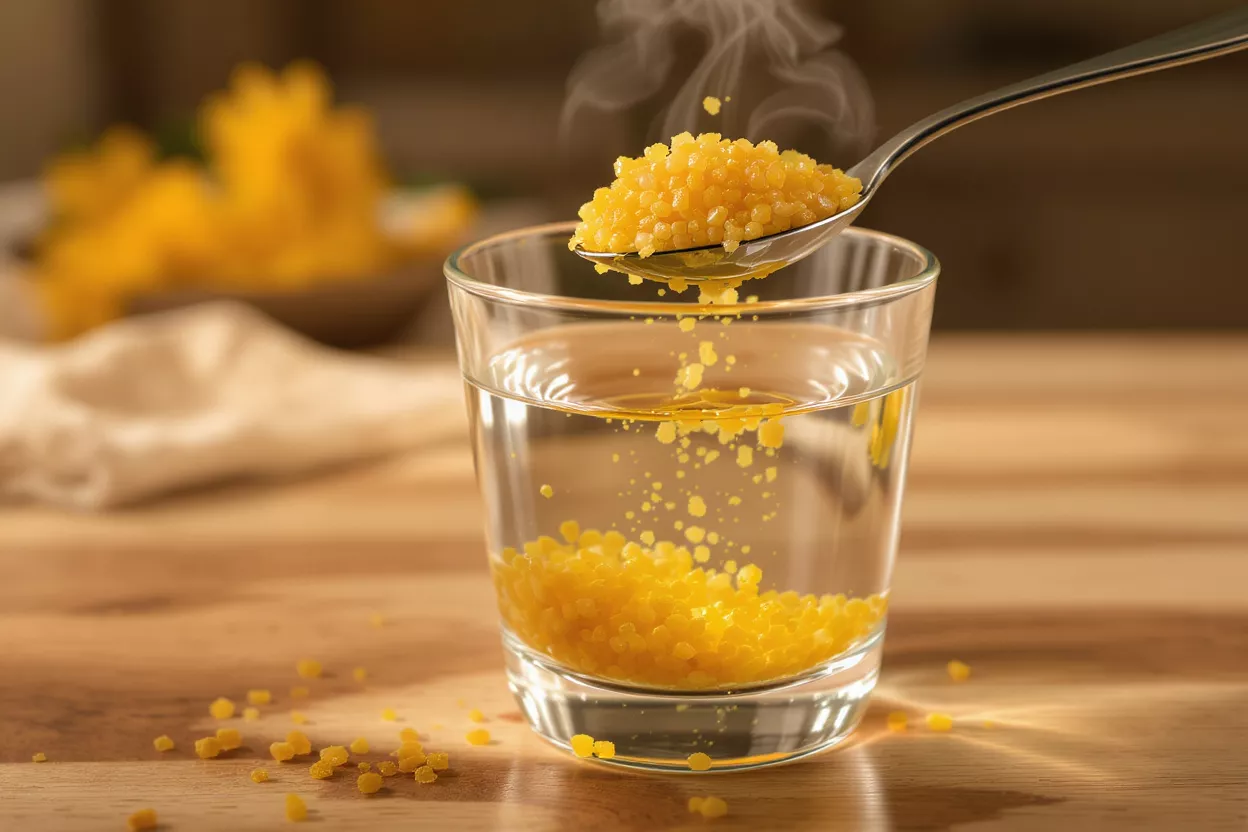
Liquid versus granule forms: Beyond the source, lecithin comes in liquid and powdered or granulated formats. Liquid lecithin blends smoothly into warm oils and is excellent for tinctures and oil-based infusions. Granules dissolve well into batters and are easier to measure precisely, which many bakers prefer for dependable dosing across a tray of brownies.
For most home cannabis cooks, sunflower lecithin has emerged as the default recommendation. Its clean profile, lack of common allergens, and gentle extraction process make it the safest all-around choice when you are not sure which to reach for.
Does Lecithin Improve Cannabis Bioavailability?
Understanding bioavailability: Bioavailability refers to the proportion of an ingested cannabinoid that actually reaches your bloodstream and produces an effect. Cannabis edibles are notoriously inefficient in this regard — a significant share of the cannabinoids you eat never makes it through digestion and liver metabolism intact. Anything that nudges that number upward is worth attention.
The leading theory behind lecithin's enhancement effect ties back to those tiny emulsified droplets. By breaking infused fats into finer particles and packaging them within phospholipid shells, lecithin may help cannabinoids slip more easily across the fatty membranes of intestinal cells. Some makers report that lecithin-rich edibles feel stronger gram for gram, suggesting more of the active compound is being absorbed rather than excreted.
It is worth being honest about the evidence here. Robust clinical research specifically measuring lecithin's impact on cannabinoid absorption in humans remains limited, and much of the enthusiasm comes from anecdote and food-science principles rather than controlled trials. The mechanism is plausible and widely accepted, but treat dramatic potency claims with healthy skepticism.
Why Lecithin Matters in Cannabis Edible Recipes
Ask any experienced edible maker about their non-negotiable ingredients and lecithin will almost always make the list. Its value extends well beyond the abstract chemistry into tangible improvements you can taste and see in a finished batch. The texture of a properly emulsified gummy is smoother, the dose distribution is more even, and the shelf stability is noticeably better.
Texture and mouthfeel: In gummies and chocolates, lecithin contributes to a glossy finish and a pleasant, cohesive bite. It prevents the grainy separation that can plague homemade confections, giving your edibles a more professional, store-bought quality.
Even potency across a batch: This is arguably the single most important reason to use lecithin. When you pour a large infused mixture into individual moulds, you want every piece to carry the same dose. By keeping cannabinoids suspended uniformly, lecithin guards against the frustrating and potentially uncomfortable experience of one edible hitting far harder than expected.
How Much Lecithin to Use in Cannabis Edibles
Getting the quantity right is easier than many beginners fear, because lecithin is forgiving and the effective range is fairly wide. The goal is to use enough to fully emulsify your infused fat without altering the flavour or texture in noticeable ways. Overdoing it can lend a slightly soapy or chalky note, so moderation pays off.
- 📏 Tinctures and oils: Roughly one teaspoon of liquid lecithin per cup of carrier oil is a common starting point.
- 🧁 Baked goods: One to two tablespoons of granules per batch of brownies or cookies integrates cleanly into the batter.
- 🍬 Gummies: About one quarter to one half teaspoon per cup of liquid keeps the emulsion stable as the mixture cools and sets.
Adjusting for your recipe: These figures are guidelines rather than rigid rules. The ideal amount depends on how much fat your recipe contains and how watery the surrounding ingredients are. Recipes heavy in oil need more emulsifier to keep everything in suspension, while a mostly fat-based chocolate may need very little.
When in doubt, start on the lower end and scale up only if you notice separation. Adding lecithin during the infusion stage, while the oil is warm, tends to give the best integration because the molecules disperse most readily into a heated liquid.
Lecithin Benefits Beyond Emulsification
While its role as a binding agent dominates the conversation, lecithin carries a reputation as a nutritional supplement in its own right, independent of any cannabis application. Phospholipids are essential building blocks of every cell membrane in the body, and lecithin is a rich dietary source of them.
Choline and brain health: Lecithin supplies choline, a nutrient the body uses to produce acetylcholine, a neurotransmitter involved in memory and muscle control. Choline also supports healthy liver function and fat metabolism, which is part of why lecithin has long been marketed as a wellness supplement.
Some research has explored lecithin's potential to support cardiovascular health by influencing cholesterol balance, though results are mixed and far from conclusive. As with the bioavailability claims, the prudent approach is to appreciate lecithin as a useful functional ingredient without overstating its therapeutic powers.
In the context of an edible, these nutritional footnotes are a minor bonus rather than a primary motivation. You are adding lecithin for its emulsifying muscle first and foremost, but it is reassuring to know the ingredient brings a modest nutritional pedigree along for the ride.
Is Lecithin Safe in Cannabis Products?
Regulatory standing: Lecithin is recognized as a safe food additive by major regulatory bodies and has been used in mainstream food manufacturing for over a century. It appears in chocolate, margarine, salad dressings, and countless packaged goods, which speaks to its established safety profile when consumed in normal dietary amounts.
For the vast majority of people, lecithin causes no adverse effects whatsoever. The most common considerations are allergen related — those with soy allergies should opt for sunflower lecithin, and anyone with an egg allergy should obviously avoid egg-derived versions. Reading source labels carefully resolves nearly all concern.
Consuming very large quantities of lecithin can occasionally cause mild digestive upset, but the small amounts used in edible recipes fall far below any threshold of concern. Used as directed in a typical infusion, lecithin is one of the more benign ingredients in your cannabis pantry.
Lecithin vs Coconut Oil for Cannabis Edibles
A common point of confusion is how lecithin relates to fat sources like coconut oil, since both are frequently recommended for boosting edible quality. The two are not competitors but partners, each playing a distinct role in a well-built recipe.
Different jobs entirely: Coconut oil acts as the carrier fat that cannabinoids bind to during infusion, thanks to its high saturated fat content. Lecithin, by contrast, is the emulsifier that keeps that infused fat evenly distributed and helps it absorb. You are not choosing between them — you typically use both together for the best result.
When you pair a quality infused fat like cannabis oil with a small dose of lecithin, you get the strengths of both: strong cannabinoid binding from the saturated fat and even, efficient distribution from the emulsifier. This combination is the foundation of most reliable edible recipes and explains why both ingredients appear together so often in trusted formulations.
Common Questions About Lecithin and Cannabis
After covering the chemistry, types, and practical use of lecithin, a handful of recurring questions tend to surface among new edible makers. Addressing them directly clears up the last bits of uncertainty before you head into the kitchen.
- ❓ Can I skip lecithin entirely? Yes, your edibles will still work, but you may see uneven dosing and a grainier texture. It is optional but genuinely helpful.
- 🌡️ When do I add it? During the infusion stage while your oil is warm, so the lecithin disperses fully before the mixture sets.
- 👅 Will it change the taste? In proper amounts, no. Excessive lecithin can introduce a faintly soapy note, which is why measuring matters.
Does lecithin make edibles stronger? It may improve absorption so that more of the cannabinoids you consume take effect, but it does not add any cannabinoids of its own. Think of it as helping you make better use of the THC already present rather than increasing the total.
Lecithin is one of those quietly essential ingredients that separates a casual edible attempt from a consistently good one. By understanding what it does, which type to choose, and how much to use, you give yourself the tools to produce smoother, more evenly dosed, and potentially more effective cannabis edibles. It is an inexpensive, safe, and well-established addition to any infusion — a small upgrade that delivers an outsized improvement in the quality and reliability of your finished product.