LST
Learn how LST reshapes your cannabis canopy for bigger yields.
What Is LST (Low Stress Training)?
LST, or low stress training, is a cannabis cultivation technique that gently bends and secures plant branches to reshape the canopy without cutting or wounding the plant. Instead of forcing growth through trauma, you guide it. By tying down the main stem and lateral branches, you flatten the natural Christmas-tree shape into a wide, even table of bud sites that all sit at roughly the same height under your light.
The core principle behind LST is the manipulation of a plant's hormonal hierarchy. Cannabis naturally funnels growth energy to its tallest tip through a process called apical dominance, where the hormone auxin concentrates at the highest point. When you bend that dominant tip below the lower branches, the plant redistributes auxin and energy more evenly, encouraging dozens of lower shoots to rise up and compete as equals. Research on plant hormone distribution published by Nature underscores how positional changes in stems alter growth signaling.
Because no tissue is severed, the plant experiences minimal shock and keeps growing on schedule. That makes LST one of the most beginner-friendly methods available, and it works equally well in soil, coco, or hydro setups. Whether you are managing a single autoflower or a full tent of photoperiod plants, the technique scales smoothly to your space and goals.
How Does LST Work on Cannabis Plants?
The mechanics of LST come down to light exposure and hormone redistribution. A plant left to grow naturally develops one dominant cola while lower branches stay shaded, weak, and unproductive. By tying the top down horizontally, you expose those buried bud sites to direct light, and they respond by stretching upward and thickening into competitive colas of their own.
Light penetration is the practical engine here. Cannabis leaves can only convert the light that actually strikes them, and a tall, dense plant wastes enormous photosynthetic potential by shading its own lower half. Flattening the canopy means more leaf surface sits in the high-intensity zone directly beneath your lamp. Plant scientists at Nature have documented how light interception efficiency directly correlates with biomass accumulation in many crops.
Over a few weeks of consistent training, the plant's profile transforms. What would have been a single dominant spear becomes a broad, multi-headed bush with eight, ten, or more main flowering tips. A quality set of soft plant training clips makes this redirection painless, holding branches in place without pinching the stem as it thickens.
When to Start LST on Your Plants
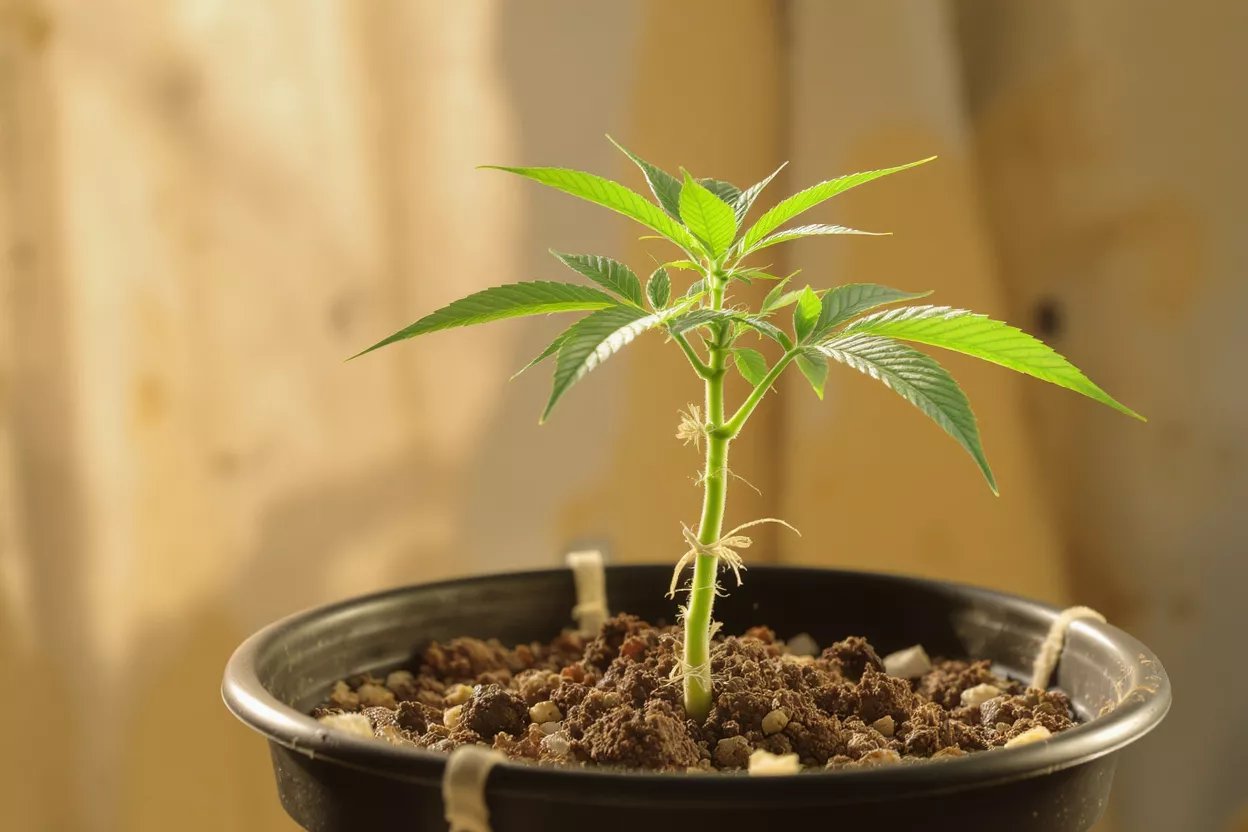
Timing is everything with low stress training. The ideal window opens once your seedling has developed three to five nodes, usually around two to three weeks into the vegetative stage. At this point the stem is still flexible and forgiving, bending easily without the risk of snapping that comes with older, woodier growth.
Young plants recover faster and adapt their growth direction within a day or two of being tied down. If you wait too long, lower stems lignify and become stiff, raising the chance of a clean break when you apply pressure. That said, even a partially snapped stem can often be splinted and saved, so an accident early on is rarely fatal to the plant.
For autoflowers, start gently and start early, because these plants run on a fixed clock and will not wait for you to finish training before they flip into flower. Photoperiod plants give you far more latitude: you can keep them in veg and continue shaping the canopy for as long as your space allows before switching the light schedule to trigger bloom.
LST vs HST: Which Training Method Wins?
Low stress training and high stress training pursue the same goal through opposite philosophies. LST bends and ties without damaging tissue, while HST deliberately wounds the plant through topping, fimming, supercropping, or main-lining to force a more dramatic restructuring. Each approach carries trade-offs in recovery time, risk, and final structure.
HST can produce more aggressive branching and bigger structural changes, but it demands recovery days during which growth stalls while the plant heals. For growers on tight timelines or working with sensitive autoflowers, that pause can cost real yield. LST sidesteps the recovery penalty entirely because nothing is cut, letting the plant grow without interruption.
- 🌿 LST: No cutting, near-zero recovery time, beginner-friendly, ideal for autoflowers and small tents.
- ✂️ HST: Involves wounding, requires recovery days, higher risk, better for experienced growers wanting dramatic restructuring.
- ⚖️ Hybrid approach: Many growers top once for structure, then use LST to spread the resulting branches into an even canopy.
The honest answer is that neither method universally wins. Most experienced cultivators blend the two: a single topping early for a stronger framework, followed by patient LST to flatten everything out. This hybrid strategy captures the structural upside of HST while preserving the gentle, low-risk control that makes LST so reliable.
Step-by-Step LST Tutorial for Beginners
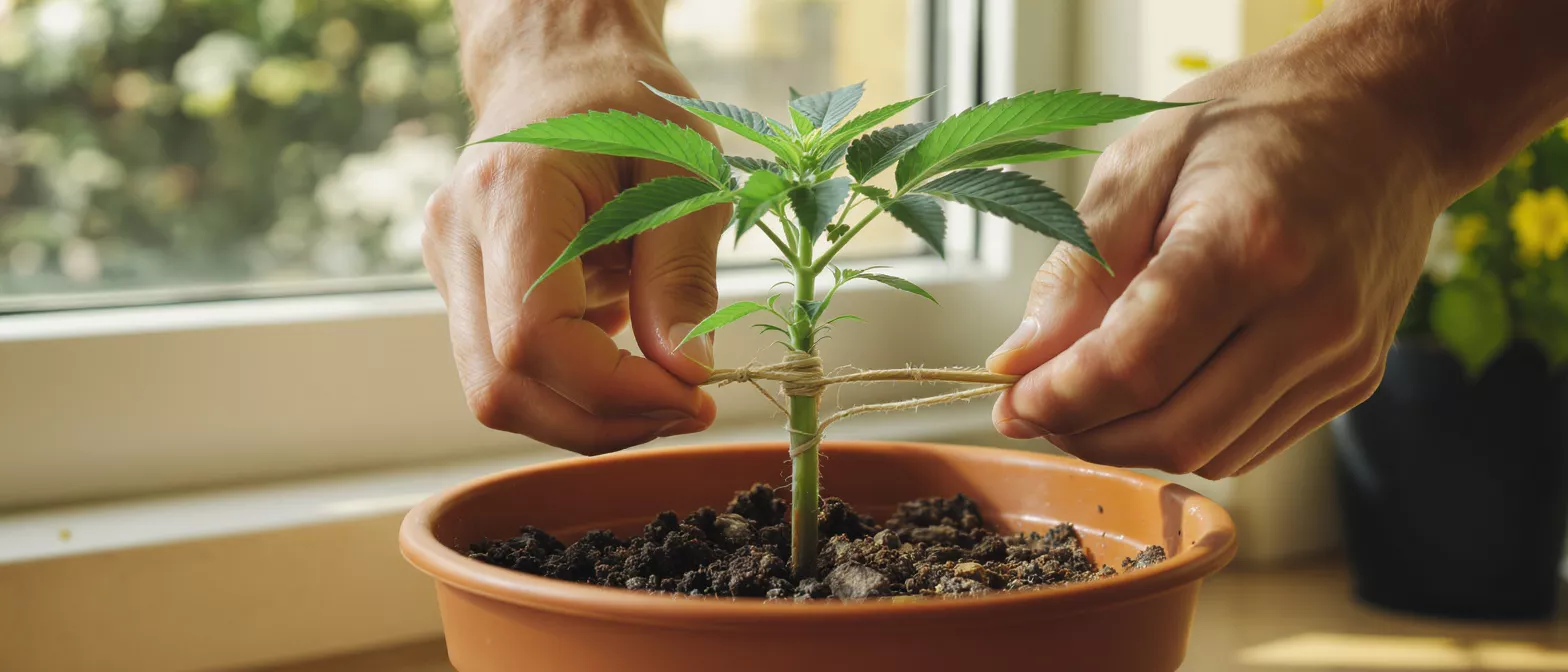
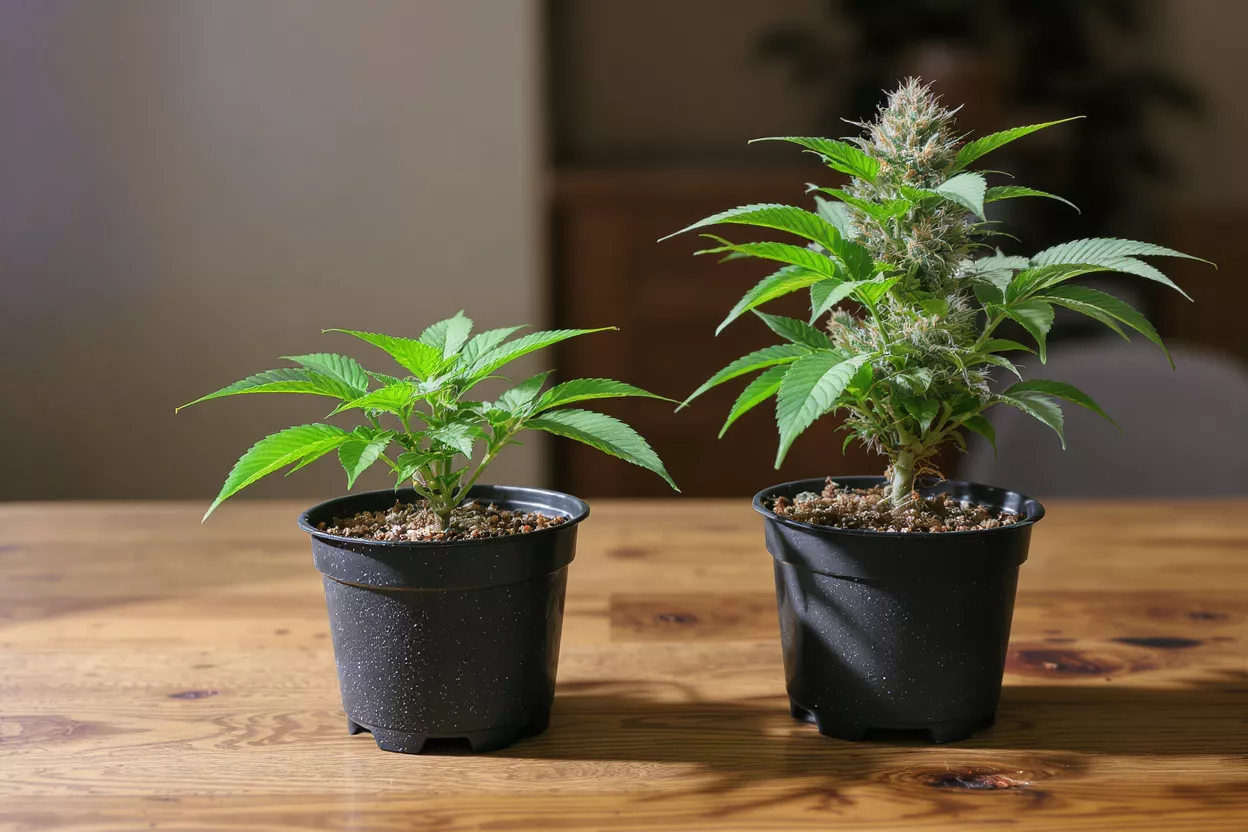
Getting started with LST requires almost no specialized knowledge. Once your plant has a few nodes and a pliable main stem, you simply bend the top away from center and anchor it down so the lower branches sit above the bent tip. From there you repeat and adjust as new growth rises.
The process is forgiving and iterative, so do not stress about perfection on your first attempt. Plants are resilient and respond to consistent, gentle guidance over the course of days. Below is a straightforward sequence that works for nearly any photoperiod or autoflower plant.
- 🌱 Wait for readiness: Let the plant reach 4-6 nodes with a bendable stem before you begin.
- 🔗 Anchor the pot: Drill holes around the rim or use a wire frame to give yourself tie-down points.
- 🪢 Bend the main stem: Gently fold the top to one side and secure it so it sits lower than the surrounding branches.
- ☀️ Expose the inner growth: Tuck large fan leaves aside so light reaches the newly revealed bud sites.
- 🔄 Repeat as it grows: Retie new shoots every few days to keep the canopy flat and even.
Check your ties every couple of days and loosen any that dig into thickening stems. As the plant matures, you will find the branches begin to hold their trained position on their own, and your role shifts from active bending to light maintenance and tucking.
Best Tools and Supplies for LST
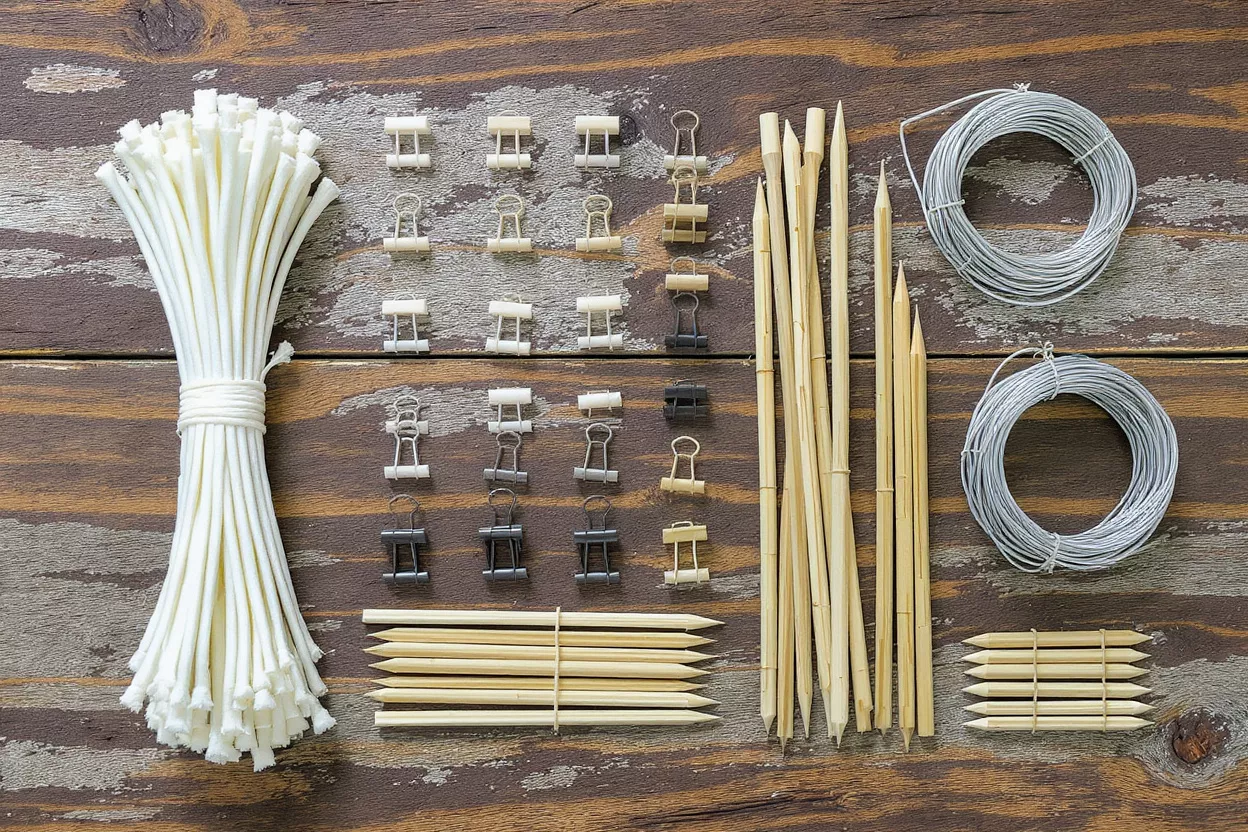
You do not need an expensive kit to practice LST effectively. Many growers get excellent results with nothing more than soft garden wire and a few minutes of attention each day. The goal is to apply gentle, even pressure without cutting into the stem, so anything soft and adjustable works.
That said, purpose-built supplies make the job cleaner and reduce the chance of accidental damage. Soft-coated wire, plastic plant clips, and gardening velcro all distribute pressure across a wider surface than bare string, which can bite into a swelling stem. A reliable spool of soft-coated training wire is the single most useful item to keep on hand.
- 🌀 Soft plant wire: Bends easily, holds shape, and won't cut into stems when applied gently.
- 📎 Plastic plant clips: Snap on quickly for fast adjustments and reusable across grows.
- 🪣 Fabric pots with rim holes: Provide convenient anchor points all around the container edge.
- 🧵 Gardening velcro: Wraps wide and soft, perfect for securing thicker mature branches.
Whatever you choose, avoid thin string or fishing line that can slice into stems under tension. The whole philosophy of low stress training is to guide without wounding, so your tools should reflect that gentle touch from start to finish.
LST Benefits for Yield and Canopy Control
The headline benefit of LST is a larger, more uniform harvest from the same footprint. By converting a single dominant cola into many top-tier flowering sites, you multiply the number of dense, light-saturated buds the plant can produce. Growers commonly report meaningful yield increases simply from flattening the canopy and improving light distribution.
Beyond raw weight, LST gives you precise control over plant height, which is invaluable in tents and cabinets where vertical space is limited. Keeping a flat canopy at a fixed distance from the light also means every bud site receives consistent intensity, producing more even ripening and fewer wispy, undersized larf buds at harvest. Studies on canopy architecture summarized by Nature reinforce how uniform light distribution boosts crop performance.
Airflow is another underrated payoff. A flat, open canopy lets directional airflow move freely between branches, lowering humidity around the buds and reducing the risk of mold and powdery mildew. Pairing your trained plants with a good clip-on circulation fan keeps that air moving and your dense, dank colas dry and healthy through the critical flowering weeks.
Common LST Mistakes to Avoid
The most frequent beginner error is being too timid or too aggressive. Bend too softly and the plant barely responds; yank too hard and you snap the stem before it can adapt. The sweet spot is firm, steady pressure that holds the branch in a new position without crackling the tissue, applied a little more each day rather than all at once.
Another common slip is neglecting to loosen ties as stems thicken. A wire that fit perfectly last week can strangle a swelling stem this week, choking off the flow of water and nutrients above the constriction. Check your anchors regularly and reposition anything that has started to dig in, because a girdled branch can wither and undo your careful work.
Finally, many growers forget that LST is an ongoing process, not a one-time event. Tying the top down once and walking away wastes most of the technique's potential. The canopy wants to revert to vertical dominance the moment you stop guiding it, so consistent retraining over the veg cycle is what separates a modestly improved plant from a truly transformed one.
Combining LST With Other Techniques
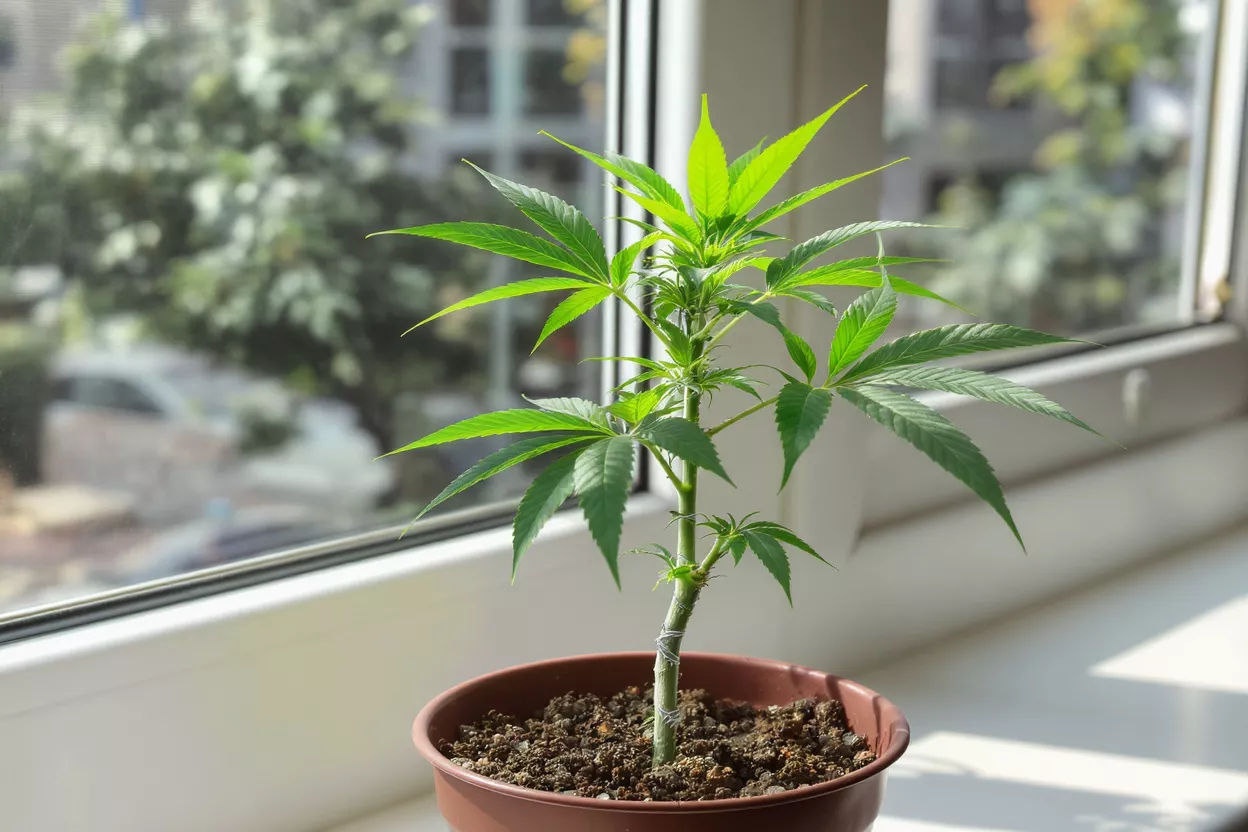
LST plays beautifully with nearly every other training and canopy method. Because it is gentle and non-destructive, you can layer it on top of more aggressive techniques to refine the results. The most popular pairing is topping followed by LST, where you cut the main stem once to create two leaders, then bend those leaders outward for a wide, symmetrical structure.
Defoliation is a natural companion to LST. Selectively removing large fan leaves that shade lower bud sites complements the light-exposure goals of training, opening up the canopy interior so trained shoots get the photons they need. Combined with the ScrOG (screen of green) method, where you weave branches through a horizontal net, LST becomes the foundation of an exceptionally productive flat canopy.
Even autoflower growers, who traditionally avoid high stress methods, can safely fold LST into a broader plan that includes light defoliation and careful nutrient timing. The key is to stack only the techniques your plant can handle without stalling, and to let recovery-free LST do the heavy lifting of shaping while gentler trimming fine-tunes the details.
Is LST Worth It for Home Growers?
For the vast majority of home cultivators, LST is absolutely worth the modest effort. It costs almost nothing, requires no special skill, and delivers some of the best yield-per-watt improvements available short of upgrading your light. The few minutes you spend tucking and tying each day pay off in noticeably heavier, more uniform harvests.
The technique is especially valuable for anyone growing in confined spaces where height control matters as much as total yield. A flat, well-managed canopy keeps your plants a safe distance from the lamp, prevents light burn on the tallest tips, and makes the most of every square inch of tent floor. That efficiency is precisely why LST remains a staple in grow rooms from first-timers to seasoned veterans.
In short, low stress training rewards patience and consistency with measurable results, and the low risk profile means there is little downside to experimenting. Start early, train gently, retie often, and watch a single plant transform into a wide, productive canopy. Whether you grow boutique diamonds-grade flower or simply want a fuller harvest, mastering LST is one of the highest-return skills a home grower can develop.