PEG
Discover what PEG is in cannabis products, how it works as a carrier agent, and whether it's safe.
What Is PEG in Cannabis Products?
PEG, short for polyethylene glycol, is a synthetic, water-soluble polymer that shows up across the cannabis industry as a carrier agent, thinning agent, and excipient. When you read about peg cannabis formulations, you are usually looking at a compound that helps disperse oily cannabinoids into products that would otherwise resist mixing — tinctures, vape liquids, capsules, and certain edibles all rely on carriers like this to deliver a consistent dose.
The term covers a family of related molecules rather than a single substance. PEG is manufactured in a range of molecular weights, denoted by numbers such as PEG 200, PEG 400, or PEG 4000, with each weight behaving differently in terms of viscosity, solubility, and how the body processes it. Lighter PEGs flow like thin oil, while heavier versions resemble waxes or solids at room temperature.
Understanding PEG matters because cannabis is fundamentally an oil-based plant medicine. Compounds like THC and CBD do not naturally dissolve in water, so manufacturers need carriers to make these molecules workable, dosable, and shelf-stable. PEG is one of several tools they reach for.
How PEG Works in Cannabis Formulations
At a chemical level, PEG functions as an amphiphilic helper — it has regions that interact with water and regions that interact with oils. This dual nature lets it bridge the gap between fat-soluble cannabinoids and the water-based or alcohol-based environments many products require. The result is a homogeneous mixture where active compounds stay evenly distributed rather than separating into layers.
In vape products, the role shifts toward viscosity control. Raw cannabis distillate is thick and sluggish, which makes it hard to wick properly through a coil. Adding a measured amount of a light PEG thins the oil so it flows to the heating element and vaporizes cleanly. Too little thinning produces clogged cartridges; too much can compromise vapor quality and flavor.
PEG also influences bioavailability — how much of an active ingredient your body can actually absorb. By keeping cannabinoids dispersed in fine droplets rather than clumped together, certain PEG formulations can improve absorption compared with raw oil taken on its own. This is one reason pharmaceutical formulators have studied PEG-based delivery systems for decades.
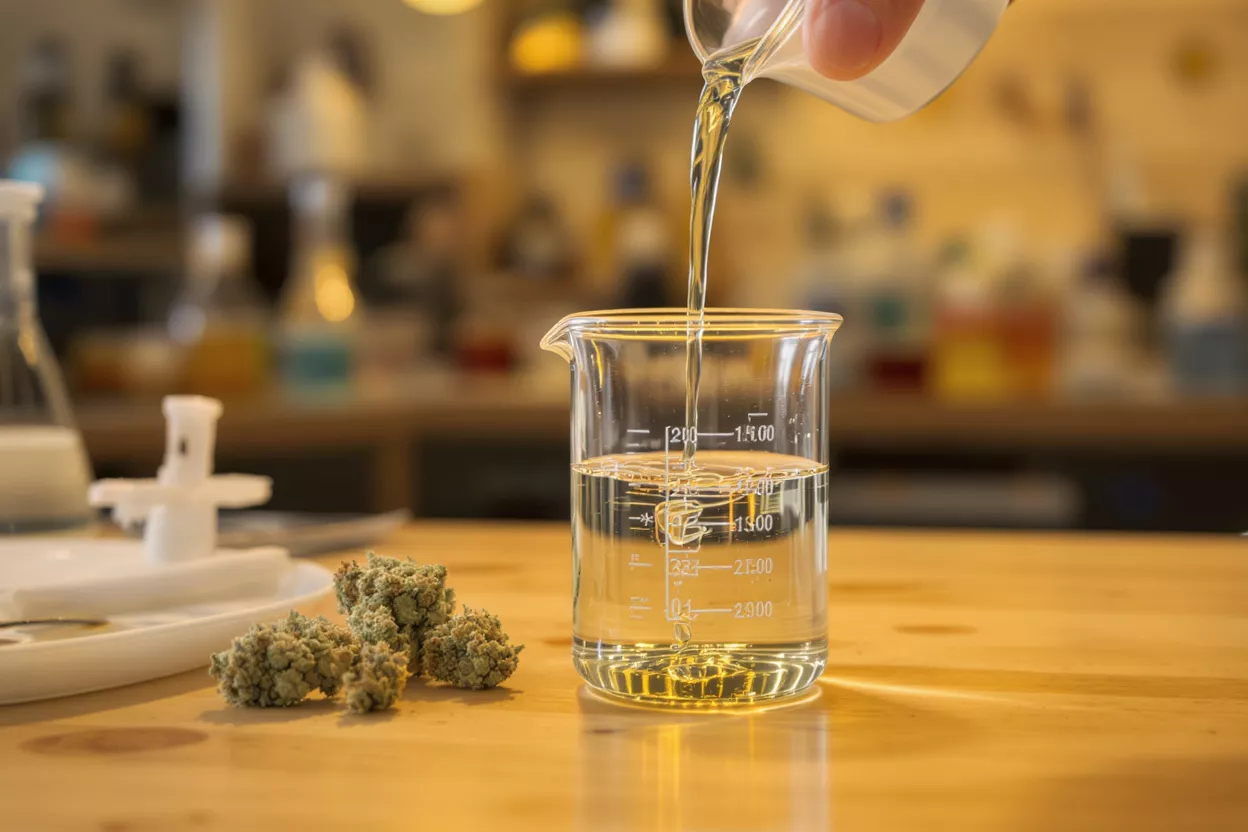
Types of PEG Used in Cannabis Edibles and Vapes
Not all PEG is interchangeable. The molecular weight printed after the name tells you a great deal about how a given grade will behave and where it tends to be used. Manufacturers select the grade that matches the product format, the desired texture, and the regulatory expectations of their market.
Here is a quick reference for the grades most commonly encountered in cannabis manufacturing:
- 💧 PEG 200–400: Thin liquids favored for vape thinning agents and liquid-fill capsules where low viscosity matters.
- 🧴 PEG 600: A slightly heavier liquid used in some tinctures and topical preparations for a smoother feel.
- 🧊 PEG 1000–1500: Soft, semi-solid grades that lend body to balms and ointments.
- 🧱 PEG 4000–6000: Waxy solids used as binders and coatings in tablets, capsules, and certain edible formats.
The lower-weight liquids dominate inhalable and sublingual products because their fluidity supports accurate dosing and clean delivery. Higher-weight grades belong to solid dose forms and topicals, where structure and slow release become priorities rather than flowability.
PEG in Cannabis Vape Cartridges Explained
Cutting and thinning agents became a hot topic during the vape safety conversations of recent years, and PEG sits squarely in that discussion. Historically, some producers used light PEG grades to dilute thick distillate so it would perform well in cartridges. The practice was widespread because it was inexpensive and effective at solving the very real problem of clogged hardware.
The concern centers on what happens when these carriers are heated. Research has suggested that certain thinning agents, including PEG and propylene glycol, can degrade at high temperatures and potentially form unwanted byproducts such as formaldehyde. The amount produced depends heavily on the device, the coil temperature, and how aggressively the cartridge is run.
Because of these findings, a growing share of premium brands have moved toward cutting-agent-free formulations that rely on cannabis-derived terpenes for both thinning and flavor. If you vape regularly, knowing whether a cartridge uses PEG, an alternative carrier, or no cutting agent at all is genuinely useful information for making an informed choice.
PEG in Cannabis Edibles and Tinctures
Beyond vapes, PEG earns its keep in ingestible products where its water solubility solves real formulation headaches. A cannabis tincture, for instance, needs its cannabinoids to stay suspended in the liquid for the life of the bottle. PEG-based carriers help prevent the separation and settling that would otherwise leave the last dose stronger or weaker than the first.
In softgel capsules, liquid PEG grades serve as the fill medium that holds a precise cannabinoid dose inside the gelatin shell. This format gives consumers tasteless, pre-measured dosing without the variability that comes from droppers or homemade edibles. The carrier also protects the active compounds from oxidation while the capsule sits on the shelf.
PEG additionally acts as a mild humectant and texture modifier in some chewable products, helping maintain moisture and a pleasant mouthfeel. That said, many modern edibles use food-grade emulsifiers and oils instead, so PEG is far from universal in this category.
Is PEG in Cannabis Safe to Consume?
PEG has a long history of regulatory acceptance in pharmaceuticals, cosmetics, and food. The U.S. FDA considers many PEG grades safe for ingestion at typical doses, and you will find PEG 3350 sold openly as an over-the-counter laxative. This track record gives the compound a meaningful baseline of safety data that newer cannabis additives simply do not have.
Context determines the real answer. Ingesting PEG in a capsule or tincture is a very different exposure than inhaling its thermal breakdown products from a hot vape coil. The safety profile that applies to swallowing PEG does not automatically transfer to vaporizing it, which is why the inhalation question deserves separate, careful consideration.
A small number of people report sensitivity or allergic reactions to PEG, and awareness of PEG allergy has grown alongside its use in certain medications. For most consumers the compound is well tolerated, but anyone with a known PEG sensitivity should read labels carefully and consult a healthcare provider about cannabis products that may contain it.
PEG vs Other Cannabis Carrier Agents
PEG is one option among several carriers, and each brings tradeoffs. Understanding how it stacks up against the alternatives helps explain why a given product chose one over another. The decision usually balances cost, performance, mouthfeel, and the safety expectations of the target market.
Here is how PEG compares with the carriers you are most likely to see on cannabis labels:
- 🌿 MCT oil: A coconut-derived carrier popular in tinctures and capsules; natural and well tolerated, but oil-based rather than water-soluble.
- 💨 Propylene glycol: Another synthetic thinning agent common in vapes; faces similar heating-byproduct scrutiny as PEG.
- 🍯 Vegetable glycerin: A sweet, plant-derived carrier used in some vape blends and edibles for a smoother draw.
- 🍊 Cannabis terpenes: Plant-derived thinning that doubles as flavor, increasingly favored in premium cutting-agent-free vapes.
No single carrier wins on every axis. PEG excels at water solubility and precise dosing in ingestibles, while terpene-based and oil-based systems tend to lead in inhalable products where heating chemistry matters most. The best choice depends entirely on the format and how the product will be used.
PEG Benefits in Cannabis Manufacturing
Dosing consistency is arguably PEG's greatest contribution to cannabis products. By keeping cannabinoids evenly dispersed, it ensures that every milliliter of tincture or every capsule delivers the same active dose. For a category where reliable dosing builds consumer trust, that consistency is no small thing.
PEG also supports shelf stability. Its inertness and resistance to oxidation help protect delicate cannabinoids and preserve potency over a product's lifespan, reducing the degradation that turns active compounds into less desirable byproducts over time.
From a manufacturing standpoint, PEG is inexpensive, widely available in pharmaceutical grade, and exceptionally well characterized. Formulators know exactly how each grade behaves, which streamlines product development and quality control. These practical advantages explain why PEG remains a workhorse excipient even as plant-derived alternatives gain ground.
How to Spot PEG on Cannabis Product Labels
Reading labels is your most direct line of defense as an informed consumer. PEG may appear under its full name, polyethylene glycol, or alongside a number that signals its molecular weight, such as PEG 400. Some labels group it under broader terms like "carrier agents" or "excipients," which is why scanning the full ingredient list matters.
For vape products specifically, look for explicit claims like "no cutting agents," "100% cannabis-derived terpenes," or a stated absence of PEG and propylene glycol. Brands that omit these agents tend to advertise the fact prominently, since it is a selling point for safety-conscious buyers.
When a label is vague, a reputable producer should provide a certificate of analysis or respond to direct questions about formulation. Lab testing for cannabinoids is standard, but ingredient transparency around carriers varies, so do not hesitate to ask. Knowing what carries your cannabinoids is just as relevant as knowing the cannabinoids themselves.
Common Questions About PEG in Cannabis
A few questions come up repeatedly once people start paying attention to carriers. Because PEG straddles the line between trusted pharmaceutical excipient and scrutinized vape additive, the answers genuinely depend on how you are consuming it. Here are the points worth keeping in mind.
Is PEG natural? No — it is a synthetic polymer manufactured from petroleum-derived ethylene oxide. That synthetic origin does not automatically make it harmful, since it has decades of medical use behind it, but consumers seeking fully plant-derived products may prefer carriers like MCT oil or cannabis terpenes instead.
Does PEG affect how cannabis feels? The carrier itself is largely inert and does not produce psychoactive effects, but it can influence onset and intensity by shaping how quickly cannabinoids absorb. A well-formulated tincture using an appropriate carrier can feel noticeably more consistent than a poorly mixed one.
To summarize, PEG is a versatile and well-studied carrier that solves real problems in cannabis formulation, from dosing accuracy to shelf stability. Its safety profile is reassuring for ingestibles but more nuanced for inhalables, where heating chemistry raises legitimate questions. The smartest approach is simply to read labels, understand which carrier a product uses, and match that choice to how you intend to consume it — knowledge that turns you from a passive buyer into a discerning one.