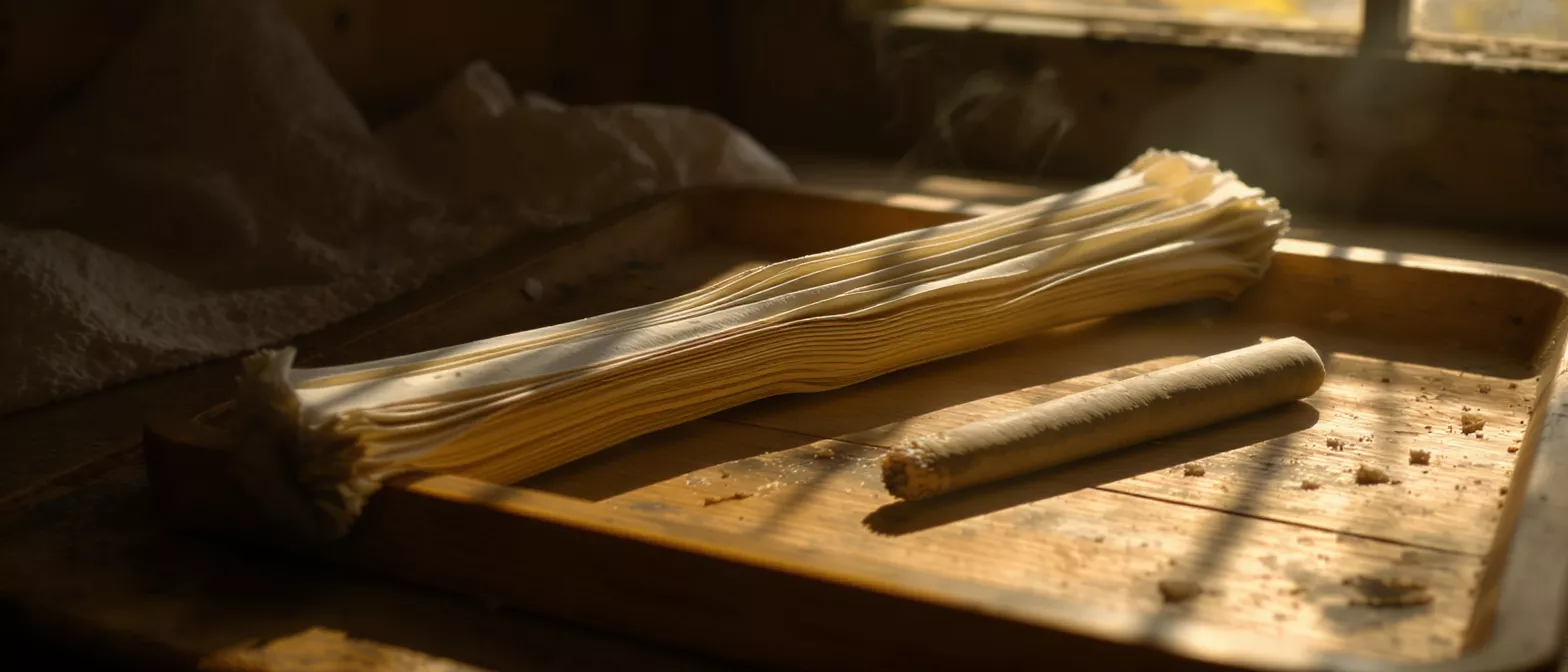
Crutch
Learn what a crutch is, why it matters, and how to roll one perfectly.
What Is a Crutch in a Joint?
A crutch is the small, rolled piece of stiff paper or card placed at the mouth end of a joint or blunt. Sometimes called a filter, tip, or roach, the crutch gives structure to an otherwise floppy paper cylinder and creates a defined channel for airflow. If you have ever watched someone roll inside a dispensary lounge and noticed that little spiral of cardboard at one end, that is the crutch doing quiet but essential work.
Despite the name, a crutch is not a true filter in the cigarette sense. It does not trap tar or strip out compounds the way a cellulose cigarette filter does. Instead, it functions as a spacer and an airflow guide, keeping loose plant material out of your mouth while letting smoke pass through unimpeded. The distinction matters, because many newcomers assume a crutch cleans the smoke the way a carbon insert might.
The terminology shifts depending on who you ask. In some circles the unrolled, resin-soaked end of a finished joint is the "roach," while the cardboard insert is specifically the "crutch" or "tip." Either way, this humble component has become standard in modern rolling, and learning to use one well separates a clean, even-burning joint from a soggy, collapsing one.
Why Use a Crutch When Rolling?
Structural support that holds the joint open: The most immediate benefit is rigidity. A crutch acts like a backbone at the mouth end, preventing the paper from pinching shut when you draw. This keeps airflow consistent from the first puff to the last, which is exactly the kind of directional airflow that makes a joint smoke smoothly rather than choking off halfway down.
Keeping plant material out of your mouth: Nobody enjoys picking flecks of ground flower off their tongue. A tightly wound crutch creates a barrier with enough internal surface area to stop loose particles from migrating up the channel. This is the single feature most smokers cite when they switch from tipless joints, and a good pre-rolled cone with built-in tips delivers it without any extra effort.
Beyond comfort, crutches reduce waste. Without one, you reach a point where the joint becomes too short and too hot to hold, and you toss perfectly good material. According to Canada.ca, smoke from combusted cannabis contains many of the same irritants found in tobacco smoke, so a crutch that lets you finish a joint without scorching your fingertips also keeps you from inhaling the harshest, hottest final draws.
Types of Crutch Materials
Not all crutch materials behave the same way, and the one you choose affects burn, taste, and durability. Most rollers reach for whatever thin cardboard is handy, but understanding the trade-offs helps you make a better joint every time.
Thin, uncoated card stock remains the gold standard because it folds cleanly and holds its shape. Avoid anything glossy, waxed, or printed with heavy ink, since those coatings can release unpleasant fumes when they sit near a burning cherry. The smell of scorched glossy cardboard is unmistakable and will ruin an otherwise dank joint.
- 📇 Filter tip booklets: Purpose-made perforated card designed for rolling, often included with quality papers. Consistent thickness and easy to tear.
- 📦 Business cards and cereal boxes: The classic improvised option. Free and effective, but watch for ink and coatings.
- 🌿 Hemp-based tips: Unbleached, additive-free card that aligns with a clean-burning ethos and adds no flavor.
- 🪵 Wood-pulp filter tips: Slightly more porous, giving a marginally cooler draw.
Whatever you choose, keep it food-safe and free of plastic lamination. A reusable glass joint tip is another route entirely, sidestepping paper questions while delivering a cool, clean pull on every session.
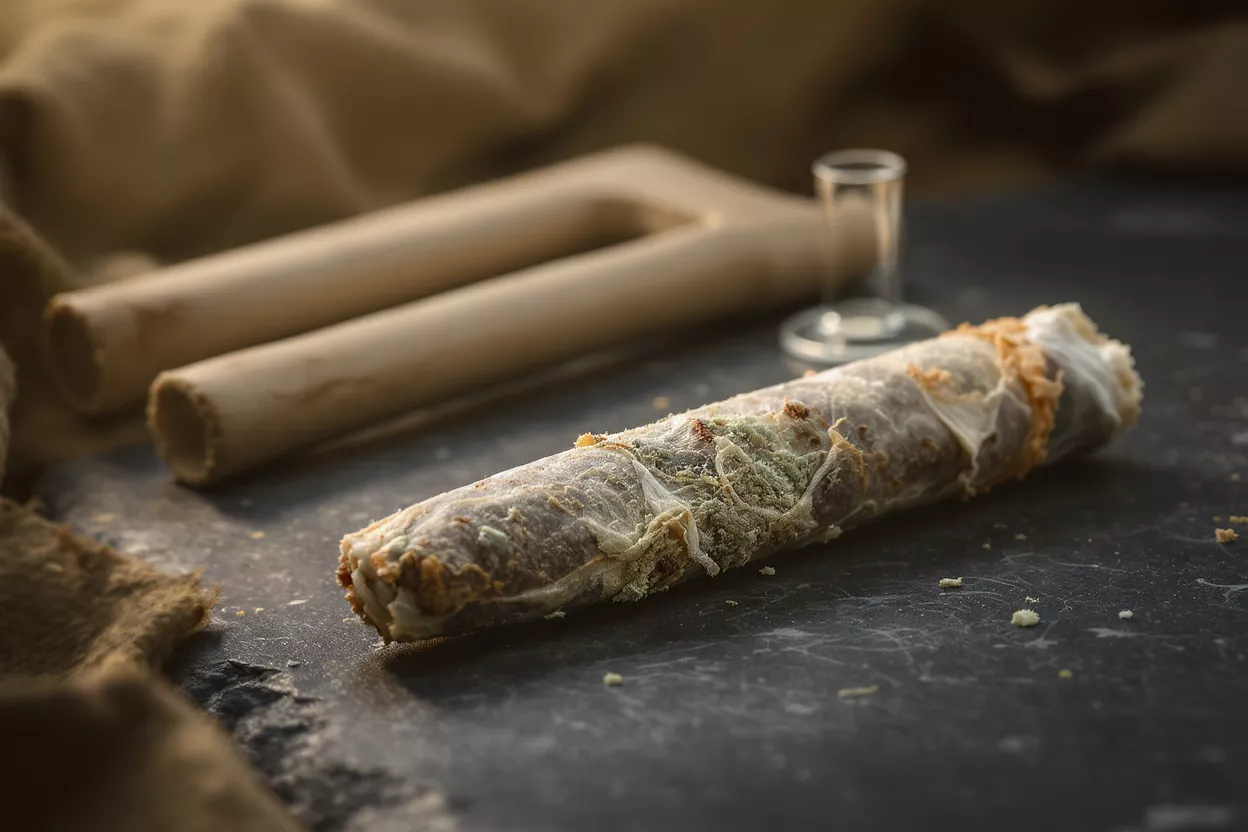
How to Make a Crutch Step by Step
Start with the accordion folds: Take a strip of card roughly the width you want your tip and make two or three tight zigzag folds at one end. These initial bends create the internal baffles that block plant matter while keeping the air channel open. This little "W" or "M" shape at the core is what separates a functional crutch from a hollow tube that lets everything through.
Once the accordion is set, roll the remaining length of card around it until you reach your desired diameter. Roll firmly but not so tight that you crush the channel closed. The goal is a snug cylinder that matches the width of the joint you intend to build, giving the paper a clean anchor point to wrap around.
Hold the rolled crutch for a few seconds so it remembers its shape, or tuck the loose edge under a previous wrap to keep it from springing open. Place it at one end of your rolling paper before you add flower, and build the joint outward from there. With practice the whole process takes under ten seconds.
- ✂️ Cut a strip of thin card about 2 cm wide and 5 cm long.
- 🪗 Make two or three tight accordion folds at one end.
- 🌀 Roll the rest of the card around the folds to your chosen width.
- 🤏 Hold or tuck the edge so the cylinder keeps its shape.
- 📄 Seat it at the mouth end of the paper and roll your joint.
Best Crutch Tips for Beginners
Match the crutch width to the joint: One of the most common beginner errors is rolling a crutch that is too thin or too thick for the joint body. A mismatched diameter creates an awkward step where the paper bunches, leading to uneven burns and air gaps. Size the crutch first, then build the joint to fit it.
Practice your accordion folds on scrap card before committing to your good rolling papers. The fold is where the magic happens, and getting a feel for the right tension prevents you from wasting material. A loosely folded core lets debris through, while an overly crushed one restricts the draw and makes the whole thing pull tight.
Keep a small stash of pre-cut card strips ready to go, especially if you roll often. Having tips on hand removes friction from the process and stops you from grabbing whatever questionable cardboard is lying around. For total convenience, many smokers skip the craft entirely and keep a box of unbleached rolling paper kits that bundle papers, tips, and a packing tool together.
Crutch vs Glass Tip: Which Is Better?
The paper-versus-glass debate comes down to convenience versus experience. A paper crutch is disposable, cheap, and always available, while a glass tip is reusable, delivers a cooler draw, and never burns your lips. Both have a place, and many regular smokers own a glass tip for home sessions while keeping paper on hand for the road.
Glass tips shine for flavor purists. Because glass is inert, it adds nothing to the smoke, letting the terpene profile of your flower come through clean. The trade-off is fragility and the need to clean it, much like maintaining a domeless nail or an e-nail in the concentrate world. A paper crutch, by contrast, you simply discard with the roach.
- ♻️ Reusability: Glass wins, paper loses. Glass tips last indefinitely with care.
- 💨 Cool draw: Glass dissipates heat better than paper for a smoother final pull.
- 👜 Portability: Paper wins. No risk of shattering in your pocket or dugout.
- 💰 Cost: Paper is essentially free; glass is a small one-time investment.
The U.S. Food and Drug Administration notes that combustion byproducts are inherent to any smoked product, so neither option detoxifies your smoke. The choice is about comfort and flavor, not health filtration. Canada.ca offers practical context on lower-risk consumption habits if reducing intake is your goal.
Common Crutch Rolling Mistakes
Rolling the crutch too tight: A crutch crushed down to a near-solid wad restricts airflow and makes the joint pull like a clogged straw. The accordion baffles should be present but not compressed flat. You want resistance against debris, not against your lungs. If your finished joint draws hard, an overtight crutch is often the culprit.
Another frequent error is making the crutch too short. A stubby tip leaves too little card to grip and lets the cherry creep close to your fingers before the joint is finished. Aim for a length that gives you a comfortable handle and enough internal channel to do its job. Too long, however, and you waste paper and create dead space.
Finally, watch the materials. Using glossy, dyed, or laminated card introduces fumes you do not want anywhere near your lungs. The same caution applies to anything that has touched adhesive or food residue. Stick to clean, uncoated stock and your joint stays as honest as the flower inside it.
Does a Crutch Affect Your High?
A crutch does not reduce potency or filter out cannabinoids, which is a common misconception. Because it functions as a spacer rather than an absorptive filter, the THC, CBD, and aromatic terpenes pass straight through to you. Whether you are smoking high-test Diesel flower or a milder strain, the crutch leaves the chemistry untouched.
What a crutch does change is the consistency of your experience. By keeping airflow open and even, it ensures each draw delivers a similar dose rather than alternating between starved and rushing pulls. This steadier burn can make a joint feel smoother and more controlled, even though the underlying Delta-9 THC content is identical.
It is worth distinguishing inhaled flower from other formats entirely. Edibles work through a slow digestive pathway, sometimes with enteric coating on capsule products, and produce a markedly different and longer onset than smoking. A crutch belongs strictly to the combustion world; it has nothing to do with the edible hangover some people report after a heavy elixir or gummy session.
Crutch Shapes and Folding Styles
The W-fold and M-fold classics: The simplest and most popular accordion shapes form a W or an M before the outer roll. These create three or four chambers that catch debris efficiently while keeping the draw open. For everyday joints, this style is hard to beat and quick to execute once muscle memory kicks in.
More elaborate folds exist for those who treat rolling as a craft. Spiral crutches, heart shapes, and even initials can be folded into the card for a decorative touch that shows through a clear paper. These are more about flair than function, but they prove how much personality a humble tip can carry.
The diameter and density of the fold matter more than the design. A wider chamber suits a fat joint or blunt, while a tighter spiral suits a slim pin. Adjusting the number of folds changes how much debris the crutch stops, so experiment until you find the balance of clean draw and open airflow that suits your style.
Are Crutches Safe to Smoke Through?
For the vast majority of smokers, an uncoated paper or card crutch is perfectly safe to use, provided you keep it clean and free of inks, dyes, and plastic coatings. The card sits at the mouth end and rarely combusts directly, so it stays well clear of the burning cherry until the joint is nearly spent.
The real safety conversation is about smoke itself, not the crutch. No tip, paper or glass, removes the tar and irritants produced by combustion. According to Canada.ca, any form of inhaled smoke carries respiratory risk, so a crutch is best understood as a comfort and structure tool rather than a harm-reduction device.
If health is a priority, the cleanest path is to avoid laminated or chemically treated materials entirely and to consider non-combustion formats when appropriate. But for a classic, well-built joint, a simple hemp or card crutch remains a time-tested choice that improves the smoking experience without introducing anything you would not want in your lungs. Roll clean, choose your materials wisely, and the humble crutch will reward you with a smoother, cooler, more enjoyable session every time.