Curing
Discover how curing cannabis transforms harvested flower into smooth, aromatic bud.
What Is Curing Cannabis
Curing cannabis is the controlled aging process that follows the initial drying of harvested flower, and it is arguably the most underappreciated step in the entire production chain. After buds have been trimmed and dried to a workable moisture level, they are sealed in containers where a slow, deliberate exchange of moisture and air takes place over days or weeks. This patient finishing stage is what separates harsh, grassy-tasting flower from the smooth, aromatic product that connoisseurs prize.
At its core, curing is a biochemical process. Residual sugars, chlorophyll, and other plant compounds continue to break down inside the flower, while the remaining moisture redistributes evenly from the dense interior of the bud toward the surface. This redistribution is why a properly cured nug feels consistently dry yet never brittle, and why its aroma deepens rather than fades over time.
The word "curing" borrows from older food and tobacco traditions, where aging transformed raw material into something refined. Cannabis follows the same logic. The terpenes and cannabinoids that define a strain's character are preserved and even enhanced when the cure is done with care.
Why Curing Cannabis Matters for Quality
Flavour preservation is the headline benefit. The volatile aromatic compounds in cannabis are fragile, and a rushed or skipped cure allows them to degrade or evaporate. A measured cure locks in the citrus, pine, earth, and fuel notes that growers spend an entire grow cycle cultivating, giving the finished flower a depth that simply cannot be faked after the fact.
Smoothness comes from chlorophyll breakdown. Freshly dried cannabis is loaded with chlorophyll, the compound responsible for that harsh, hay-like burn at the back of the throat. During the cure, enzymes continue to degrade chlorophyll and other harsh byproducts, which is why well-cured flower produces a cleaner, less irritating smoke or vapour.
Beyond taste and smoothness, curing protects potency. Improper storage can accelerate the conversion of THC into CBN, a cannabinoid associated with sedation rather than the bright, energetic effects many users seek. A stable cure keeps the cannabinoid profile closer to its intended balance, preserving both the experience and the shelf life of the flower.
How Curing Cannabis Works Step by Step
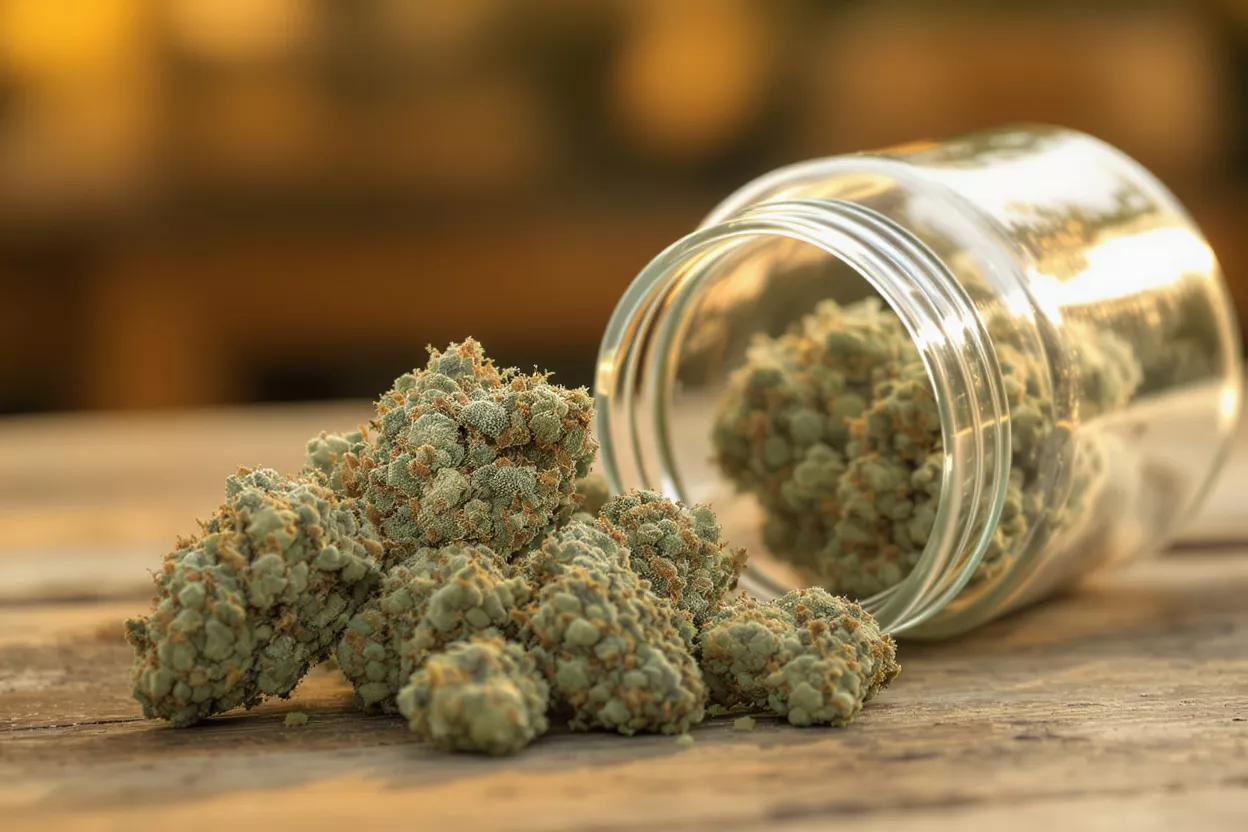
Once flower has been dried to roughly the right moisture content, the curing process begins by sealing the buds into airtight containers. The internal moisture that remains locked in the stems and the centre of each bud slowly migrates outward, rehydrating the surface. This is why a jar that felt perfectly dry in the morning can feel slightly moist again by evening.
Burping is the heartbeat of the cure. Opening the containers periodically, a practice known as burping, releases the humid air that has accumulated and allows fresh, drier air to enter. This exchange prevents moisture from building up to the point where mould can take hold, while still allowing the slow internal redistribution that defines a good cure.
Over successive days, the burping frequency decreases as the moisture inside the buds stabilizes. The flower gradually reaches an equilibrium where surface and interior moisture are balanced. At that point the harsh compounds have largely broken down, the aroma has bloomed, and the flower is ready for long-term storage or consumption.
- 🫙 Seal: Place dried buds loosely in airtight glass jars, filling to about three-quarters capacity.
- 🌬️ Burp: Open jars once or twice daily for the first week to exchange air and check moisture.
- 📉 Taper: Reduce burping to every few days as the cure progresses through weeks two and three.
- 👃 Assess: Smell for ammonia, which signals trapped moisture, and act quickly if detected.
- 🏆 Store: Once stable, move jars to a cool, dark place for extended aging.
Drying vs Curing Cannabis: What Is the Difference
Drying and curing are often spoken of in the same breath, but they are distinct stages with different goals. Drying is the rapid removal of the bulk of the water from freshly harvested plants, typically over a week to ten days in a controlled room. Its purpose is to bring moisture down to a safe level quickly enough to prevent mould but slowly enough to avoid sealing in chlorophyll.
Curing begins where drying ends. If drying is about removing water, curing is about refining what remains. The cure works on the residual moisture and the internal chemistry of the flower, smoothing out flavour and preserving aroma in a way that fast drying alone never achieves.
Rushing the drying phase to get to market faster is a common shortcut, and it almost always shows. Flower that was force-dried with heat or excessive airflow loses terpenes and ends up harsh, no matter how careful the subsequent cure. The two stages work together, and neither can fully compensate for a mistake in the other.
Best Containers for Curing Cannabis
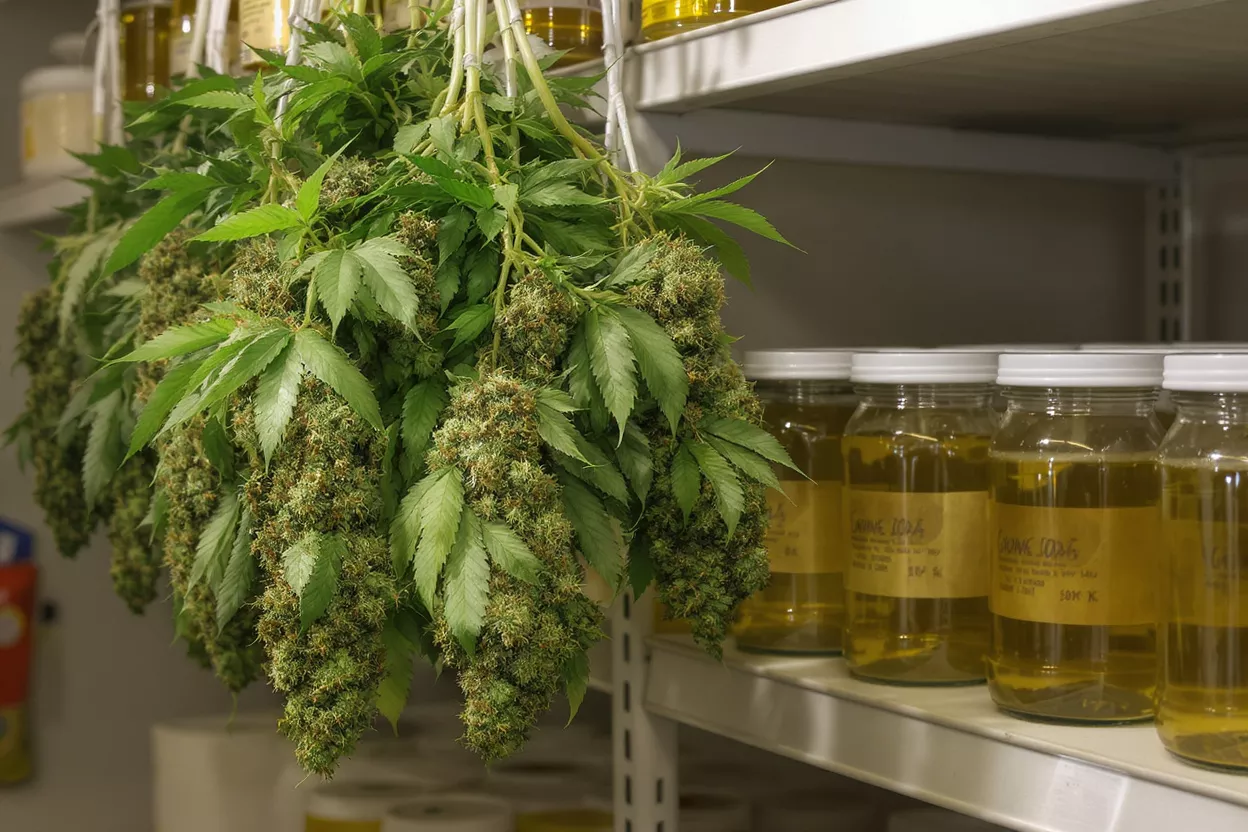
The container you choose has a real impact on the outcome of a cure. Wide-mouth glass mason jars are the long-standing favourite for good reason: glass is non-reactive, does not impart flavours, and seals tightly enough to maintain a stable internal environment while still being easy to open for burping.
Material matters more than people expect. Plastic bags and bins can leach odours and allow static to strip delicate trichomes from the bud surface. Metal containers risk reacting with moisture. For small-batch curing, glass remains the gold standard, while larger operations often turn to food-grade containers designed specifically for the purpose.
Some growers add humidity-control packs to their jars to hold the internal environment at a target moisture level. These two-way packs absorb excess moisture or release it as needed, taking much of the guesswork out of the cure and protecting flower during long storage windows.
- 🫙 Glass mason jars: The reliable choice for home and small-batch cures, non-reactive and easy to monitor.
- 📦 Food-grade bins: Practical for larger harvests where jar space becomes impractical.
- 💧 Humidity packs: Two-way regulators that hold moisture at a set point and ease long-term storage.
- 🚫 Avoid plastic bags: Static and odour transfer make them a poor curing vessel.
Ideal Humidity and Temperature for Curing Cannabis
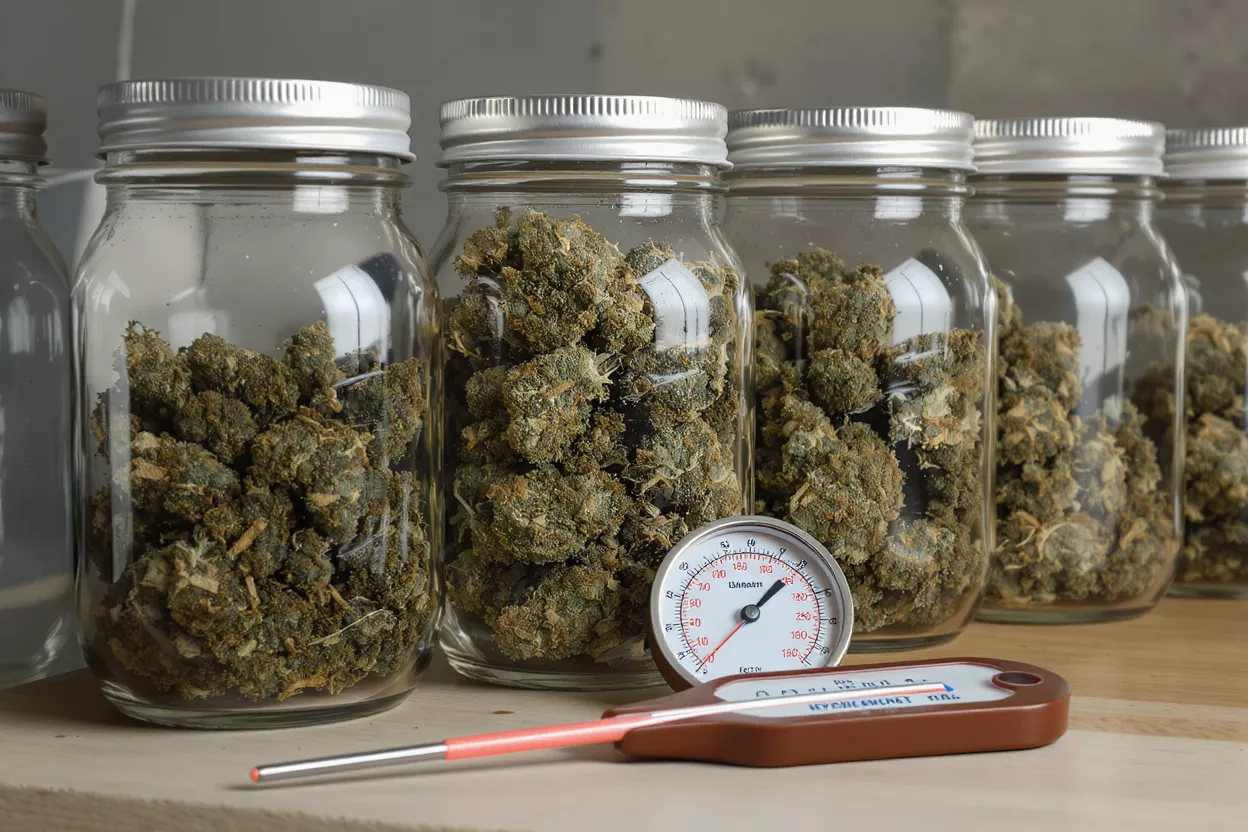
Environment is everything during a cure. The widely accepted target is a relative humidity inside the container of roughly 58 to 65 percent, paired with a stable temperature in the range of 60 to 70 degrees Fahrenheit. Within this window, the beneficial chemistry of the cure proceeds while the conditions remain inhospitable to mould.
Too much humidity invites mould. When internal moisture climbs above the safe range, trapped dampness creates the perfect breeding ground for mould and bacteria, often announced by a sharp ammonia smell. This is the single greatest risk during curing, and it is why diligent burping in the early days is non-negotiable.
Too little humidity creates the opposite problem. Flower that dries out too far becomes brittle and dusty, the terpenes evaporate, and the harsh edge of an undeveloped cure never fully smooths out. Hitting the middle ground, and holding it steady, is the art that separates an excellent cure from a mediocre one.
How Long to Cure Cannabis for Best Results
The minimum effective cure for most cannabis is about two weeks, and at that point the flower is noticeably smoother and more aromatic than freshly dried bud. For many growers, two to three weeks represents the sweet spot where the improvement is dramatic and the wait remains reasonable.
Longer cures deepen complexity. Cannabis cured for four to eight weeks often develops a richer, more layered aroma and an even smoother smoke. Some connoisseurs extend the cure for several months, treating it much like aging a fine spirit, with the flower continuing to refine as long as the environment stays stable.
There is a point of diminishing returns, and eventually very long storage shifts from improvement to slow degradation as cannabinoids and terpenes gradually break down. The practical takeaway is that almost any cure benefits from patience in the first month, while extended aging is a matter of personal preference and storage discipline.
Common Curing Cannabis Mistakes to Avoid
Skipping the burp is the classic error. Sealing flower into jars and walking away allows moisture to accumulate unchecked, and the result is frequently mould that ruins an entire batch. The early days of a cure demand attention, and a missed burp during that window can undo a season of careful cultivation.
Curing flower that was dried unevenly causes problems too. If buds go into the jar with wildly different moisture levels, the damper ones can raise the humidity of the whole container and put the drier flower at risk. Sorting buds by density and dryness before sealing helps the cure progress evenly.
Overpacking jars is another frequent misstep. Crammed flower has little air circulation, traps moisture against itself, and is harder to inspect. Leaving headroom and gently shaking the jar during each burp keeps the buds loose and lets air move freely around every nug.
Benefits of Properly Cured Cannabis
A well-cured flower rewards every stage of the process with tangible improvements. The aroma is fuller and truer to the strain, the smoke or vapour is dramatically smoother, and the overall experience feels more refined and controlled. These are not marketing claims; they are the direct, repeatable result of letting chemistry do its work over time.
Shelf life is a major practical benefit. Properly cured cannabis stored in stable conditions can retain its quality for many months to over a year. The reduced and balanced moisture content makes the flower far less hospitable to mould, while the slowed degradation of cannabinoids keeps potency intact for longer.
There is also a consistency benefit that matters enormously for anyone using cannabis for wellness. A predictable, well-preserved cannabinoid and terpene profile means each session delivers a more reliable experience, which is especially valuable when a particular effect or relief is the goal.
How to Tell When Cannabis Is Fully Cured
Knowing when a cure is complete comes down to a handful of sensory cues that experienced growers learn to trust. The snap of a stem is one of the oldest tests: a fully cured branch snaps cleanly rather than bending, signalling that interior moisture has reached the right level. The buds themselves should feel dry on the outside yet retain a slight springiness when gently squeezed.
Aroma tells the clearest story. A finished cure smells rich and characteristic of the strain, with the grassy, hay-like notes of fresh flower replaced by deep, complex terpene aromas. Any lingering scent of ammonia or fresh-cut grass means the cure needs more time and attention.
Curing is the quiet finishing touch that elevates good cannabis into great cannabis, transforming raw, freshly dried flower into a smooth, aromatic, and stable product. By controlling moisture, managing the environment, and giving the process the patience it deserves, anyone can preserve the full character of their harvest. Master the cure, and every other effort that went into growing the plant finally pays off in the jar.