Topping
Learn how topping transforms your cannabis plant into a multi-cola powerhouse.
Topping is one of the first hands-on techniques most cannabis growers learn, and for good reason. By removing the very tip of a young plant, you reshape how it grows for the rest of its life. Instead of a single dominant cola towering above everything else, topping coaxes the plant into producing multiple main branches, a wider canopy, and a more even spread of bud sites. Whether you are chasing bigger harvests of truly dank flower or simply trying to keep a plant from outgrowing your tent, understanding topping is foundational knowledge.
This guide breaks down exactly what topping does, when and how to do it, and how it stacks up against other training methods. The technique is simple enough for a first-time grower to master in minutes, yet powerful enough to define the structure of a high-yielding plant. Let us start with the basics.
What Is Topping in Cannabis Growing?
The core definition: Topping is the practice of cutting off the newest growth tip at the top of a cannabis plant's main stem. That tip — called the apical meristem — is where the plant concentrates much of its upward growth energy. When you snip it, the plant can no longer grow straight up from that single point, so it redirects its resources to the two nodes directly below the cut.
Why growers do it: The goal is to break the plant's natural tendency toward apical dominance, where one central stem grows tall and shades out everything beneath it. By eliminating that single leader, you encourage the development of two (and eventually many) main colas of roughly equal size. The result is a bushier, flatter plant that uses light more efficiently and produces more usable bud sites at the canopy level.
Topping is a form of high-stress training, meaning it involves physically wounding the plant. Because of this, timing and plant health matter a great deal — a concept we will return to throughout this guide. Done correctly, topping is a low-risk technique with a high payoff, and it remains one of the most widely recommended practices for indoor and outdoor cultivation alike.
How Does Topping Work on a Cannabis Plant?
To understand topping, it helps to understand a plant hormone called auxin. Auxin accumulates in the growing tip and signals the plant to push energy upward into that dominant stem while suppressing the side branches. Research summarized by Harvard Health on plant biology and human-relevant botany underscores how hormonal signaling governs growth patterns across the plant kingdom — and cannabis is no exception.
The hormonal shift: When you remove the apical tip, you remove the primary source of that auxin signal. The two lateral buds just below the cut, which were previously held back, are suddenly free to grow. They surge upward and become two new main stems. Over time, with repeated topping, this multiplies into four, eight, or more colas.
The plant does not lose energy from this process so much as it redistributes it. Instead of pouring resources into one tall, light-hungry tip, the plant spreads that vigor across a wider frame. This is why a topped plant often appears to pause for a few days after the cut — it is busy rerouting its growth strategy before launching into its new, bushier form.
When to Top Cannabis Plants for Best Results
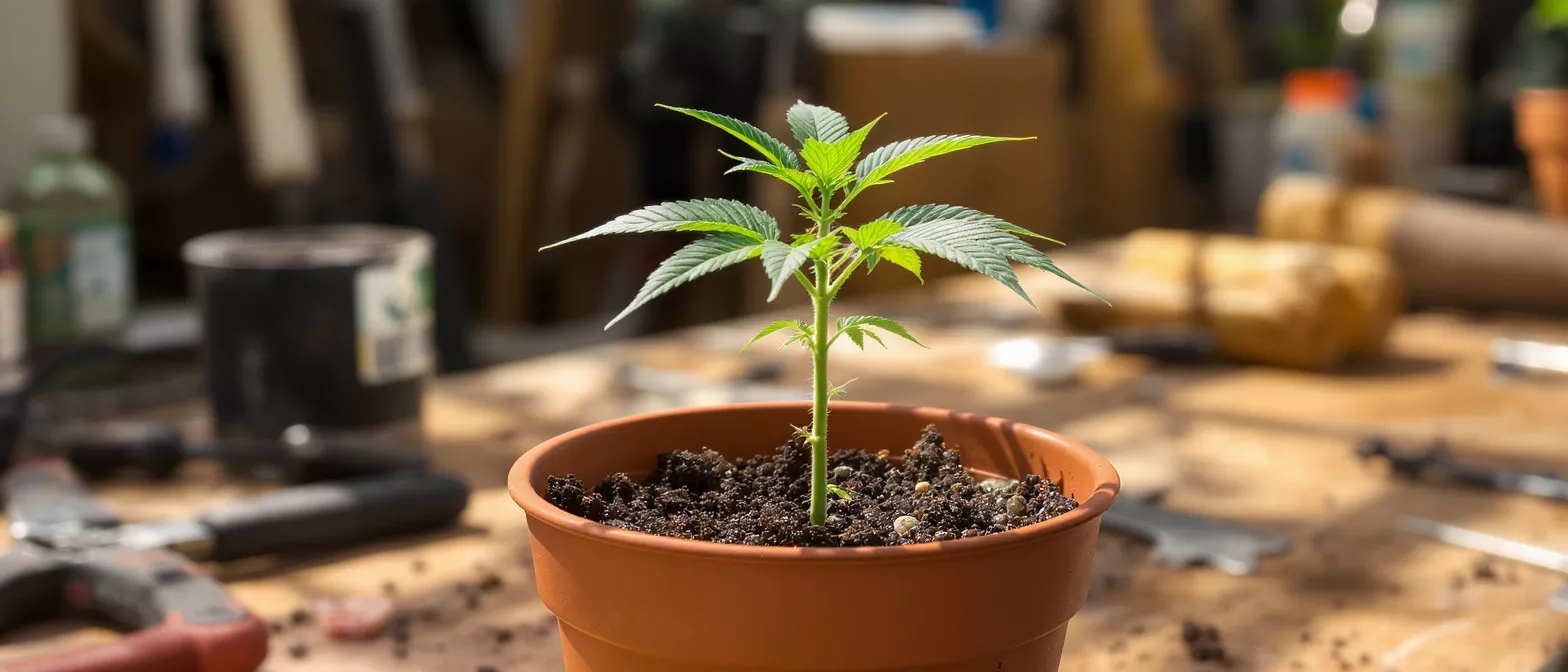
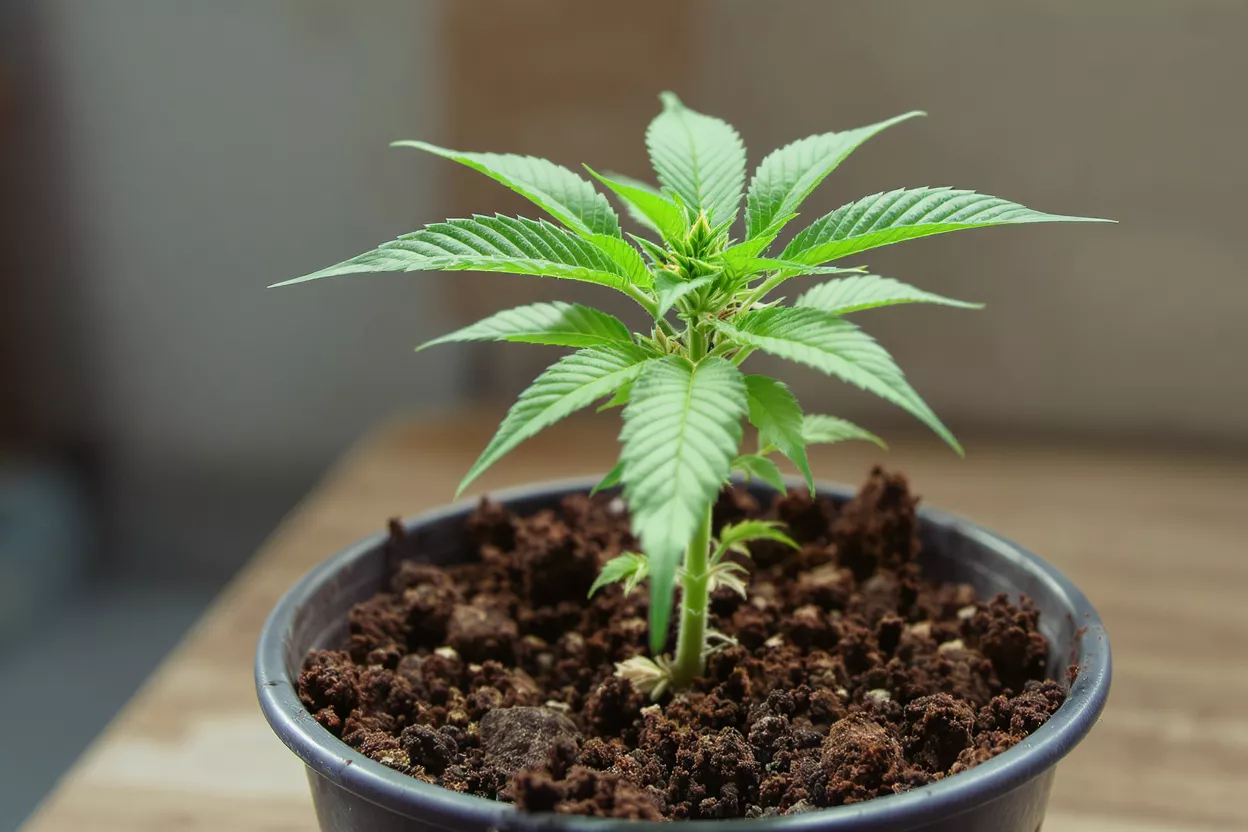
The right developmental stage: Most growers top during the vegetative stage, once the plant has developed three to five nodes. Topping too early, before the plant has enough leaf mass and root structure, can stunt it. Waiting until it has a solid foundation ensures it has the energy reserves to recover quickly and bounce back stronger.
A common recommendation is to make the first cut above the third or fourth node. This leaves enough lower growth to support photosynthesis while still triggering the branching response higher up. After the plant recovers — typically within a week — you can top again to multiply the cola count, provided you still have plenty of vegetative time left before flipping to flower.
Timing relative to flowering: Always finish topping during veg. Topping during flower is risky because the plant has shifted its energy toward bud production and has far less capacity to heal. For autoflowering varieties, which run on a fixed internal clock, the window is tighter still — many growers top autos only once, very early, or skip high-stress training entirely in favor of gentler methods. Healthy, vigorous plants recover fastest, so a quality organic veg nutrient blend can shorten downtime between cuts.
How to Top Cannabis Step by Step
Topping is refreshingly simple, but a clean technique reduces the risk of infection and speeds recovery. The goal is a precise, sanitary cut that leaves the plant with a clean wound and two healthy nodes ready to take over.
Here is the basic process from start to finish:
- 🌱 Wait for the right stage: Confirm the plant has at least three to five healthy nodes and is growing vigorously.
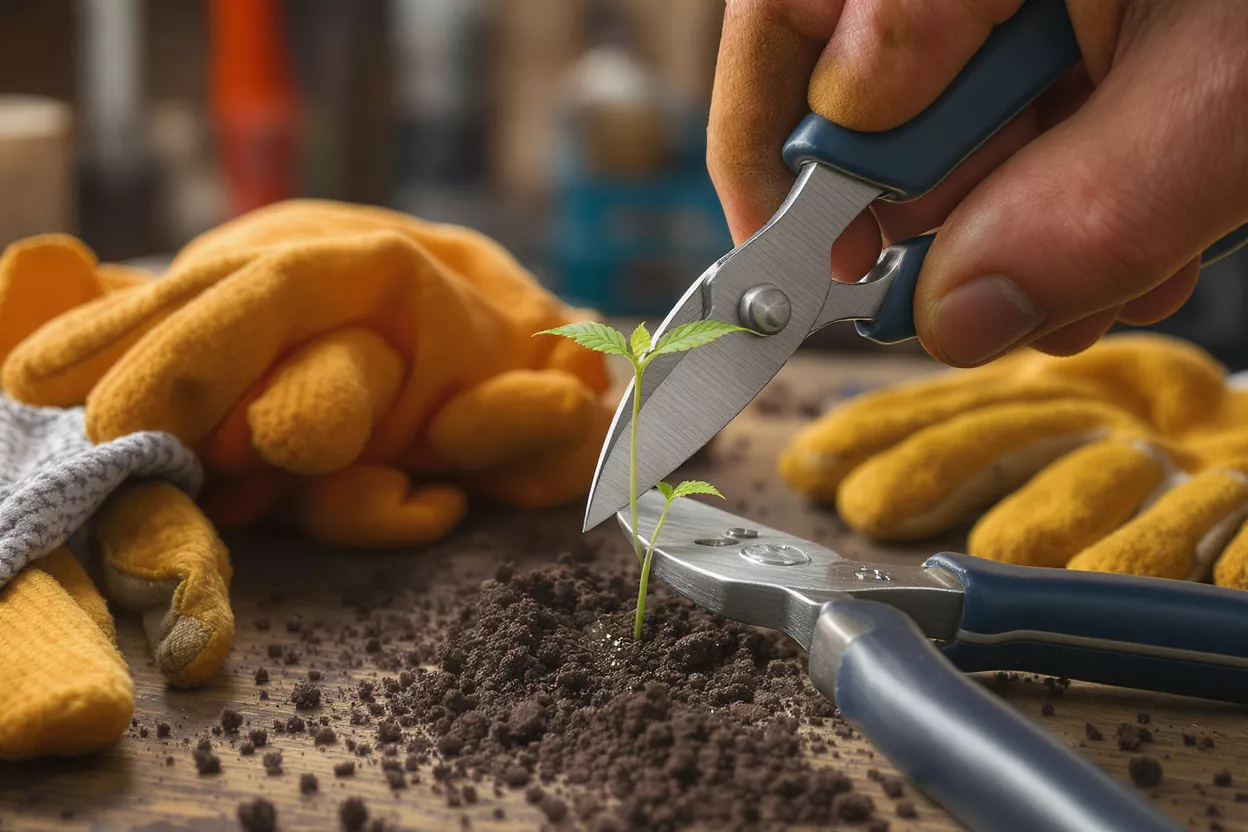
- ✂️ Sterilize your tool: Use sharp, clean scissors or a blade wiped with isopropyl alcohol to avoid introducing pathogens.
- 📍 Locate the cut point: Identify the new growth at the top and the node just below it where two side shoots emerge.
- 🌿 Make the cut: Snip the stem cleanly just above that node, removing the top tip in one motion.
- 💧 Support recovery: Keep conditions stable, avoid overwatering, and let the plant rest before any further training.
Aftercare matters: In the days following a top, keep your environment dialed in — stable temperature, moderate humidity, and gentle directional airflow over the canopy to discourage mold at the wound site. Avoid stacking stressors; do not transplant, defoliate heavily, and top all in the same day. Give the plant time to settle, and you will see vigorous new shoots within a week.
Topping vs Fimming: What Is the Difference?
Two cuts, two outcomes: Topping and fimming are closely related, and beginners often confuse them. Topping removes the entire growth tip cleanly above a node, reliably producing two new main stems. Fimming — a term that reportedly originated from the phrase "f*** I missed" — involves pinching or cutting off only about 75% of the newest growth, leaving a ragged remainder.
Because fimming leaves part of the tip intact, it can produce three, four, or even more new shoots from a single cut, rather than the clean two from topping. However, fimming is less predictable. The results vary depending on exactly how much tissue you remove, and the messier wound can sometimes lead to uneven growth.
Which should you choose? Topping offers symmetry and predictability, making it ideal when you want an even, balanced canopy. Fimming offers a faster route to a high cola count with less recovery shock, since you remove less material overall. Many experienced growers use both at different points, and pairing either technique with a quality low-stress training kit gives you precise control over your plant's final shape.
Topping Benefits for Yield and Canopy
The biggest reason growers top is yield. A single untopped plant tends to produce one large central cola and a collection of smaller, shaded buds below. By contrast, a well-topped plant develops multiple colas of similar size, all sitting at the canopy where they receive direct light.
Topping also makes a plant easier to manage in confined spaces. Indoor growers working with limited vertical headroom benefit enormously from the shorter, wider profile a topped plant develops. Even, well-lit canopies tend to ripen more uniformly, which can improve the overall quality of your harvest. Studies on light penetration and plant physiology, including general findings discussed by Harvard Health, reinforce how efficient light capture drives healthier plant development.
Key advantages of topping include:
- 🌳 Multiple main colas: Two becomes four becomes eight, multiplying your prime bud sites.
- 📏 Height control: A flatter canopy fits tents, closets, and low-ceiling spaces with room to spare.
- ☀️ Better light exposure: An even canopy lets every bud site soak up direct light rather than languishing in shade.
- 🍃 More uniform ripening: Colas at similar heights mature on a similar timeline, simplifying harvest.
- 💨 Improved airflow: An open structure reduces humidity pockets and lowers mold risk.
Topping and Other Training Methods
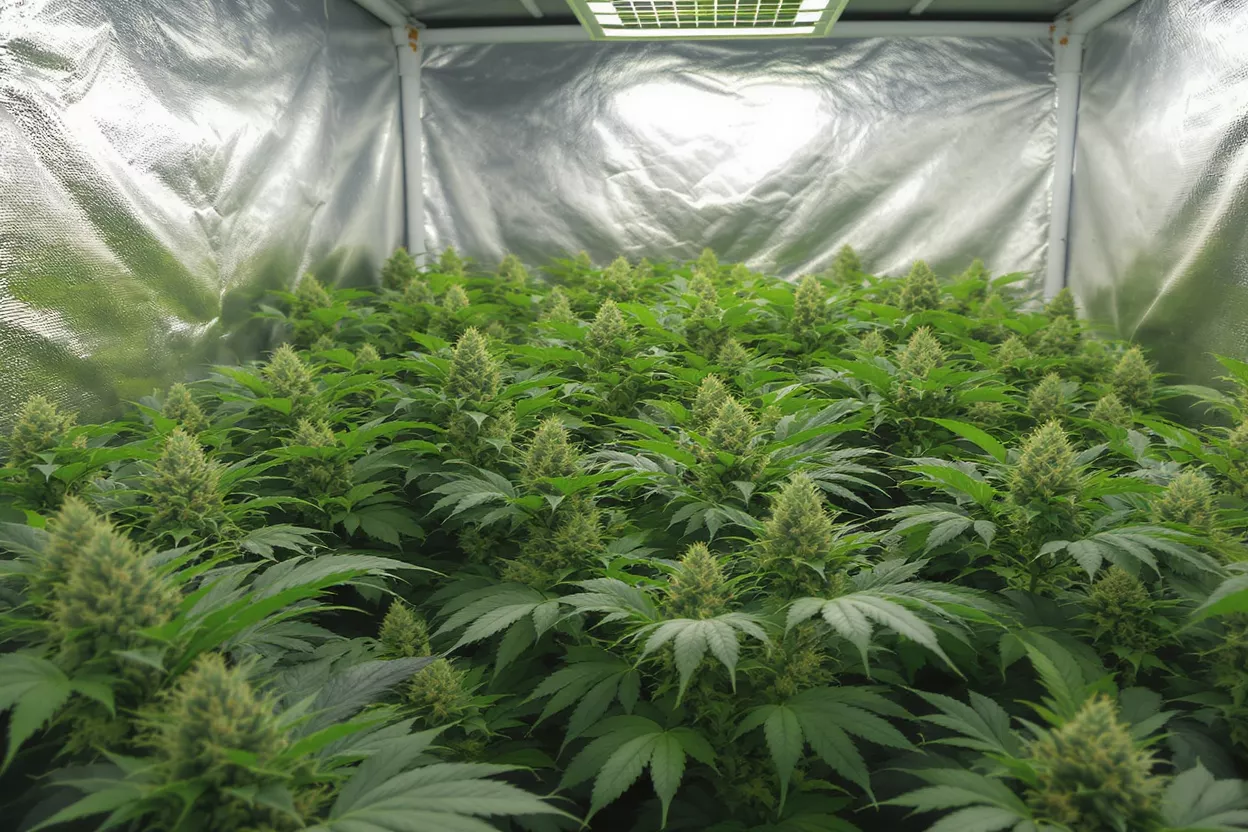
Combining techniques: Topping rarely works alone. It pairs naturally with low-stress training (LST), where you gently bend and tie down branches to keep the canopy flat and expose more bud sites to light. After topping creates multiple stems, LST spreads them outward to maximize coverage.
Another popular pairing is the Screen of Green (ScrOG) method, where a horizontal net is placed above the plants. Topped plants fill out a ScrOG screen beautifully, since the multiple colas can be woven through the netting to create an even, light-saturated canopy. The combination of topping and ScrOG is a favorite among growers chasing maximum yield from minimal floor space.
Defoliation — the selective removal of fan leaves — is sometimes used alongside topping to improve light penetration and airflow deep in the canopy. Used judiciously, these techniques complement one another. Overdone, they stress the plant unnecessarily, so balance is key. A reliable grow tent ventilation system keeps directional airflow consistent across a trained, multi-cola canopy.
Common Topping Mistakes to Avoid
Topping too early: The most frequent beginner error is cutting before the plant is ready. A seedling with only one or two nodes lacks the resources to recover well, and topping it can cause serious stunting. Patience pays off — wait for that third to fifth node and a vigorous growth pattern.
Using dirty tools is another avoidable mistake. An open wound is an entry point for pathogens, and a contaminated blade can introduce disease that sets your plant back for weeks. Always sterilize before you cut. Similarly, topping a sick, nutrient-deficient, or already-stressed plant compounds the problem; only top healthy, thriving specimens.
Finally, beginners sometimes top too aggressively or too late in the grow cycle. Topping deep into flowering wastes the plant's energy when it should be building buds, and stacking multiple high-stress techniques at once overwhelms recovery. Spread your training out, give the plant time between procedures, and respect its recovery window.
Is Topping Cannabis Safe for the Plant?
Generally yes, with care: Topping is a well-established, low-risk technique when performed on a healthy plant with clean tools at the correct stage. Cannabis is a resilient plant, and the temporary stress of topping is something a vigorous specimen shrugs off within days. The brief growth pause is normal and not a cause for alarm.
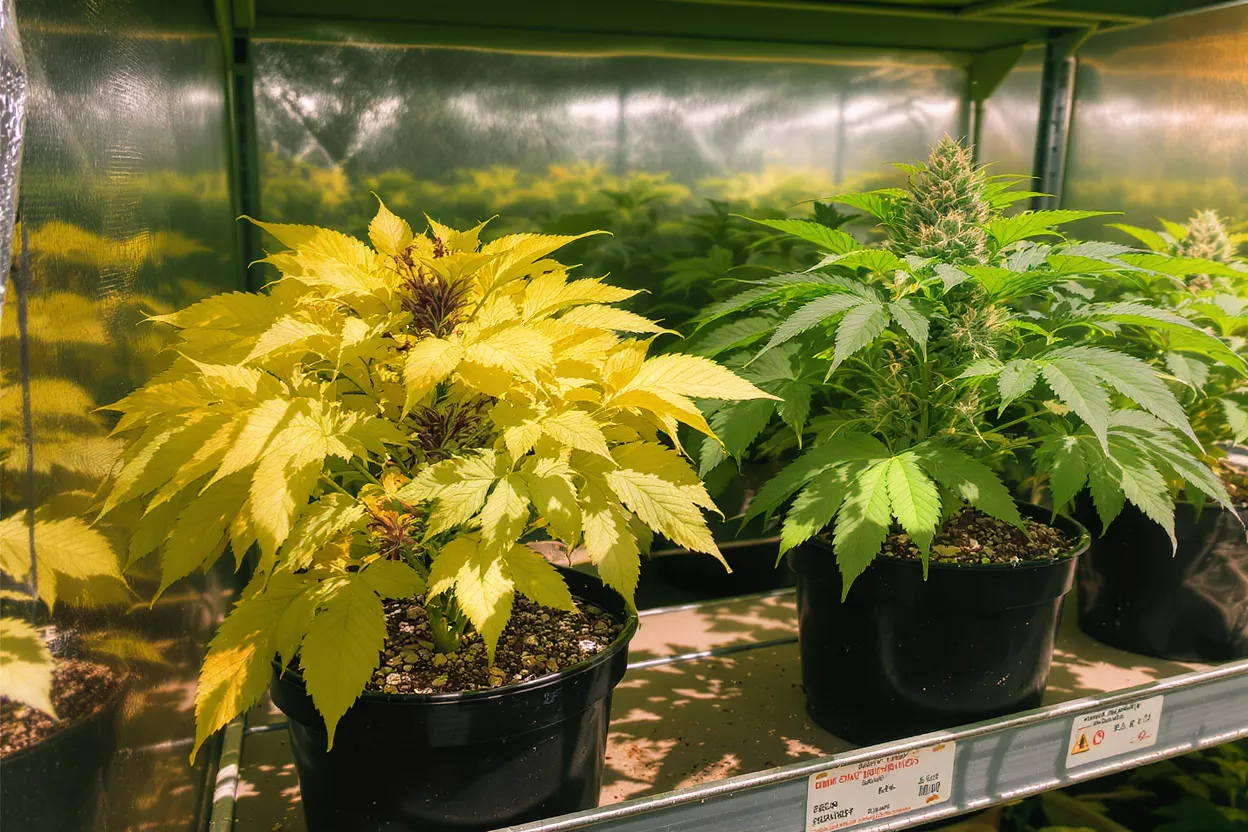
That said, "safe" depends on context. Stressing an already-weak plant, topping during flower, or using contaminated equipment turns a routine procedure into a setback. The same principle that governs cautious dosing in human health — that timing and condition matter — applies here. As general health resources like Harvard Health note about any intervention, doing it correctly and at the right moment is what separates a benefit from a risk.
For growers who feel uneasy about cutting their plants, gentler alternatives exist. Low-stress training bends rather than cuts, achieving a similar flat canopy without an open wound. But for those willing to make the snip, topping remains one of the most reliable, beginner-friendly ways to dramatically improve plant structure and yield.
Topping FAQs for New Growers
How many times can I top one plant? There is no hard limit, but each top adds recovery time. Many growers top two or three times during a generous vegetative period, doubling cola count with each round. Just make sure you have enough veg time left for the plant to recover and bush out before you flip to flower.
Will topping delay my harvest? Topping extends the vegetative stage slightly because the plant pauses to recover and restructure. Plan for a few extra days to a week per top. For photoperiod plants this is easy to accommodate; for autoflowers, the fixed clock makes aggressive topping risky, which is why many auto growers favor low-stress training instead.
Topping is a small cut with an outsized impact. By understanding the apical dominance it interrupts, timing it during healthy vegetative growth, and pairing it thoughtfully with methods like LST and ScrOG, you can transform a single-cola plant into a wide, productive, light-efficient canopy. Start with clean tools, top only healthy plants at the right node, and give your plant time to recover — and you will be rewarded with a bushier structure and a more generous harvest of quality, dank flower.