Isolate
Discover what isolate cannabis is, how it's made, and how to use it.
What Is Isolate Cannabis?
Isolate cannabis is the purest form of a single cannabinoid, refined until everything else has been stripped away. When a product is labelled isolate, it typically contains 99% or more of one compound — most often CBD or THC — with no terpenes, flavonoids, or supporting cannabinoids left in the final powder or crystal.
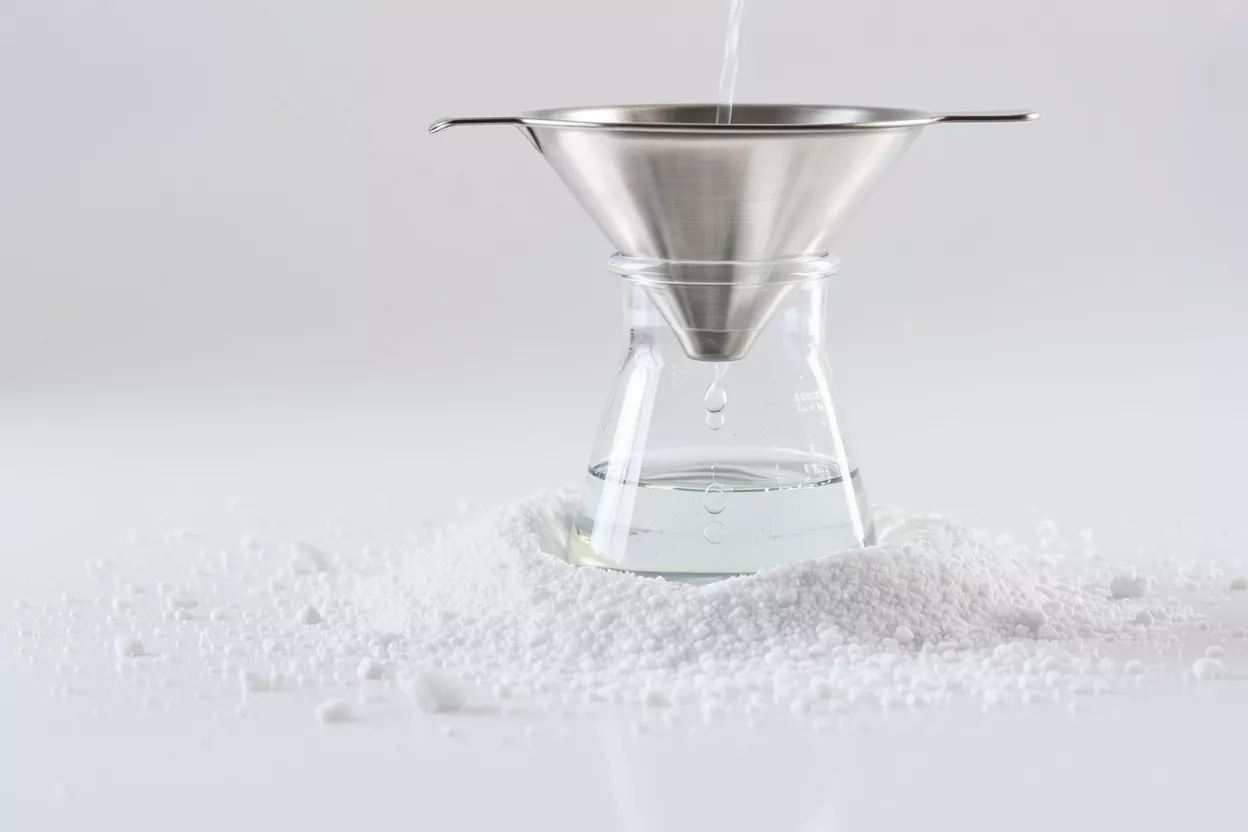
The appearance is distinctive. A finished isolate looks like a fine white crystalline powder or a slab of clear, brittle crystal, depending on how it was processed. It carries no smell and no taste, which is precisely the point: by removing the aromatic terpenes and plant compounds, manufacturers create a neutral, predictable building block.
Why purity matters to manufacturers: Isolate gives formulators a known quantity. When you start with a 99% pure ingredient, dosing becomes mathematical rather than approximate. That precision is the reason isolate underpins so many edibles, capsules, and beverages where consistency from one batch to the next is non-negotiable.
How Isolate Cannabis Is Made
Producing isolate is a multi-stage refinement process that begins with a crude cannabis or hemp extract and ends with a single, near-pure compound. The journey from raw plant to crystalline powder involves extraction, winterization, distillation, and finally crystallization — each step shedding more of the surrounding plant material.
Extraction comes first: Most producers start with a CO2 extraction or hydrocarbon process to pull cannabinoids and terpenes out of the plant. This yields a thick, dark crude oil that contains the target cannabinoid alongside fats, waxes, and chlorophyll that must be removed.
Winterization and distillation refine the crude: Winterization dissolves the extract in alcohol and chills it so unwanted fats and waxes precipitate out. The cleaned oil then passes through distillation, which separates compounds by boiling point. The final step — crystallization — coaxes the purified cannabinoid into solid crystals that are washed and dried into the finished isolate.
Types of Cannabis Isolate
Although the word isolate suggests a single product, the category covers several distinct cannabinoids that can each be refined to near-total purity. The market has expanded well beyond the original CBD powder, and today minor cannabinoids appear in isolate form as research and consumer interest grow.
Each isolate behaves the same way physically — an odourless, tasteless solid — but the compound inside determines its effects and legal status. Here are the forms you are most likely to encounter:
- 🧊 CBD isolate: The most common and widely available, prized for being non-intoxicating and easy to dose in wellness products.
- 🔬 THC isolate: Pure delta-9 crystalline, intoxicating and tightly regulated, used where precise psychoactive dosing is required.
- 🌿 CBG isolate: Refined CBG, the so-called mother cannabinoid, increasingly popular in targeted formulations.
- 💤 CBN isolate: Isolated CBN, often associated with rest and relaxation products.
The growing list reflects a broader trend in the industry: as analytical equipment improves, producers can isolate cannabinoids that were once too scarce or unstable to refine, giving formulators an expanding palette of single-compound ingredients.
CBD Isolate vs THC Isolate
The two most prominent isolates sit at opposite ends of the psychoactivity spectrum, and understanding that contrast is essential before choosing a product. CBD isolate is non-intoxicating, while THC isolate delivers the full psychoactive punch of pure delta-9 with no buffering compounds to soften it.
Legal status diverges sharply: In many jurisdictions, hemp-derived CBD isolate occupies a far more permissive legal space than THC isolate, which remains a controlled substance subject to strict cannabis regulations. This single distinction shapes where each product can be sold and how it must be labelled.
Use cases follow the effects: CBD isolate dominates daytime wellness products, sublingual oils, and topical formulations where users want potential benefits without impairment. THC isolate, by contrast, is reserved for formulators creating precisely dosed intoxicating edibles and tinctures, where the absence of terpenes lets the dose be controlled to the milligram.
Isolate Cannabis Purity and Testing
Purity is the entire value proposition of an isolate, which makes third-party laboratory testing indispensable. A reputable isolate arrives with a Certificate of Analysis confirming the cannabinoid percentage and screening for the contaminants that refinement is supposed to remove.
What a Certificate of Analysis confirms: A proper COA verifies the target cannabinoid sits at or above 99% and that residual solvents, pesticides, and heavy metals fall below safe thresholds. Without this paperwork, a buyer has no way to verify that the white powder in front of them is what the label claims.
Because isolate is so concentrated, even trace contamination becomes meaningful when the product is later diluted into thousands of doses. This is why serious manufacturers test at multiple stages — crude, distillate, and finished isolate — rather than relying on a single end-of-line result.
- ✅ Cannabinoid potency: Confirms the isolate meets the 99%+ purity claim on the label.
- 🧪 Residual solvents: Ensures extraction chemicals have been fully purged from the final crystal.
- 🛡️ Heavy metals and pesticides: Screens for contaminants drawn up from soil or applied to the crop.
- 🦠 Microbial screening: Verifies the product is free of mould, yeast, and harmful bacteria.
Isolate Cannabis Benefits
The appeal of isolate comes down to control. By stripping a cannabinoid down to its purest form, isolate removes the variables that make full-plant extracts harder to standardize, and that simplicity delivers several practical advantages for both makers and consumers.
Precise, repeatable dosing: When an ingredient is 99% pure, calculating a dose is straightforward arithmetic. A formulator who needs exactly 10 milligrams of a cannabinoid per gummy can rely on isolate to hit that number consistently, batch after batch, without the variability that terpene-rich extracts introduce.
No taste, no smell, no THC concerns: Because isolate is flavourless and odourless, it disappears into beverages, baked goods, and capsules without altering taste. CBD isolate in particular contains no detectable THC, making it the natural choice for anyone who must avoid the intoxicating cannabinoid entirely for personal or professional reasons.
How to Use Isolate Cannabis
One of isolate's strengths is its versatility. Because it is a neutral solid, it can be incorporated into nearly any delivery format, and the right method depends on how quickly you want effects and how precisely you want to measure your dose.
Making your own oils and edibles: Isolate dissolves readily into fats and oils, so a common approach is to stir a measured amount of CBD isolate into a carrier oil such as MCT or olive oil to create a custom-strength tincture. The same powder can be folded into edibles, letting home cooks control potency exactly.
Dabbing and direct methods: Some users vaporize or dab isolate crystals for fast-acting effects, often combining CBD isolate with terpenes to restore flavour and aroma. Others place a measured amount under the tongue for sublingual absorption. Whichever route you choose, a small digital scale is essential because the doses involved are measured in milligrams.
Isolate vs Full Spectrum and Broad Spectrum
Isolate sits at one end of a spectrum of extract types, and choosing between them means deciding how much of the plant you want to keep. Full spectrum retains the complete cannabinoid and terpene profile, broad spectrum keeps most of it minus THC, and isolate keeps only a single compound.
The entourage effect debate: Many researchers believe cannabinoids and terpenes work together synergistically — the so-called entourage effect. Full spectrum products preserve that interplay, which some users find more effective. Isolate deliberately sacrifices this potential synergy in exchange for purity and predictability.
Neither approach is universally better; they serve different priorities. The quick comparison below highlights where each option earns its place:
- 🌱 Full spectrum: All cannabinoids and terpenes including THC — best for those seeking the entourage effect.
- 🍃 Broad spectrum: Full plant profile minus THC — a middle ground for THC-free synergy.
- 💎 Isolate: A single cannabinoid at 99%+ purity — best for precise dosing and zero THC.
Isolate Cannabis Dosing Guide
Dosing isolate accurately is both its greatest advantage and its biggest responsibility. Because the powder is so concentrated, tiny differences in measurement translate to meaningful differences in dose, so a milligram-scale and a patient approach are the foundations of safe use.
Start low and go slow: Whether you are working with CBD or THC isolate, begin with the smallest reasonable amount and wait to assess the effect before increasing. With THC isolate especially, the absence of buffering compounds means a small dose can feel stronger than the equivalent amount from flower or full-spectrum extract.
Converting isolate into a usable product is straightforward once you know your target. A gram of isolate at 99% purity contains roughly 990 milligrams of active cannabinoid, so dividing that across your batch tells you exactly how much sits in each serving. Keep a simple record of what you measured and how it felt, and adjust from there rather than guessing.
Are Cannabis Isolates Safe?
When sourced responsibly, isolate is among the cleanest cannabis ingredients available, precisely because the refinement process removes contaminants along with everything else. Safety, however, hinges on sourcing from producers who test thoroughly and label honestly.
Sourcing from tested producers: The single most important safety factor is buying isolate accompanied by a current Certificate of Analysis from an accredited lab. Reputable suppliers make this documentation easy to find, and its absence is a clear warning sign regardless of how pure the powder looks.
Understanding potency risks: The flip side of purity is potency. Isolate's concentration makes accidental overconsumption easy if it is measured carelessly, particularly with intoxicating THC isolate. Storing it securely away from children and pets, and always weighing doses rather than estimating by eye, keeps that risk in check.
Isolate represents the most refined expression of the cannabis plant — a single cannabinoid distilled to near-perfect purity for those who value precision above all else. Whether you are a formulator building consistent products or an individual seeking flavourless, predictable dosing, understanding how isolate is made, tested, and used lets you take full advantage of what this remarkable ingredient offers while respecting its concentrated nature.