


Scrog
Master the SCROG method to maximize cannabis yields.
What Is SCROG in Cannabis Growing?
SCROG, short for "screen of green," is one of the most effective low-stress training methods in the cannabis grower's toolkit. At its core, the technique involves positioning a horizontal screen or net above your plants and weaving the branches through it as they grow. The result is a flat, even canopy where light reaches dozens of budding sites instead of being wasted on lower foliage and shaded interior growth. For growers chasing higher yields from a limited footprint, SCROG has become almost synonymous with efficiency.
The beauty of the method lies in its simplicity. You are not introducing exotic equipment or risky high-stress manipulation — you are simply guiding the plant to grow the way you want it to. By keeping the canopy level, every cola sits at roughly the same distance from your light source, which means uniform development and far less of the larf (loose, airy buds) that plague untrained plants.
SCROG works hand in hand with other training approaches and is especially popular among indoor growers working with photoperiod strains. Because you control when the plant transitions to flowering, you can dictate exactly how much of the screen gets filled before the stretch begins. That level of control is what separates a respectable harvest from an exceptional one.
How Does the SCROG Method Work?
The fundamental principle behind SCROG is light distribution. Cannabis plants left to their own devices grow in a Christmas-tree shape: one dominant central cola surrounded by progressively smaller, shaded side branches. Light intensity drops off dramatically as you move down the plant, so those lower branches produce thin, underdeveloped flowers. SCROG flips this dynamic by spreading the branches outward into a horizontal plane.
Breaking apical dominance: When you tuck branches under the screen rather than letting them shoot straight up, you suppress the plant's natural tendency to funnel energy into a single top. Hormones that would have fed one giant cola get redistributed across many growing tips. The result is a canopy of evenly sized colas, each receiving comparable light. This redistribution is the engine that drives SCROG's yield advantage.
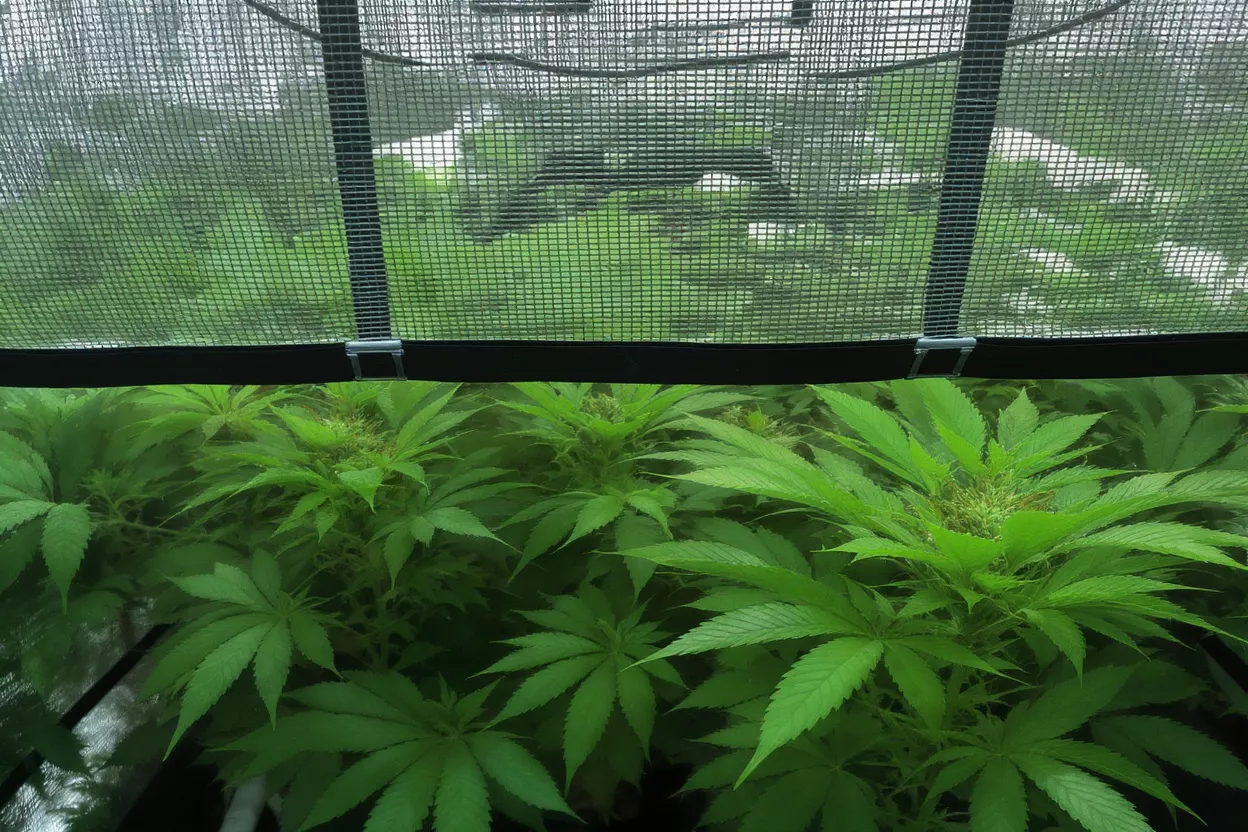
Filling the screen during veg: The work happens primarily in the vegetative stage. As shoots reach above the net, you gently bend them back down and weave them horizontally to an open square. Done consistently, this fills the screen with an even lattice of branches. Once roughly 70 to 80 percent of the screen is occupied, you flip your lights to a 12/12 schedule and let the flowering stretch finish filling the gaps.
SCROG vs SOG: What Is the Difference?
Newcomers frequently confuse SCROG with SOG, or "sea of green," because the acronyms look similar and both aim to maximize yield per square foot. The strategies, however, are nearly opposite in philosophy. SOG relies on growing many small plants packed tightly together, each flowered early so the collective canopy forms a dense "sea" of single colas. SCROG instead coaxes a small number of plants — sometimes just one — into filling the entire space.
When SOG makes sense: Sea of green rewards growers who can start large numbers of clones and want a fast turnaround. Because each plant spends little time in veg, harvest cycles come quickly. The trade-off is the need for more plants, which can be a legal or logistical headache depending on your jurisdiction and the plant counts you are permitted to keep.
SCROG, by contrast, is ideal when you are limited in plant numbers but generous on time. Many home growers in regions with strict plant-count rules turn to SCROG precisely because it extracts maximum production from a couple of well-trained plants. Here is how the two methods stack up at a glance:
- 🌱 Plant count: SOG uses many small plants; SCROG uses few large ones.
- ⏱️ Veg time: SOG keeps veg short; SCROG extends veg to fill the screen.
- 📏 Equipment: SCROG requires a horizontal screen; SOG generally does not.
- 🌿 Canopy shape: Both aim for flat and even, achieved through opposite means.
- ⚖️ Best for: SOG suits commercial speed; SCROG suits plant-limited home grows.
How to Set Up a SCROG Screen
Building a SCROG screen does not demand much. A simple frame of PVC pipe or wood strung with garden netting, trellis mesh, or even sturdy string is all most growers need. The standard guidance is to use square openings around two by two inches — large enough to weave branches through comfortably, small enough to provide real support as the colas gain weight later in flower.
Screen height matters: Mount the net roughly 20 to 30 centimeters above the top of your growing medium. Too low and you will not have room to tuck branches; too high and the plant stretches past the screen before you can train it. The ideal height depends on your strain's vigor and how long you intend to vegetate, so leave yourself flexibility if you are using an adjustable frame.
Stability is the other half of the equation. As flowers swell over the weeks, the combined weight pressing on the screen can be considerable, and a flimsy frame will sag right into your canopy. Anchor the screen securely to your tent poles or a freestanding structure. The goal is a taut, level plane that holds its shape from the first tuck to the final harvest.
Best Strains for the SCROG Technique
Not every plant responds equally well to a screen. The ideal SCROG candidate is a vigorous, stretchy plant that produces plenty of lateral branching and responds happily to bending. Sativa and sativa-dominant hybrids are classic choices because their long internodal spacing and enthusiastic stretch give you plenty of material to weave across the net.
Why indicas can struggle: Pure indica varieties tend to grow short and bushy with tight internodes, which gives you less length to manipulate across a wide screen. They can still be scrogged successfully, but you may need a smaller screen or more aggressive early training to spread them out. Hybrids that lean slightly sativa often hit the sweet spot of manageability and yield.
Avoid autoflowers when possible: Because autoflower plants begin flowering on a fixed timeline regardless of light schedule, you cannot extend their veg time to fill the screen. This makes them tricky SCROG subjects since you may run out of vegetative growth before the net is full. If you do scrog an autoflower, start training extremely early and keep the screen modest. Photoperiod strains remain the safer, more forgiving option.
SCROG Training Timeline From Veg to Flower
Timing is everything with SCROG, and the rhythm of the grow falls into clear phases. The early vegetative stage is when you establish structure, the late veg stage is when you fill the screen, and the flowering transition is when you stop training and let the plant finish. Understanding where you are in this arc keeps you from over- or under-filling your canopy.
A typical SCROG progression unfolds something like this:
- 🌱 Early veg: Top or pinch the plant once it has several nodes to encourage multiple main shoots.
- 🪢 Mid veg: Position the screen and begin tucking shoots horizontally as they breach the net.
- 📐 Late veg: Continue weaving until 70 to 80 percent of the screen is filled.
- 💡 Flip to flower: Switch to 12/12; expect the stretch to fill remaining gaps over two to three weeks.
- ✂️ Early flower: Make final tucks, then defoliate growth beneath the screen to focus energy upward.
The stretch window is critical: When you flip to flowering, most strains roughly double in height over the next few weeks. This is why you stop filling the screen at 70 to 80 percent rather than 100 — the stretch supplies the rest. Misjudge this and your canopy either ends up sparse or grows so far past the screen that it defeats the purpose of training in the first place.

SCROG Benefits for Yield and Light
The headline benefit of SCROG is yield, and the gains are real rather than marketing hype. By converting the plant from a single tall cola into a wide canopy of evenly lit bud sites, you dramatically increase the number of flowering tops exposed to optimal light intensity. More tops at the right light distance translates directly into more usable, dense flower at harvest.
Beyond raw weight, SCROG improves grow-space efficiency in ways that matter for indoor cultivators. A flat canopy lets you run your light closer and more uniformly, reducing the wasted light that spills around a Christmas-tree-shaped plant. It also improves airflow through the canopy, which lowers the risk of mold and bud rot in dense flowering colas.
- 📈 Higher yield per watt: Even canopies make far better use of every lumen your light produces.
- 🌬️ Better airflow: Spread branches reduce humidity pockets and the mold risk that follows.
- 🔦 Uniform light penetration: Colas sit at equal distance for consistent, even bud development.
- 🪴 Space efficiency: Maximizes production from limited grow tents and plant counts.
There is also a quality dimension that often gets overlooked. Because every bud site receives strong, consistent light, you get fewer of those wispy lower buds and more dense, fully developed flowers throughout the canopy. The harvest is not just bigger — it is more uniform and easier to trim.
Common SCROG Mistakes and How to Avoid Them
The most common error new growers make is flipping to flower too late or too early. Flip too early and the screen sits half empty, wasting potential canopy space. Flip too late and the stretch pushes branches well past the net, leaving you scrambling to retrain rapidly hardening stems. Patience and observation during the late veg window prevent both extremes.
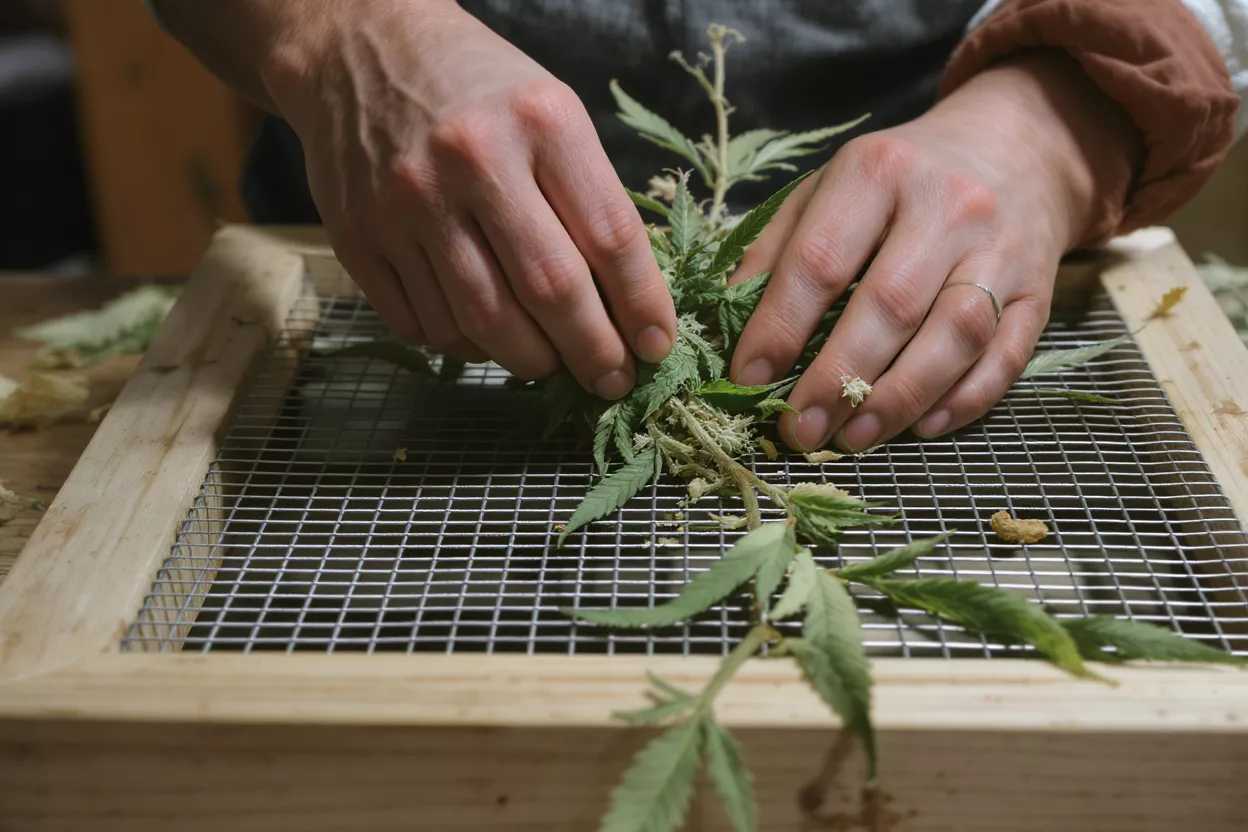
Damaging branches during the tuck: Cannabis stems are flexible but not infinitely so, especially as they mature and lignify. Tuck and weave while shoots are young and pliable. If a stem feels stiff, bend it gradually over several days rather than forcing it, or use the supercropping technique of gently crushing the inner fibers to make a bend safely.
Neglecting to defoliate: Once the canopy is established, growth beneath the screen contributes little but consumes energy and chokes airflow. Removing this lower foliage and the small shoots that will never reach the light — often called lollipopping — redirects the plant's resources into the productive colas sitting on top of the net. Skipping this step leaves you with airy popcorn buds underneath and a less efficient grow overall.
Is SCROG Better Indoors or Outdoors?
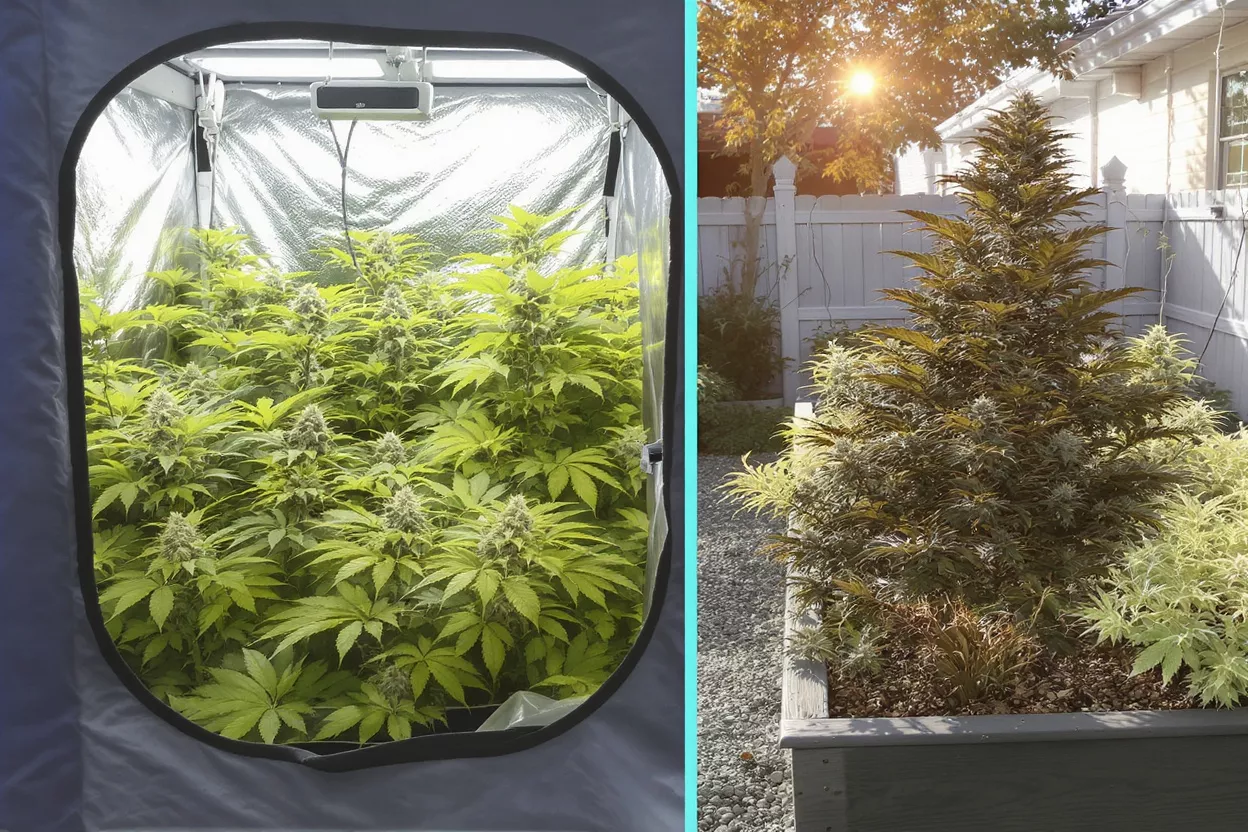
SCROG was born as an indoor technique, and that is still where it shines brightest. Indoor growers work with fixed light sources at fixed distances, so a flat, even canopy that keeps every cola at the optimal height pays immediate dividends. The controlled environment also lets you dial in the veg-to-flower transition precisely, which is the linchpin of good screen filling.
That said, SCROG can absolutely be adapted to outdoor and greenhouse grows. Outdoors, the screen serves a slightly different purpose: rather than chasing uniform distance from an artificial light, you are spreading the plant to capture more direct sunlight and to keep a large plant manageable and discreet. A horizontal screen can also help support heavy outdoor colas against wind and rain.
The main outdoor challenge is the lack of control over the flowering trigger. Because outdoor photoperiod plants flower according to the changing seasons, you have less ability to fine-tune when the stretch begins. Growers compensate by starting plants early in the season to allow ample veg time before the natural flowering signal arrives in late summer.
SCROG Tips for First-Time Growers
If this is your first attempt, start simple. Use a single plant and a modestly sized screen rather than trying to manage several plants under one net. Working with one specimen lets you learn how that strain responds to training without the added complexity of juggling multiple plants at different growth rates. Confidence built on a single successful run carries over to bigger setups.
Be consistent with daily tucks: SCROG rewards attention. A few minutes every day or two spent tucking new growth back under the screen produces a far better canopy than occasional heavy interventions. Little, frequent adjustments keep stems pliable and let you guide growth precisely. Think of it as gardening maintenance rather than a one-time chore.
Finally, keep a grow log. Note when you topped, when you placed the screen, when you flipped to flower, and how the stretch behaved for your particular strain. These records turn each grow into a learning experience, letting you refine your timing and screen height on the next round. SCROG is a skill that compounds, and the growers who keep notes improve fastest.
SCROG remains one of the most reliable ways to coax a heavier, more uniform harvest out of a limited space and a small number of plants. By spreading the canopy flat, breaking apical dominance, and timing the flip carefully, you transform an ordinary plant into a wide field of evenly lit, fully developed colas. Master the rhythm of tucking, weaving, and defoliating, and the screen of green technique will reward you with results that justify every minute of effort you put in.


Comments