

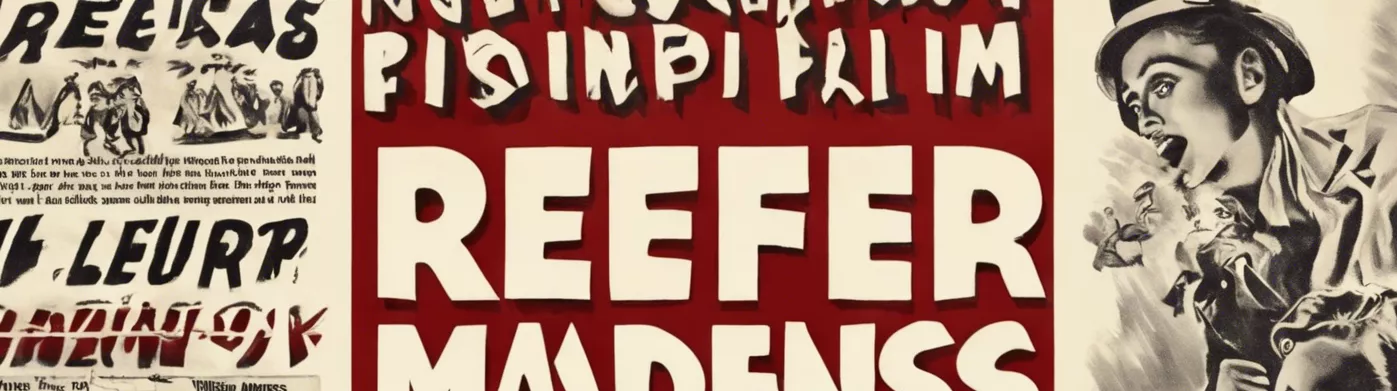
Reefer
Discover the history of reefer, the classic slang for a marijuana joint.
What Is Reefer? The Slang Term Explained
Few words in the lexicon of cannabis carry as much historical baggage as reefer. At its simplest, reefer is a vintage slang term for a hand-rolled marijuana cigarette — what most people today would call a joint. The word evokes smoky jazz clubs, sepia-toned newsreels, and a particular era of American anxiety about the plant. Yet beneath that nostalgic surface lies a tangled story of music, migration, prohibition, and prejudice that makes the term far more layered than it first appears.
To understand reefer is to understand a specific cultural moment. The word peaked in popularity during the 1920s through 1940s, a period when cannabis was transitioning from a relatively obscure substance into a national flashpoint. Reefer wasn't just a casual nickname — it became loaded with meaning, weaponized by moralists and embraced by subcultures in equal measure.
Reefer as a cultural artifact: Unlike clinical terms such as cannabis or the botanical name Cannabis sativa, reefer was always a street word. It belonged to the people who actually used the plant, not the scientists or legislators who debated it. That grassroots origin is precisely why the term feels so evocative today — it carries the texture of lived experience rather than the sterility of a dictionary entry.
Where Did the Word Reefer Come From?
The etymology of reefer is genuinely contested, and that ambiguity is part of what makes the word so interesting. The most widely cited theory traces it to the Spanish word grifa or grifo, slang used in Mexico for cannabis and, by extension, for someone intoxicated by it. As cannabis use spread northward across the border in the early twentieth century, the Anglicized pronunciation may have drifted toward "reefer."
Another popular explanation borrows from nautical language. On sailing ships, to "reef" a sail meant to roll it up tightly, and a "reefer" was the sailor tasked with that job. The visual parallel to a tightly rolled marijuana cigarette is obvious, and this maritime connection gave the word a ready-made logic that helped it spread among English speakers.
Multiple origins, one word: Linguists rarely agree on a single clean source for slang this old, and reefer is no exception. The truth is likely a convergence — a Spanish-influenced term landing on ears already primed by the nautical "reefer," producing a word that felt intuitive from several directions at once. This kind of overlapping etymology is common with terms that emerge from oral culture rather than written record.
- 🌿 Spanish origin theory: Derived from grifa/grifo, Mexican slang for cannabis and intoxication.
- ⚓ Nautical origin theory: From "reefing" a sail — rolling it tightly, mirroring a rolled cigarette.
- 🗣️ Oral convergence: Likely a blend of influences cemented through spoken subculture, not a single documented source.
Reefer and the Jazz Age Connection
No discussion of reefer is complete without the jazz musicians who made it part of their world. During the 1920s and 1930s, cannabis became closely associated with the jazz scene, particularly in cities like New Orleans, Chicago, and Harlem. Musicians valued the way it seemed to alter their perception of time and rhythm, and the word reefer threaded its way through their songs, their slang, and their reputations.
Performers like Louis Armstrong were famously open about their use, treating reefer as an ordinary part of the creative life rather than a vice to be hidden. The substance became woven into the fabric of an entire genre — referenced in lyrics, celebrated in "viper songs," and traded backstage as casually as cigarettes.
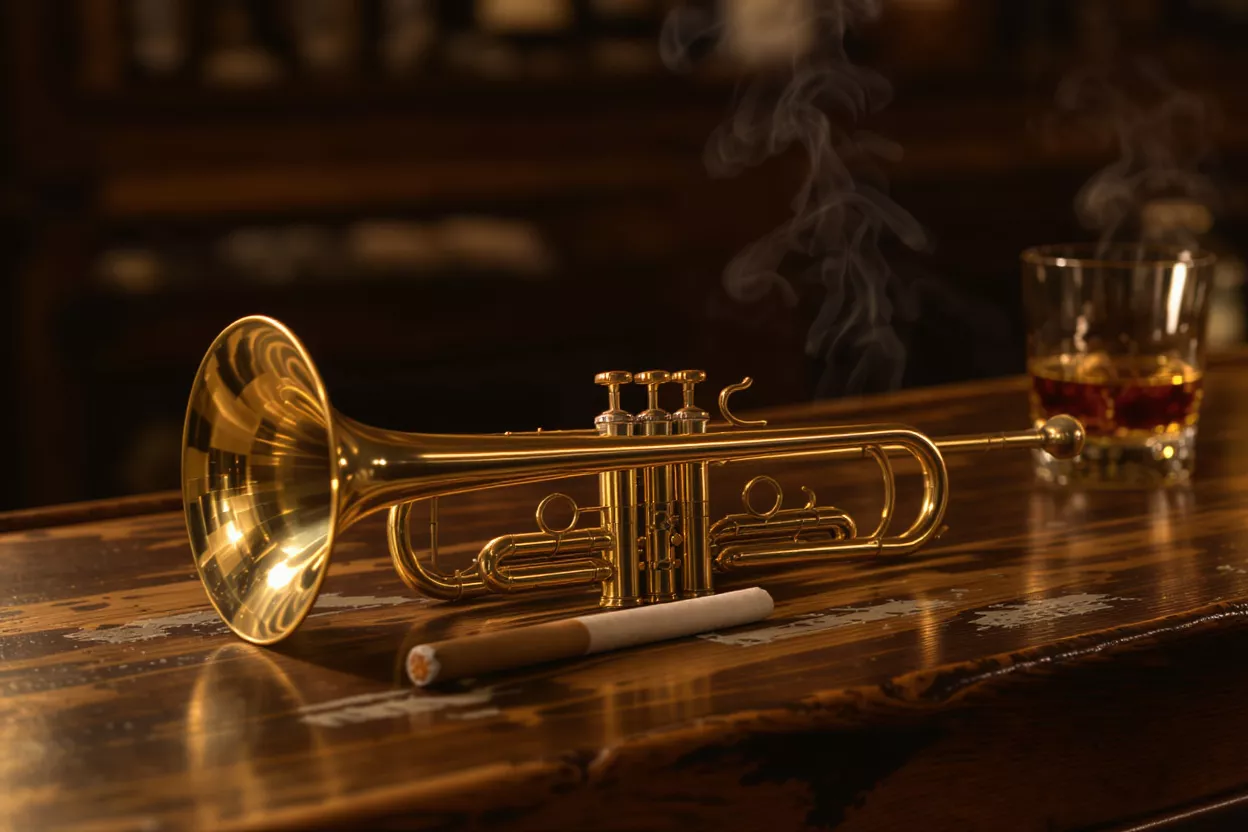
Music as cultural transmission: The jazz connection mattered because music traveled. As records and radio carried jazz across the country, the slang traveled with it, embedding reefer into the broader American vocabulary. This is also where the word began to acquire its racial associations, as the predominantly Black jazz scene became a target for those who feared both the music and its messengers.
Reefer Madness and Prohibition Propaganda
If one piece of media defines the public memory of reefer, it is the 1936 film Reefer Madness. Originally produced as a church-funded morality picture and later recut for exploitation theaters, the film depicted cannabis as a one-way ticket to insanity, violence, and ruin. Its hysterical tone — wholesome teenagers descending into madness after a single puff — was meant to terrify, and for a time it succeeded.
The film arrived during a coordinated campaign against cannabis spearheaded by Harry Anslinger and the Federal Bureau of Narcotics. Anslinger understood the power of language, and the word reefer became a rhetorical tool. By using exotic, alarming slang rather than neutral botanical terms, prohibitionists framed the plant as foreign, dangerous, and corrupting.
The cruel irony is that Reefer Madness eventually became a cult comedy. Beginning in the 1970s, college audiences rediscovered the film and howled at its absurd claims, turning a propaganda piece into an unintentional satire of itself. Today it stands as a monument to how fear can distort science — and how badly that fear aged.
The Contentious Racial Undertones of Reefer
It is impossible to discuss reefer honestly without confronting its racial history. The anti-cannabis movement of the early twentieth century leaned heavily on xenophobia, deliberately linking the plant to Mexican immigrants and Black jazz culture to stoke fear among white Americans. The very foreignness of words like reefer and marijuana was exploited to make the substance seem threatening.
Anslinger and his contemporaries made explicitly racist arguments in public testimony, claiming the plant drove minorities to violence and seduced white youth. This rhetoric wasn't incidental — it was strategic, designed to attach an existing prejudice to a new target. The slang itself became a vehicle for that prejudice.
Why the history still matters: Understanding this context is essential to using the term thoughtfully today. The disproportionate enforcement of cannabis laws against communities of color is a direct descendant of this era. When we trace the word reefer back to its roots, we're also tracing the origins of policies whose consequences are still being unwound through modern legalization and social-equity efforts.
How Reefer Differs From Modern Cannabis Slang
The vocabulary of cannabis is constantly evolving, and reefer occupies a distinctly retro corner of it. Where modern consumers might reach for "flower," "bud," or simply "weed," reefer feels deliberately old-fashioned — almost theatrical. It signals a connection to a particular historical period rather than describing a product in any technical sense.
Part of the difference is precision. Contemporary terms often distinguish between forms and formats: a pre-roll is professionally manufactured, an edible is ingested, a concentrate is dabbed. Reefer makes none of these distinctions. It simply means a marijuana cigarette, full stop, reflecting an era when there was far less variety to describe.
Modern slang also tends to be less politically charged. Where reefer carries the weight of prohibition and propaganda, today's casual terms are largely neutral, shaped by a culture that increasingly treats cannabis as a normal consumer product.
- 🕰️ Reefer: Vintage, evocative, historically loaded — refers specifically to a rolled marijuana cigarette.
- 🌱 Flower/Bud: Modern, neutral terms for the smokable plant material itself.
- 📦 Pre-roll: A precise, commercial term for a professionally rolled product sold in dispensaries.
- 💨 Weed: The dominant casual term today, broadly neutral and widely understood.
Is the Word Reefer Still Used Today?
Reefer still circulates, but mostly with a wink. Few people use it as a sincere, everyday term the way one might say "weed" or "flower." Instead, it tends to appear ironically, nostalgically, or as a deliberate nod to cannabis history. The word has shifted from functional slang into something closer to a cultural reference.
You'll encounter reefer most often in branding, music, and media that want to evoke a particular vintage aesthetic. Cannabis companies sometimes lean on the term precisely because of its retro charm, using it to signal heritage or a playful relationship with the plant's complicated past.
Generational divide: Older generations may still use reefer with genuine familiarity, having grown up when it was current. Younger consumers tend to recognize it primarily through pop culture — old films, classic songs, or knowing references in modern media. This split is itself a small window into how cannabis language migrates across decades.
Reefer in Music and Pop Culture
The word reefer has enjoyed a long and colorful career in entertainment. From the "viper" jazz songs of the 1930s — tracks like "Reefer Man" and "If You're a Viper" — to its revival in later decades, the term has been a recurring fixture whenever artists wanted to reference cannabis with a certain knowing flair.
Film and television have kept the word alive as well. Reefer Madness spawned a 2005 musical comedy remake, signaling that the original's reputation had fully completed its journey from earnest scare-piece to beloved camp. Each new reference layers fresh irony onto a word that started as a sincere term and became a cultural in-joke.

Why pop culture preserved it: Language usually discards old slang, yet reefer survives because it's useful as shorthand for an entire historical mood. Writers and musicians reach for it when they want to summon the jazz age, prohibition hysteria, or a deliberately dated vibe. That symbolic utility has given the word a far longer life than most slang enjoys.
Reefer vs Joint: What's the Difference?
Functionally, reefer and joint describe the same thing: cannabis rolled in paper for smoking. The difference is entirely one of register and era. "Joint" emerged as the dominant term in the latter half of the twentieth century and remains the standard word today, while reefer feels like its older, more theatrical ancestor.
The distinction matters mostly for tone. Calling something a joint is matter-of-fact; calling it a reefer is a stylistic choice that signals either age, irony, or affection for the past. Both refer to the same simple object — ground flower wrapped in rolling paper — but they carry entirely different cultural connotations.
It's worth noting how many synonyms exist for this single item. Spliff, doobie, jay, and others all crowd the same conceptual space, each marking a slightly different subculture or decade. Reefer is simply the elder statesman of the group, the term that predates and outlasts many of its successors.
Reefer Terminology: Key Takeaways
Reefer is far more than a quaint nickname for a marijuana cigarette. It is a linguistic time capsule, preserving the music, fears, and prejudices of an entire era within a single two-syllable word. Tracing its path from Spanish slang and nautical jargon through the jazz clubs of Harlem and the propaganda reels of the 1930s reveals how deeply language and history intertwine.
Today the word survives mostly as a cultural reference — a wink toward the past that cannabis culture has largely reclaimed with humor and pride. Yet its darker associations with prohibition-era racism remain an important reminder of why we should understand the words we use, not just repeat them. The story of reefer is, in miniature, the story of cannabis in America: misunderstood, mythologized, and slowly being reexamined with fresh eyes.
The next time you hear someone say reefer, you'll know it carries far more than its dictionary meaning. It holds a century of music, fear, resilience, and cultural transformation — a small word with an outsized story worth remembering.





Comments