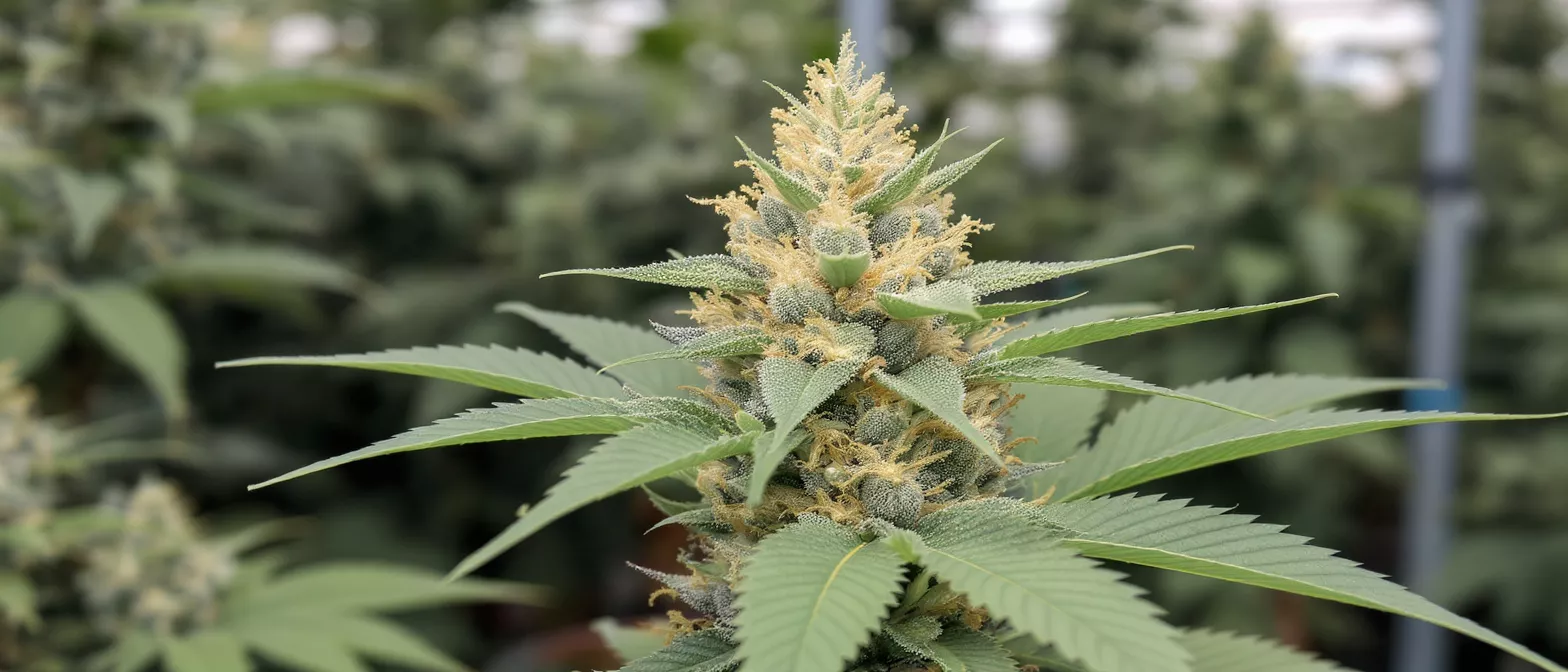
cannabis anthers
Learn what cannabis anthers are, how they develop, and why they matter.
What Are Cannabis Anthers
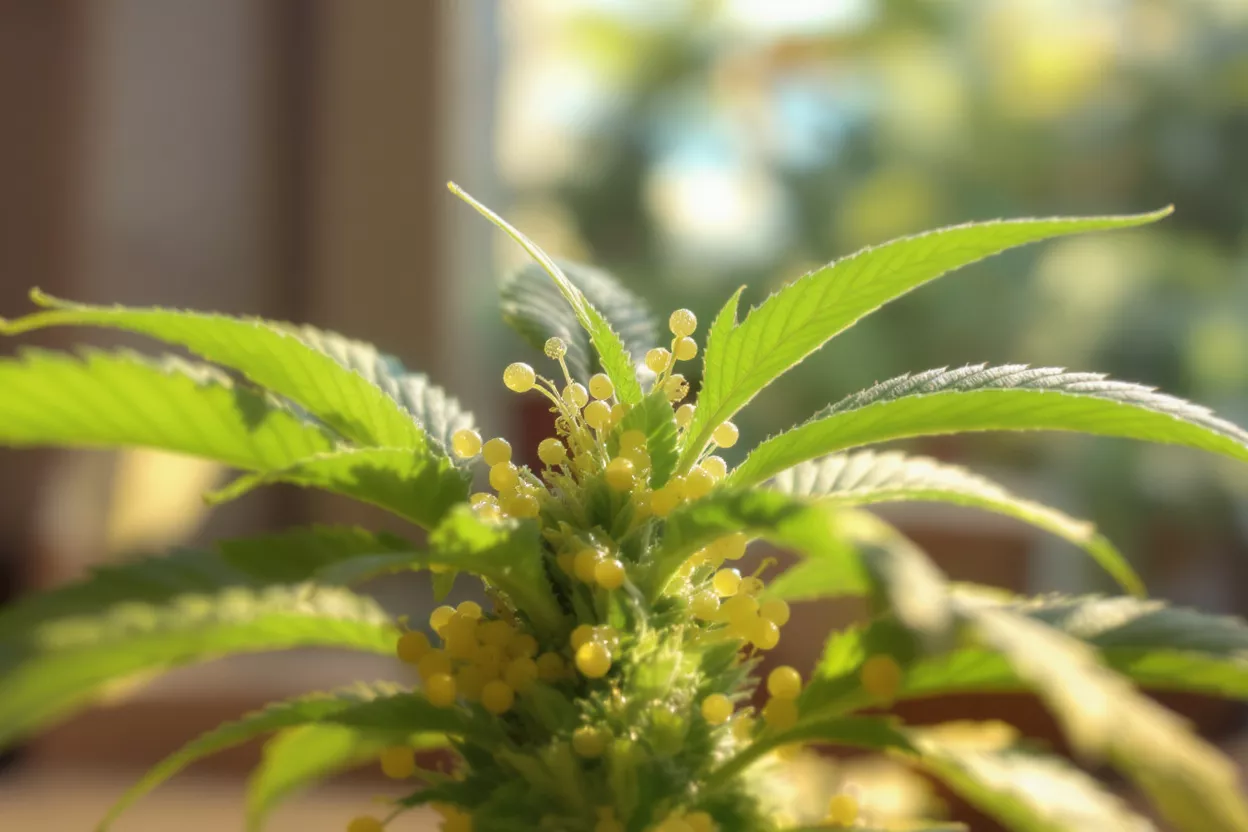
Cannabis anthers are the pollen-bearing structures of a male cannabis plant, and understanding them is one of the most practical skills a cultivator can develop. Each anther is a small, sac-like organ that matures, splits open, and releases the fine yellow pollen responsible for fertilizing female flowers. To the naked eye, a cluster of cannabis anthers looks a bit like a tiny bunch of pale bananas or grapes dangling from a node, which is exactly why experienced growers learn to spot them fast.
The reason anthers carry so much weight in a grow room comes down to a single fact: pollen drift. Once cannabis anthers dehisce and shed their contents, that pollen can travel on the slightest air current and pollinate every female plant nearby. For anyone growing seedless flower, that is the difference between dense, resinous buds and a crop riddled with seeds.
Botanically, the anther sits atop a thin filament, and together they form the stamen — the male reproductive unit. While the term sounds clinical, the concept is straightforward, and according to RxList, the same reproductive anatomy appears across countless flowering plants, with cannabis simply being one of the more economically scrutinized examples.
How Cannabis Anthers Develop on the Plant
The pre-flower stage: Cannabis anthers do not appear overnight. They begin as tiny pollen sacs that form at the nodes during early flowering, looking initially like small spade-shaped or rounded green balls. As the plant matures, these sacs swell, elongate, and eventually open into the recognizable anther clusters. Catching them in the pre-flower stage gives a grower the widest window to act.
Temperature, light cycle, and genetics all influence how quickly anthers mature. Plants under stress — heat spikes, light leaks, or interrupted dark periods — often rush toward reproduction, pushing anthers out earlier than a healthy, stable plant would. A reliable grow tent thermometer hygrometer helps you keep those variables in check so your plants are not triggered into premature male development.
Once the sacs split, dehiscence happens quickly. A single mature cluster can release thousands of pollen grains within hours of opening, and warm, dry conditions accelerate the process. This is why daily inspection during weeks three through five of flowering pays off so handsomely for growers chasing seedless harvests.
Cannabis Anthers vs Female Flowers
Telling males from females: The single most valuable distinction in a cannabis garden is the difference between male anthers and female pistils. Female flowers produce slender white or cream hairs called pistils, which emerge in pairs from a teardrop-shaped calyx. Male anthers, by contrast, form in grape-like bundles with no hairs at all. Once you have seen both side by side, the distinction becomes second nature.
Female plants are the prize for most growers because their flowers carry the bulk of the cannabinoids and aromatic compounds. The female calyx develops sticky trichomes loaded with THC, CBD, and minor cannabinoids like CBG, CBN, and the precursor acids CBGA and CBLA. Male plants concentrate their energy on pollen production instead, which is why their anthers dominate the flowering nodes.
Here is a quick visual comparison to keep in your back pocket when scouting plants:
- 🔬 Anthers (male): Pale yellow-green clusters resembling tiny bananas or grapes, no hairs, hang downward from nodes.
- 🌸 Pistils (female): Fine white hairs emerging in pairs from a swollen teardrop calyx.
- ⚠️ Hermaphrodite: Female-looking plant that also pushes out stray anthers, often banana-shaped.
- 🕒 Timing: Both reveal their sex during the first one to three weeks of the flowering stretch.
How to Identify Cannabis Anthers Early
Where to look first: Cannabis anthers tend to show up at the nodes — the junctions where branches meet the main stem. Early on, before they open, they appear as small clustered balls rather than the elongated open anthers you see later. A handheld loupe or a jeweler's magnifying loupe makes this inspection far easier, letting you confirm sex before the plant commits resources to pollen.
Lighting matters when scouting. Inspect under bright, neutral light and rotate the plant so you can see each node from multiple angles. Early pollen sacs are smooth and rounded, lacking the wispy hairs that signal female pistils. The earlier you confirm what you are looking at, the more options you keep open — culling, isolating, or breeding deliberately.
Stress-induced anthers can hide low on the plant or tucked behind fan leaves, so do not limit your search to the canopy. Healthline-style wellness guides and horticultural references alike emphasize consistent, methodical inspection, and RxList notes that plant reproductive cues are often subtle until they suddenly are not. Daily checks turn a potential disaster into a five-minute routine.
Why Cannabis Anthers Matter for Growers
The seedless flower equation: The vast majority of premium cannabis flower is sinsemilla — Spanish for "without seed." Unfertilized female plants keep channeling energy into trichome and cannabinoid production rather than seed formation, yielding the dense, frosty buds the market rewards. A single overlooked cluster of cannabis anthers can pollinate an entire room and quietly compromise weeks of careful work.
Seeds also degrade the smoking experience. Pre-rolls and chillum bowls packed with seedy flower pop, crackle, and burn unevenly, which is why anyone rolling cigarette style pre rolls wants seedless material. Whether you favor a classic chillum or modern cigarette style pre rolls, the quality of the starting flower traces directly back to whether stray anthers were caught in time.
For commercial operations, the financial stakes are enormous. A pollinated crop can lose a substantial portion of its market value, and cleanup is labor-intensive. This is why disciplined growers treat anther scouting as non-negotiable, often deploying a dedicated handheld digital microscope to confirm plant sex with certainty before problems spread.
Cannabis Anthers and Pollination Explained
How pollen reaches the pistil: Pollination is elegantly simple in cannabis. When an anther dehisces, it releases dry, lightweight pollen that drifts through the air until it contacts a receptive female pistil. The pollen grain then germinates, sends a tube down through the pistil into the ovule, and fertilization produces a seed. The whole sequence can unfold within a single day under the right conditions.
Cannabis is wind-pollinated, meaning it relies on air movement rather than insects. This is precisely why a single anther releasing pollen indoors is so dangerous — circulation fans, the very tools that keep a canopy healthy, also become highly efficient pollen distributors. According to RxList, wind-pollinated plants typically produce vast quantities of lightweight pollen precisely to overcome the randomness of air dispersal.
Understanding this mechanism shapes good practice. If you spot open anthers, kill airflow in that zone immediately, isolate the plant, and consider a gentle water mist to weigh down loose pollen before removal. Acting on the pollination pathway directly is far more effective than reacting after the fact.
Hermaphrodite Plants and Banana Anthers
When females grow anthers: The most frustrating anthers are the ones that appear on otherwise female plants. Hermaphroditism causes a genetically female plant to push out male anthers, often as bright yellow, banana-shaped structures emerging directly from the buds. Because they self-pollinate, even one banana anther can seed nearby colas before you notice anything is wrong.
Stress is the usual trigger. Light leaks during the dark cycle, extreme temperatures, nutrient swings, and physical damage all nudge a plant toward this survival response. Some genetics are simply more prone to it than others, which is why reputable seed stock and a stable environment are your first lines of defense. Keeping a stable canopy with a quality light leak proof grow tent dramatically reduces the odds.
If you find banana anthers, assess the severity. A single late-flowering banana on a nearly finished plant may produce only a handful of seeds, whereas early, widespread bananas signal a plant best removed. The terms growers use are colorful — some call a seeded plant "cherried" out — but the underlying principle is consistent: catch it early, act decisively.
Managing Cannabis Anthers in the Garden
Prevention beats cure: The best anther management strategy is environmental discipline. Stable temperatures, an uninterrupted dark cycle, clean nutrient routines, and reputable feminized or known genetics eliminate the majority of unexpected male and hermaphrodite expression before it starts. A calm, consistent grow space simply produces fewer surprises.
When you do find anthers, your response depends on the plant's role. A confirmed male in a seedless grow should be removed cleanly — ideally bagged before it leaves the room to contain any loose pollen. Move slowly and avoid jostling, since rough handling can rupture mature sacs and broadcast pollen everywhere.
Keep a simple action checklist near your grow space so decisions are quick under pressure:
- 🔍 Inspect daily: Check nodes and bud sites every day from week three of flowering.
- 🚫 Kill airflow: Shut off fans in the affected zone the moment you spot open anthers.
- 💧 Mist gently: A light water spray weighs down loose pollen before you remove the plant.
- 🛍️ Bag and remove: Enclose the plant in a bag before transporting it out of the room.
- 🧼 Clean surfaces: Wipe down nearby gear to clear any stray pollen grains.
Cannabis Anthers in Breeding and Seed Production
Anthers as a deliberate tool: For breeders, cannabis anthers are not a threat — they are the entire point. Producing seeds means deliberately collecting pollen from a selected male's anthers and applying it to chosen female flowers. This controlled cross is how new cultivars emerge and how growers preserve genetics they value. The same structure that ruins a sinsemilla crop becomes the foundation of a breeding program.
Collecting pollen is methodical work. Breeders isolate a male, allow its anthers to mature and open, then capture the pollen on parchment or in a clean container. Stored cool and dry, viable pollen can keep for months, letting a breeder pollinate selectively across multiple plants and timelines. Patience and cleanliness define success here.
Beyond simple crosses, anthers play into advanced techniques. Growers sometimes induce a female to produce pollen-bearing anthers chemically, creating feminized seeds that inherit only female chromosomes. According to RxList, manipulating plant reproductive hormones is a well-documented horticultural practice, and cannabis breeders apply these principles with remarkable precision to lock in desirable traits like aroma, potency, and resistance to stress.
Cannabis Anthers FAQs for New Growers
Can anthers appear after flowering starts? Yes. Anthers most commonly reveal themselves in the first weeks of flower, but stress-induced and hermaphroditic anthers can surface much later, sometimes even in the final stretch before harvest. This is exactly why late-flower inspection remains important even when a plant has looked female the whole way through.
New growers often ask whether a few anthers ruin everything. The honest answer is nuanced — a single, isolated banana caught immediately may cost you only a seed or two, while open male sacs releasing clouds of pollen can compromise a room. Severity, timing, and your reaction speed determine the outcome more than the mere presence of an anther.
Cannabis anthers ultimately reward the attentive grower and punish the complacent one. Learning to recognize them early, understanding the pollination pathway, and responding with calm discipline transforms them from a looming threat into a manageable, even useful, part of cultivation. Whether your goal is flawless seedless flower or a deliberate breeding cross, mastery of anthers is a cornerstone skill — and like learning to spot trichomes or read a plant's overall health, it only gets easier with practice.