Red eye
Learn why cannabis causes red eye, how long it lasts, and how to get rid of it fast.
What Is Red Eye From Cannabis
Red eye is one of the most universally recognized signs that someone has been using cannabis, and it shows up regardless of whether you smoked a joint, hit a vape, or worked through an edible. The telltale bloodshot look comes from the eyes' surface blood vessels widening and filling with blood, giving the white of the eye that distinctive pink or crimson tint. It is so closely associated with getting high that it has become cultural shorthand, immortalized in slang and even product names.
What many people do not realize is that red eye has very little to do with the smoke itself. You can experience the same effect from an edible, a tincture, or any other consumption method that delivers a meaningful dose of THC. That distinction matters because it tells us the cause is internal and pharmacological rather than simple irritation from inhaling combusted plant matter.
Red eye as a dosage signal: Many seasoned users treat the intensity of their red eye as a rough gauge of how much THC is circulating in their system. While it is far from a precise measurement, a deeper red often correlates with a stronger dose. According to Cannigma, the redness is a direct vascular response to cannabinoids rather than evidence of any harm being done to the eye itself, which is why it fades on its own without intervention.
Why Does Weed Cause Red Eye
The short answer is blood pressure and blood vessels. When THC enters your bloodstream, it triggers a temporary drop in blood pressure throughout the body. In response, blood vessels and capillaries dilate, or expand, to compensate. The tiny vessels covering the surface of your eyes are no exception, and as they widen they become more visible, producing that classic bloodshot appearance.
The dry, smoky myth: A common misconception holds that red eye is simply caused by smoke wafting into your eyes and irritating them. While smoke can certainly add some irritation, it is not the underlying mechanism. Edibles and tinctures that never come near your eyes produce the exact same redness, which proves the effect is systemic. If smoke were the cause, dabbing from an e-rig or e-nail would produce far less red eye than a joint, and that is not what users report.
This vascular response is also why caffeine, alcohol, and certain medications can produce bloodshot eyes through similar pathways. The eyes are simply a visible window into what your circulatory system is doing in response to a substance. THC just happens to be especially good at triggering this dilation at recreational doses.
How THC Affects Blood Vessels in the Eyes
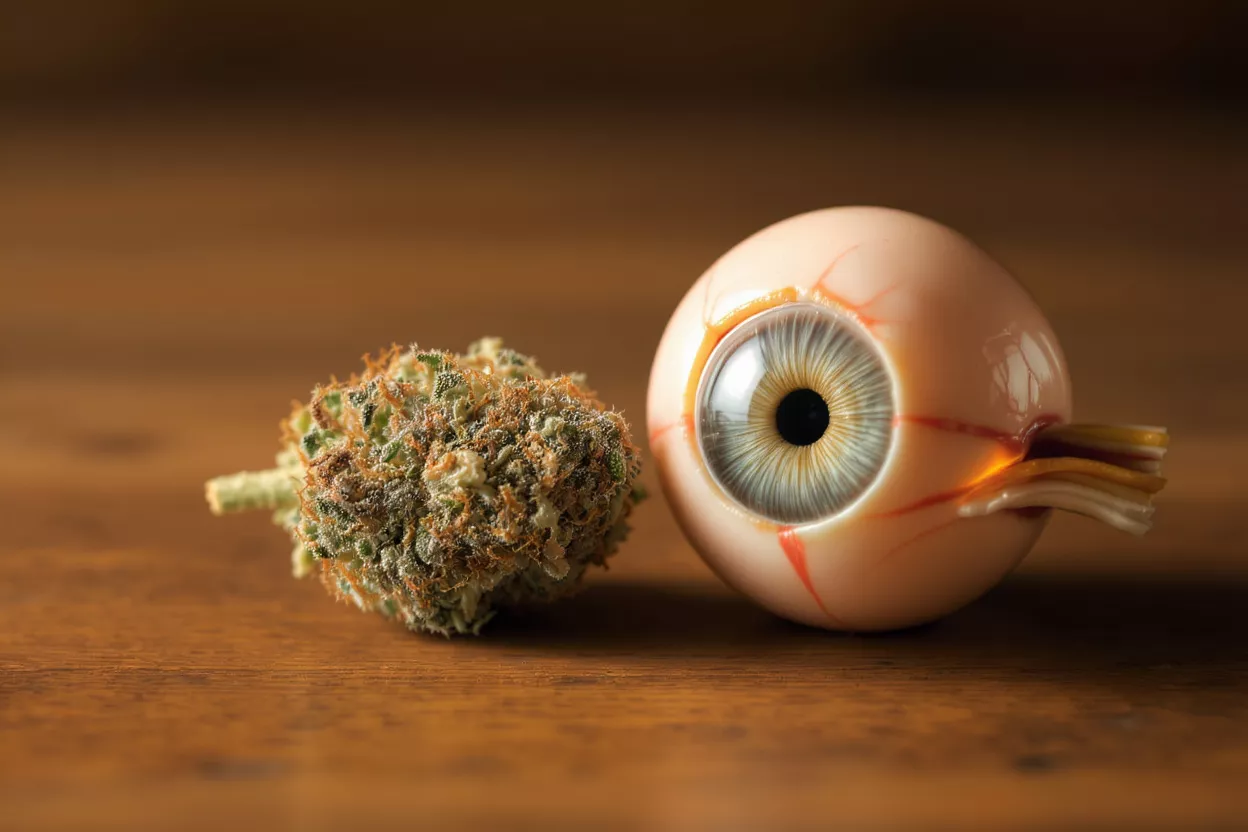
To understand red eye fully, it helps to know a little about how cannabinoids interact with your cardiovascular system. THC binds to receptors throughout the body, including those that help regulate vascular tone. When stimulated, these receptors prompt blood vessels to relax and expand, a process called vasodilation. The conjunctival vessels on the eye's surface are particularly fine and numerous, so even modest dilation becomes immediately noticeable.
The same vasodilation responsible for red eye also explains the slight drop in intraocular pressure that cannabis produces. This is a measurable physiological effect, not a coincidence, and it has been the subject of decades of medical research. A quality soothing eye drops product can counteract the surface redness without affecting any of these deeper processes.
Why some people turn redder than others: Genetics, hydration, sleep, and individual sensitivity to THC all play a role in how pronounced your red eye becomes. People with naturally prominent surface vessels or lighter eye coloring often show redness more dramatically. Someone could feel intensely high yet show almost no redness, while another person feels mildly buzzed with strikingly bloodshot eyes. The variability is completely normal and is not a sign of anything wrong.
How Long Does Red Eye Last After Smoking
For most people, red eye peaks roughly ten to fifteen minutes after the THC reaches peak concentration in the blood and then gradually subsides as the high wears off. With inhaled cannabis, that usually means redness fades within a couple of hours. With an edible, the timeline stretches considerably because edibles take longer to peak and longer to clear, sometimes leaving eyes pink for four to six hours or more.
Edible timing and the edible hangover: Because edibles are metabolized through the liver into a longer-lasting compound, the associated red eye tends to linger well past the point an inhaled dose would have cleared. This extended timeline is part of the broader edible hangover some users describe the next morning, where mild grogginess and lingering effects persist. Staying hydrated through this window noticeably helps your eyes recover faster.
The good news is that red eye is entirely self-limiting. You do not need to do anything at all for it to resolve, and there are no lasting effects on your vision or eye health. According to Cannigma, the redness simply tracks the presence of active cannabinoids and disappears as they are metabolized and cleared from your system.

Does CBD Cause Red Eye Too
This is where the conversation gets interesting. Pure CBD does not appear to cause red eye the way THC does, because it does not produce the same drop in blood pressure or the same vasodilation in the eyes. If you are using a CBD-only product and notice no bloodshot eyes, that is entirely expected and consistent with how the cannabinoid behaves.
However, many full-spectrum CBD products contain trace amounts of THC, and high enough doses could theoretically contribute a faint redness. Most users of CBD elixirs and tinctures report no eye effects whatsoever, which is one of the practical ways people distinguish between the two cannabinoids in everyday use.
What about Delta-8 and Delta-10: The newer cannabinoids like Delta-8 and Delta-10 are chemically similar to traditional Delta-9 THC and engage the same receptors, just more mildly. Because they share that mechanism, they can absolutely produce red eye, though often to a lesser degree at comparable doses. Users who switch from Delta-9 to Delta-8 frequently note their eyes are a bit less bloodshot, which fits the milder pharmacological profile of those compounds.
How to Get Rid of Red Eye Fast
If you need to clear up red eye quickly, the most direct solution is an over-the-counter redness-relief eye drop that constricts surface blood vessels. These work by reversing the vasodilation locally, narrowing the conjunctival vessels and restoring the white of your eye within minutes. They treat the appearance, not the cause, but for most situations that is exactly what you want.
Beyond drops, there are several practical strategies that help your eyes recover or mask the redness while you wait it out:
- 💧 Hydrate generously: Drinking water supports your circulation and helps your body process THC faster, which shortens the red-eye window.
- 🧊 Cold compress: Applying something cool to closed eyes encourages the surface vessels to constrict and reduces visible redness.
- 👓 Sunglasses: The simplest cosmetic fix when you just need to be presentable in public for a short while.
- 😴 Rest and wait: Red eye is self-limiting, so time alone resolves it completely without any product at all.
- ☕ Avoid stacking irritants: Skip additional smoke, dry air, or screen strain that can compound surface irritation.
A reliable bottle of redness-relief drops is worth keeping in your dugout or bag if you value discretion, since it gives you on-demand control over one of cannabis's most obvious tells.

Do Certain Strains Cause More Red Eye
Strain choice influences red eye mostly through THC potency rather than any specific strain-by-strain magic. A high-test flower from your dispensary will produce more dramatic redness than a low-potency option, simply because there is more THC driving the vasodilation. So a dank, top-shelf cultivar is more likely to leave you bloodshot than a mild one.
Potency over genetics: Whether you reach for a famous Diesel cut, a fruity hybrid, or something rich in concentrate form like Diamonds, the deciding factor is how much THC actually ends up in your bloodstream. Concentrates and dabs, with their high cannabinoid loads, frequently produce more pronounced red eye than a comparable amount of flower for exactly this reason.
That said, individual body chemistry still rules the outcome. Two people smoking the same eighth of the same strain can show wildly different levels of redness based on their personal sensitivity, hydration, and vascular makeup. There is no single strain that reliably eliminates red eye for everyone, though lower-THC and balanced-ratio options tend to be gentler across the board.
Red Eye and the Glaucoma Connection
One of the most fascinating angles on cannabis and eyes is the longstanding research into glaucoma. The same vasodilation and pressure changes that produce red eye also temporarily lower intraocular pressure, the buildup of which is the central problem in glaucoma. This connection drove decades of scientific interest and remains one of the earliest recognized medical applications of cannabis.
Why it never became a standard treatment: Despite the genuine pressure-lowering effect, the relief is short-lived, lasting only a few hours per dose. To maintain therapeutic pressure reduction around the clock, a patient would need to be continuously medicated, which is impractical and carries its own risks. According to Cannigma, modern glaucoma medications manage pressure far more reliably and consistently than cannabis ever could.
Still, the link is a useful reminder that red eye is a window into real physiological activity. The bloodshot appearance and the pressure drop are two visible faces of the same vascular response, which is part of why cannabis and ophthalmology have such a long, intertwined history.

Is Red Eye Dangerous or Just Cosmetic
For the overwhelming majority of users, red eye is purely cosmetic and completely harmless. It causes no damage to the eye, does not affect your vision, and resolves entirely on its own. There is no evidence that repeated episodes of cannabis-related red eye lead to any long-term ocular problems, so the worst consequence is usually just looking obviously high.
That said, it is worth distinguishing ordinary red eye from genuine eye problems. If your eyes are painful, itchy, producing discharge, or accompanied by changes in vision, those are signs of something other than simple cannabinoid vasodilation and deserve attention from a professional. Cannabis red eye is painless and symmetrical, never sore or oozing.
People with certain cardiovascular conditions should be mindful that the same blood pressure changes producing red eye are happening throughout the body. While the eye effects are trivial, the underlying vascular response is real, so anyone with heart concerns should approach high doses thoughtfully and consult their doctor about cannabis use. For most healthy adults, though, bloodshot eyes are simply a harmless quirk of the experience.
Preventing Red Eye Before It Starts
If avoiding red eye matters to you, the most effective prevention strategies focus on managing your THC dose and supporting your circulation before and during use. Lower doses produce less dramatic vasodilation, so moderating intake is the single most reliable lever you have. Choosing balanced THC-to-CBD products can also soften the effect compared with high-THC-only options.
Here are the practical habits that make the biggest difference:
- 💧 Pre-hydrate: Drink water before and during a session to support circulation and speed cannabinoid processing.
- ⚖️ Mind your dose: Start low and go slow, since less THC means less vasodilation and milder redness.
- 🌿 Try balanced ratios: Products with meaningful CBD alongside THC often produce gentler eye effects.
- 👁️ Keep drops handy: A small bottle of vasoconstrictor eye drops gives you fast control when you need to look clear.
- 😴 Rest up first: Being well-slept and not already fatigued tends to keep eyes looking fresher.
Ultimately, red eye is one of the most benign and predictable effects of cannabis, and it is easily managed once you understand what drives it. Whether you embrace it as part of the experience or prefer to keep it discreet, knowing that it stems from harmless vasodilation rather than any damage to your eyes lets you make informed, confident choices. A little hydration, a sensible dose, and a bottle of drops in your bag are all most people ever need to stay comfortable and in control.