Mids
Discover what mids cannabis really means, how to spot it, and if it's worth buying.
What Are Mids in Cannabis?
If you have spent any time around a dispensary counter or scrolled through cannabis forums, you have almost certainly encountered the term "mids." Short for "middle-grade," mids refer to cannabis flower that sits squarely in the middle of the quality spectrum — better than the dry, seedy "regs" of decades past, but not quite reaching the frosty, hand-trimmed glory of premium top-shelf buds. Understanding mids is essential for any consumer who wants to stretch a budget without smoking something that tastes like a campfire.
The word itself emerged from informal grading slang that cannabis enthusiasts developed long before legal markets existed. In the old days, flower was loosely sorted into three tiers: schwag or regs at the bottom, mids in the middle, and dank or fire at the top. While modern dispensaries often use cleaner terminology like "value flower" or "house buds," the underlying concept of mids persists because it captures a real, recognizable category of product that millions of consumers buy every day.
What makes mids interesting is that they are not defined by a single failing. A batch can land in the mids tier for any number of reasons — slightly lower potency, a less manicured trim, a duller aroma, or simply because the cultivator priced it competitively. According to Healthline, cannabinoid and terpene content varies widely between harvests, which means two bags of "mids" can deliver noticeably different experiences even when they carry the same label.
Where Mids Fall on the Grading Scale
The three-tier system: Cannabis grading has traditionally followed a loose hierarchy that most consumers internalize without ever being taught it formally. Mids occupy the comfortable center, flanked by lower and higher grades. Here is how the spectrum typically breaks down:
- 🌱 Regs (low grade): Often dry, brown, seedy, and harsh. Sometimes called schwag. Low potency and minimal aroma.
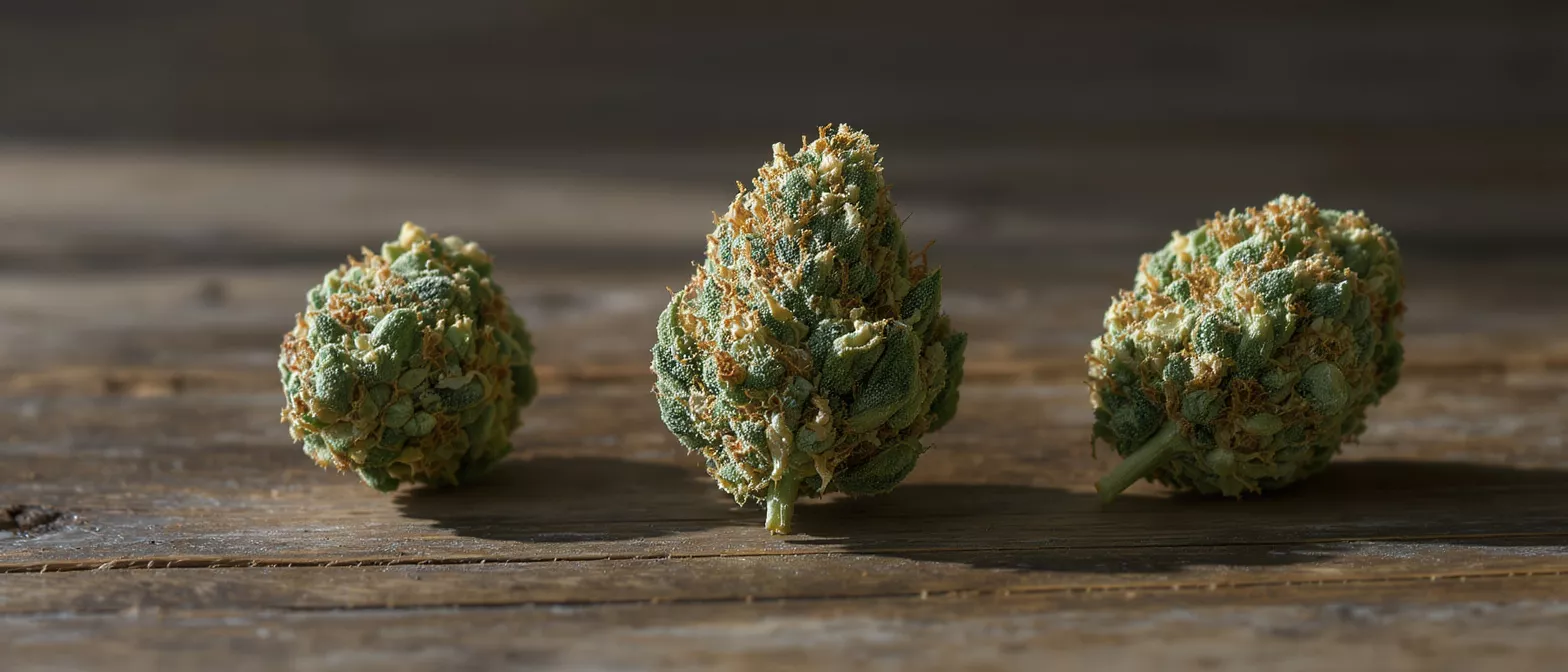
- 🍃 Mids (middle grade): Green, decently cured, moderate potency, acceptable trim. The everyday smoker's bread and butter.
- 🔥 Top-shelf (high grade): Frosty trichomes, vivid colors, loud aroma, careful hand-trimming. The dank, premium tier.
The boundaries between these tiers are genuinely fuzzy. One budtender's mids might be another shop's house top-shelf, and pricing pressures in a competitive market can shift a strain up or down a tier overnight. This subjectivity is exactly why learning to evaluate flower yourself matters more than trusting a sticker on a jar.
It also helps to remember that the grading scale predates lab testing. Before dispensaries posted THC percentages, grading was entirely sensory — a matter of look, smell, and feel. Today, a strain testing at 18% THC might still be sold as mids if its trim is rough or its terpene profile is flat, while a beautifully cured 16% strain could fetch top-shelf prices. Numbers tell only part of the story.
How to Identify Mids Flower
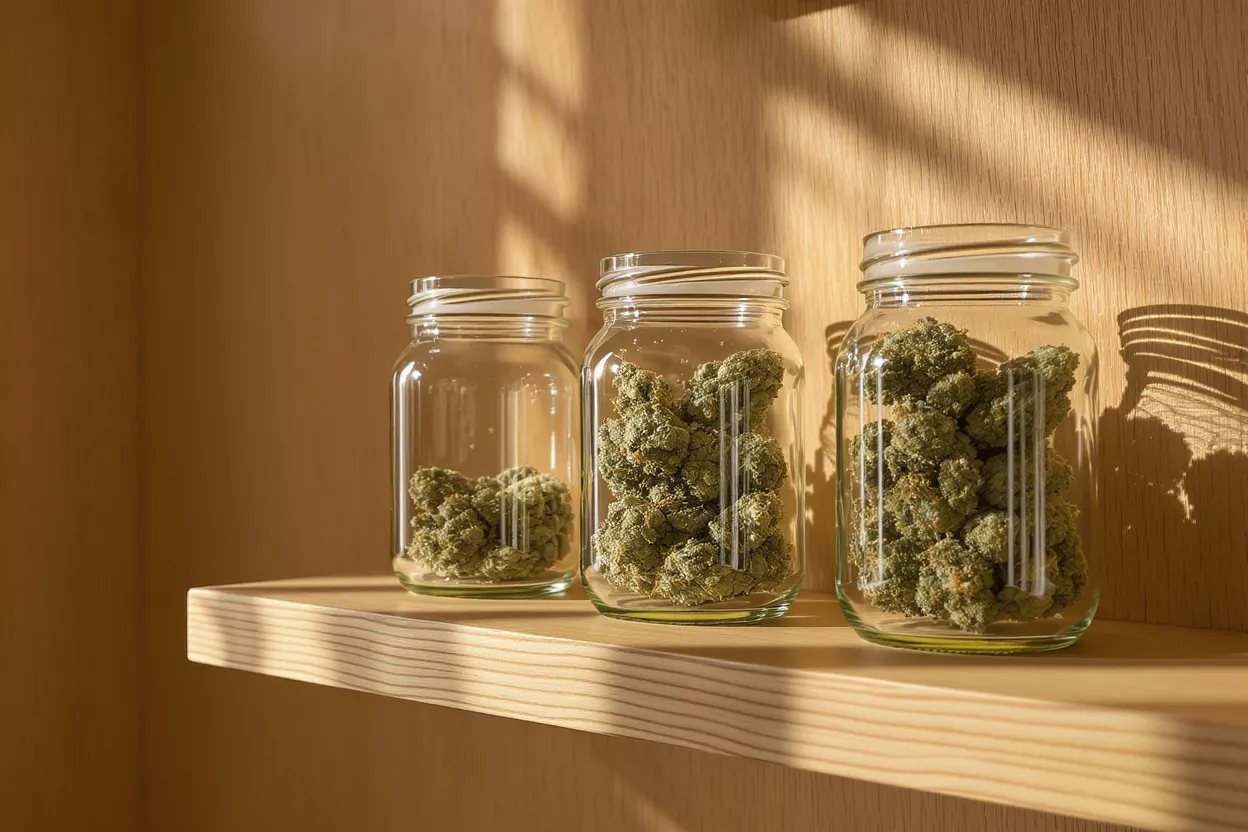
Visual cues come first: Identifying mids starts with your eyes. Mids tend to be a healthy green without the deep purples, oranges, or frosty white trichome coating that signals top-shelf flower. The buds may be a bit looser or less dense, and you might spot stems or larger fan-leaf remnants that a careful trim would have removed. This does not mean the flower is bad — it simply reflects a less labor-intensive finishing process.
Aroma tells the next chapter: Give the flower a sniff. Premium buds tend to be loud, projecting notes of diesel, citrus, pine, or sweet fruit before you even open the bag. Mids are usually more muted. You will still detect cannabis, perhaps a hint of the strain's lineage, but the bouquet lacks the intensity that makes connoisseurs swoon. A quality herb grinder can help release whatever aroma is present and improve your overall experience.
Texture and burn round out the assessment. Properly cured mids should feel slightly sticky and spring back when squeezed — not crumble to dust or feel damp. When smoked, they should produce a smooth-enough draw and burn to a light gray ash. Harsh, black, or uneven ash often points to improper curing or leftover moisture, which can push otherwise decent flower down into mids territory regardless of its genetic potential.
Mids vs Top-Shelf: What's the Difference?
The gap between mids and top-shelf is real, but it is often smaller than the price difference suggests. Top-shelf flower earns its premium through a combination of superior genetics, meticulous cultivation, slow curing, and careful hand-trimming. Every step is optimized to preserve trichomes and terpenes, which translates into stronger aroma, smoother smoke, and frequently higher potency.
Mids, by contrast, often come from the same plants or the same gardens but receive less finishing attention or come from lower nodes that simply did not develop as densely. As the team at Healthline notes, the effects of cannabis depend heavily on the full spectrum of cannabinoids and terpenes working together, so a slightly less potent mids batch can still deliver a satisfying, well-rounded experience for most users.
Here is a quick side-by-side to crystallize the differences:
- 💚 Appearance: Top-shelf is frosty and colorful; mids are healthy green and less manicured.
- 👃 Aroma: Top-shelf is loud and complex; mids are milder and simpler.
- ⚡ Potency: Top-shelf often tests higher, but the gap is frequently modest.
- 💰 Price: Mids can cost 30–50% less per eighth, a meaningful saving for regular smokers.
Why Mids Grade Happens During Cultivation
Genetics set the ceiling: Not every plant is bred to produce trophy buds. Some strains are workhorses, prized for yield and resilience rather than eye-popping bag appeal. When a grower plants for volume, the resulting flower frequently lands in the mids category by design — and that is a perfectly legitimate commercial choice that keeps prices accessible for everyday consumers.
Cultivation choices matter enormously: Environmental factors shape where a harvest ends up on the grading scale. Insufficient light, crowded canopies, or skipping techniques like defoliation and proper directional airflow can produce airier, less resinous buds. A grower who rushes the cure to get product to market faster will also see quality slip, even if the genetics were excellent to begin with.
Harvest position within the plant plays a subtle but real role too. The dense, sun-soaked colas at the top of a plant typically become top-shelf, while the smaller, shadier "larf" buds lower down get sorted into mids or used for extraction. This is not a defect — it is simply how a single plant naturally yields a range of qualities, much like a single tree producing both flawless and imperfect fruit.
Are Mids Worth Buying?
For a huge swath of cannabis consumers, mids are not just worth buying — they are the smart default. If you smoke regularly, the cost of exclusively buying top-shelf adds up fast, and the marginal improvement in experience rarely justifies doubling your spend. Mids deliver reliable effects at a fraction of the price, which is why so many seasoned users keep a stash of value flower for daily use and save the boutique buds for special occasions.
The case for mids strengthens when you consider what you actually do with your flower. If you tend to mix cannabis into a joint, pack a bowl casually, or use a portable dry herb vaporizer, the subtle nuances of top-shelf terpenes are partially lost anyway. Mids shine in these scenarios, providing satisfying results without the premium markup.
That said, mids are not for every purpose. If you are chasing a specific terpene profile, want the smoothest possible smoke, or plan to impress fellow connoisseurs, the extra spend on dank top-shelf makes sense. The honest answer is that "worth it" depends entirely on your priorities, frequency of use, and budget — there is no universally correct tier.
Best Uses for Mids Cannabis
Edibles and infusions: One of the smartest applications for mids is cooking. When you decarboxylate and infuse flower into butter or oil, the visual perfection of the bud becomes irrelevant — what matters is total cannabinoid content. Spending top-shelf money on flower you are about to simmer into a brownie batter is genuinely wasteful, making mids the obvious economical choice for any home edible maker. Watch your dosing, though, since an edible hangover from overindulging is a real and uncomfortable possibility.
Everyday smoking and rotation: Mids excel as your daily driver. Keeping a dedicated dugout loaded with affordable flower means you are not agonizing over burning through expensive buds during a casual evening. Many experienced consumers rotate between tiers strategically, reserving premium stock for moments when they want to savor every note.
Mids also make excellent practice material. If you are learning to roll, dialing in a new e-rig or e-nail, or experimenting with grinding and packing techniques, you do not want to waste premium flower on the learning curve. A stash jar with humidity control keeps your everyday mids fresh and ready, preserving moisture so even budget flower stays smooth and pleasant week after week.
Mids Pricing and Value Explained
Pricing is where mids truly justify their existence. In most legal markets, mids retail for noticeably less than top-shelf — sometimes 30 to 50 percent cheaper per eighth. For a consumer who goes through cannabis steadily, that difference compounds into substantial monthly savings without a proportional drop in satisfaction.
It helps to think in terms of cost-per-experience rather than cost-per-gram. A premium eighth might cost twice as much but deliver only marginally better sessions. When you crunch the numbers across a month of regular use, mids frequently win on pure value. According to consumer health resources like Healthline, moderation and mindful consumption matter far more to your overall experience than the price tier of your flower.
Keep an eye on how a dispensary or distributor sources and labels its tiers, since "mids" pricing varies enormously between shops. Some retailers undersell genuinely good flower as value buds to move inventory, which creates real opportunities for savvy shoppers. Building a relationship with a knowledgeable budtender is often the fastest route to finding mids that punch well above their price class.
Mids Potency and Effects
Potency is not the whole story: While mids often test somewhere in the 12–18% THC range compared to top-shelf strains pushing 22% or higher, raw potency numbers can be misleading. The entourage effect — the synergy between THC, minor cannabinoids, and terpenes — means a well-balanced mids strain can feel just as satisfying as a higher-testing one. Many users actually prefer the gentler, more manageable high that mids tend to provide.
For new or occasional consumers, the moderate potency of mids is genuinely advantageous. Starting with lower-THC flower reduces the risk of anxiety, paranoia, or an overwhelming experience. It is far easier to take another puff than it is to undo one too many, so beginning with milder flower is sound harm-reduction practice.
The effects of any mids batch still depend on its lineage. An indica-leaning mids will lean toward relaxation and body sensations, while a sativa-leaning one offers a more energetic, cerebral lift. The tier tells you about polish and price, not about whether the strain will couch-lock you or spark creativity — so always check the genetics, not just the grade.
Buying Mids: Smart Shopper Tips
Shopping for mids wisely is a skill worth developing. The goal is to find flower that overdelivers for its tier — the bag that should have been priced higher but was sorted into value buds. Trusting your own senses, asking the right questions, and inspecting the product carefully will consistently land you better deals than blindly chasing the highest THC percentage on the menu.
Here are practical habits that separate smart mids buyers from the rest:
- 🔍 Inspect before you buy: Look for green, mold-free buds with at least some visible trichomes and a decent structure.
- 👃 Trust the nose: Even mids should smell like cannabis, not hay. Aroma is a strong proxy for terpene content and freshness.
- 💬 Ask the budtender: A good one will tell you which value-tier strains are punching above their weight that week.
- 📅 Check the harvest date: Fresher flower, even mids, smokes far better than something that has been sitting too long.
- ⚖️ Compare per-gram pricing: Buying larger quantities of mids often lowers the per-gram cost dramatically.
Finally, do not let snobbery rob you of value. The cannabis community can be quick to dismiss anything that is not boutique flower, but plenty of experienced, discerning consumers happily smoke mids every day. In a world of rising prices, knowing how to spot quality mids is one of the most useful skills a cannabis enthusiast can cultivate — your wallet and your stash will both thank you.
To sum up, mids represent the practical heart of the cannabis market: dependable, affordable flower that delivers genuine satisfaction without the premium price tag. By understanding where they fall on the grading scale, learning to evaluate them with your own senses, and matching them to the right uses — from everyday smoking to edibles and infusions — you can get tremendous value from this middle tier. Top-shelf has its place, but for most consumers most of the time, well-chosen mids are exactly what the doctor ordered.