

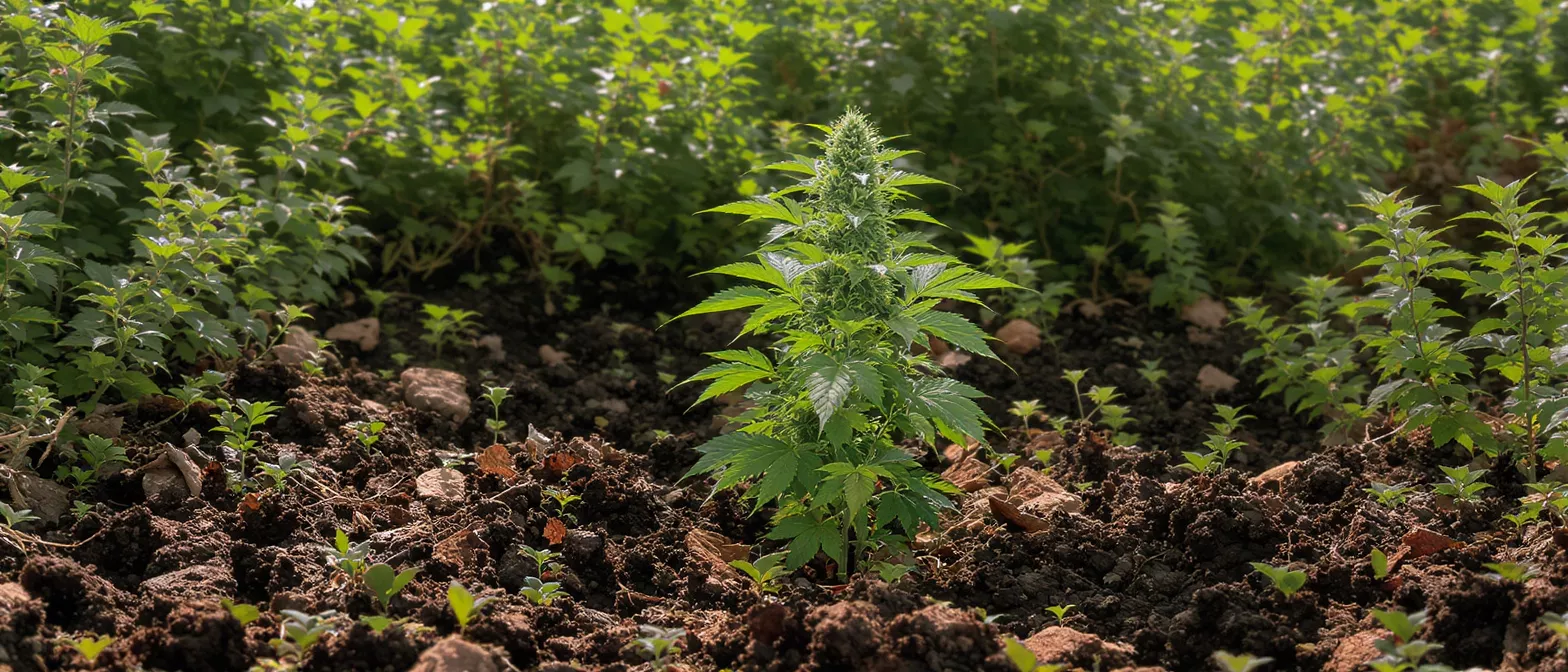
Permaculture
Learn how permaculture transforms cannabis growing into a self-sustaining ecosystem.
What Is Permaculture in Cannabis Growing
Permaculture is a design philosophy that models food and medicine production on the patterns found in natural ecosystems. When applied to cannabis, it shifts the grower's mindset away from feeding individual plants and toward cultivating an entire living system that largely sustains itself. The word itself blends "permanent" and "agriculture," and the central idea is that a well-designed garden should require less external input every year rather than more.
Conventional cannabis growing often leans on bottled nutrients, synthetic pest controls, and frequent intervention. A permaculture approach treats those crutches as symptoms of a system that is out of balance. Instead of correcting problems after they appear, the grower designs conditions where problems rarely arise in the first place. Healthy soil, beneficial insects, and diverse plant neighbors do the heavy lifting.
The ecosystem-first mindset: Rather than viewing a cannabis plant as an isolated crop, permaculture sees it as one member of a community that includes microbes, fungi, pollinators, predatory insects, and dozens of supporting plants. Every element is chosen to perform multiple functions, and waste from one part of the system becomes food for another. This closed-loop thinking is what separates permaculture from simply "growing organically."
How Permaculture Principles Work
Permaculture rests on a small set of guiding principles that translate directly to the cannabis garden. The most cited come from designers Bill Mollison and David Holmgren, and they emphasize observation, diversity, and working with nature rather than against it. Before planting a single seed, a permaculture grower spends time watching how sun, water, and wind move across the site.
Each principle pushes the grower toward resilience. Capturing and storing energy, for example, means harvesting rainwater and building soil that holds moisture, so the garden coasts through dry spells. Producing no waste means composting trim, fan leaves, and kitchen scraps back into the beds that grew them. These rules are not rigid laws but a lens for making decisions.
- 🌱 Observe and interact: Study your microclimate across a full season before committing to a design, noting frost pockets, sun angles, and drainage.
- 💧 Catch and store energy: Use swales, ponds, and mulch to bank water and nutrients during abundance for use during scarcity.
- ♻️ Produce no waste: Return every spent leaf, stalk, and root to the system through composting and chop-and-drop mulching.
- 🐞 Use and value diversity: Surround cannabis with many species so no single pest or disease can dominate.
- 🌾 Use edges and margins: The boundaries between different zones are often the most productive and biodiverse areas of the garden.
Benefits of Permaculture for Cannabis
The most immediate benefit growers notice is a dramatic reduction in recurring costs. Once a permaculture system matures, the expensive routine of buying bottled nutrients, pesticides, and fresh media largely disappears. The garden generates its own fertility through compost, cover crops, and the activity of soil life. That self-sufficiency is the entire point of the design.
Plant resilience and pest resistance: Cannabis grown in a biologically diverse system tends to shrug off problems that devastate monoculture grows. A balanced population of predatory insects keeps aphids, mites, and thrips in check without sprays, while robust soil biology helps roots fend off pathogens. Plants that grow in living soil also develop deeper, more extensive root systems, making them more drought-tolerant and structurally sound.
Environmental footprint: Permaculture cannabis avoids the runoff, salt buildup, and energy use associated with synthetic inputs. Carbon gets sequestered in the soil, water is conserved through smart design, and habitat is created for pollinators and wildlife. For growers who care about regenerative impact, the garden actively heals the land rather than depleting it.
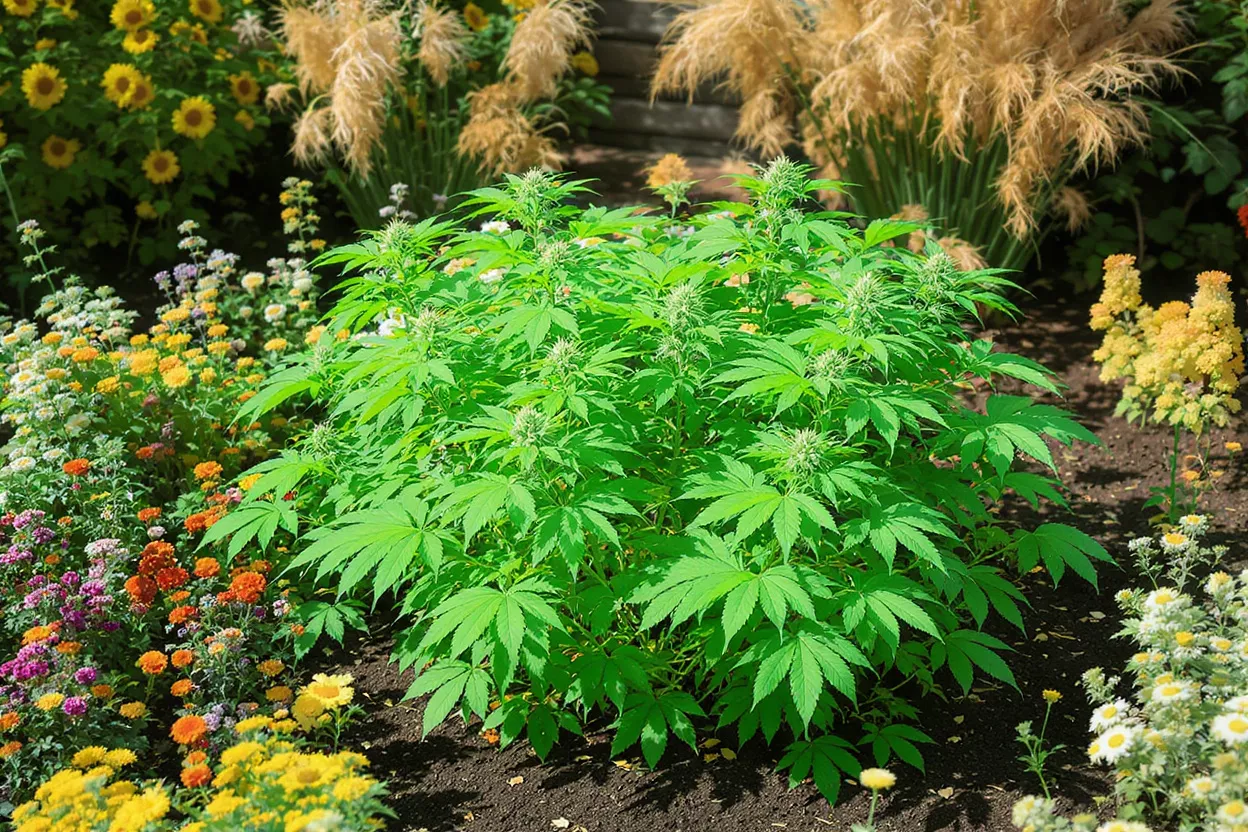
Beyond the practical and ecological gains, many cultivators report that the final flower simply tastes and smells more complex. A rich soil microbiome supports the full expression of terpenes and cannabinoids, and growers chasing nuanced aroma profiles often find that a living system delivers what bottled feeds cannot.
Building Living Soil for Permaculture Cannabis
Living soil is the foundation of any permaculture cannabis operation. Instead of an inert medium that merely anchors roots, living soil is a thriving community of bacteria, fungi, protozoa, nematodes, and earthworms. These organisms break down organic matter and deliver nutrients to the plant in a form it can use, eliminating the need for synthetic fertilizers entirely.
The soil food web: At the heart of living soil is a symbiotic relationship between roots and microbes. Plants exude sugars through their roots to feed bacteria and mycorrhizae, and in return those organisms mine minerals and water from a vastly expanded zone. This nutrient exchange is more efficient and far gentler than dumping concentrated salts into the root zone.
Building this soil takes patience but rewards it. A typical mix starts with quality compost, aeration from pumice or rice hulls, and a blend of mineral and organic amendments that feed the biology over time.
- 🪱 Earthworm castings: A gentle, microbe-rich source of nutrients that improves structure and inoculates the soil with beneficial life.
- 🍂 Compost and humus: The long-term fuel that feeds the soil food web and stores nutrients in a slow-release form.
- 🦴 Mineral amendments: Rock dust, kelp, and crab meal supply trace elements that microbes convert into plant-available nutrition.
- 🍄 Mycorrhizal inoculants: Fungal partners that extend the root system and dramatically improve water and phosphorus uptake.
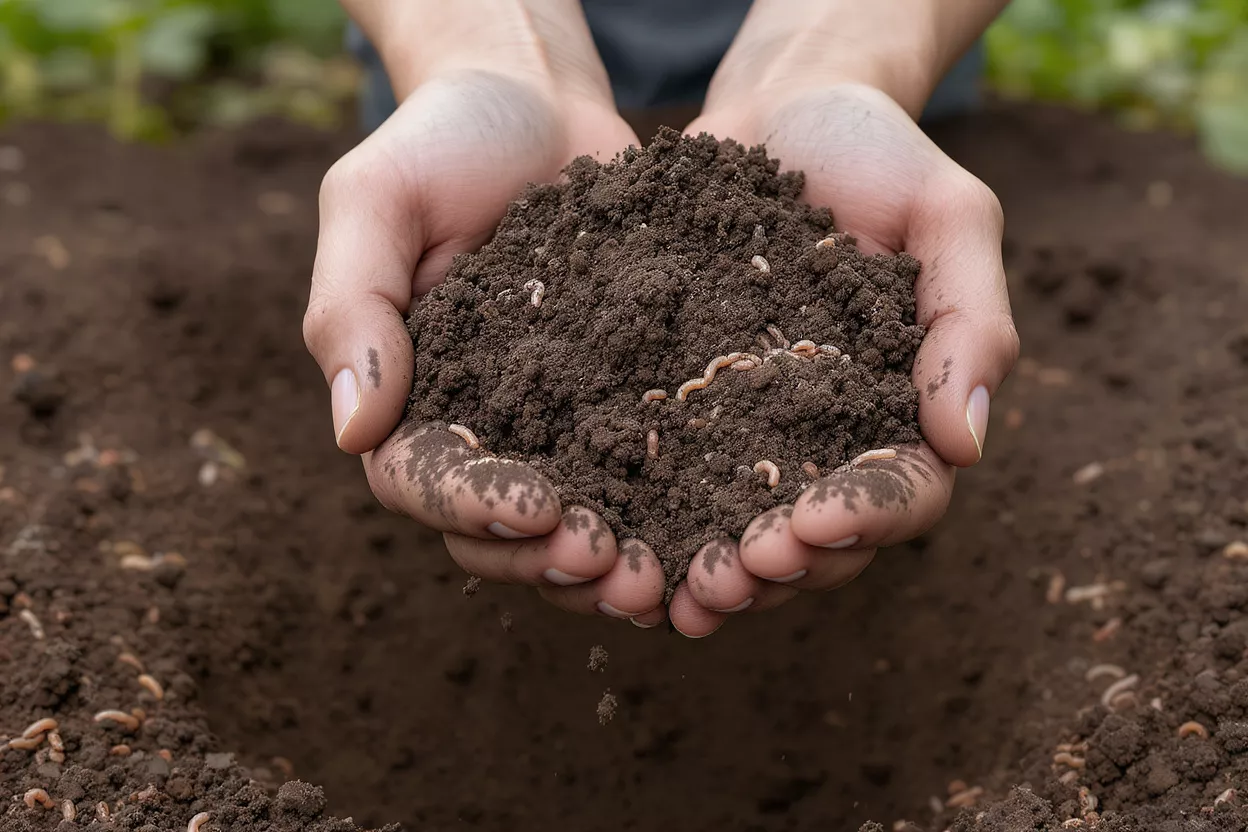
Companion Planting in a Permaculture Garden
Companion planting is where permaculture truly diverges from conventional cultivation. Rather than isolating cannabis in sterile rows, growers surround it with carefully chosen plant allies that provide pest control, attract pollinators, fix nitrogen, and build soil. These guilds mimic the layered diversity of a natural meadow or forest edge.
Some companions repel insects directly through their aromatic oils, while others act as "trap crops" that lure pests away from the cannabis. Nitrogen-fixing legumes like clover and beans partner with soil bacteria to pull atmospheric nitrogen into the ground, feeding neighboring plants for free. Deep-rooted dynamic accumulators such as comfrey draw minerals up from the subsoil and release them when their leaves are cut and dropped as mulch.
Beneficial companion plants: Building an effective guild means choosing species that each contribute something the system needs. The goal is overlapping functions so the loss of any single plant never compromises the whole.
- 🌼 Marigold: Repels nematodes and many flying pests while attracting predatory insects with its bright blooms.
- 🌿 Basil and dill: Aromatic herbs that deter aphids and whiteflies and lure beneficial wasps and hoverflies.
- 🍀 Clover and vetch: Nitrogen-fixing ground covers that suppress weeds and form a living mulch over bare soil.
- 🌸 Comfrey: A dynamic accumulator whose deep roots mine potassium and calcium for chop-and-drop mulch.
Water Management and Permaculture Design
Smart water management is one of the defining features of a well-built permaculture site. The aim is to slow, spread, and sink rainfall into the landscape so the soil itself becomes a reservoir. Swales, which are shallow ditches dug along the contour of a slope, capture runoff and let it percolate down to the root zone instead of rushing away and eroding the topsoil.
Mulch as a moisture bank: A thick layer of organic mulch over the soil surface is the simplest and most effective water-saving tool in the permaculture toolkit. Mulch shades the soil, slashes evaporation, moderates temperature swings, and feeds the soil life as it breaks down. Growers who mulch heavily often cut their irrigation needs in half.
Rainwater harvesting closes the loop further. Catching roof runoff in tanks or ponds gives the garden a chlorine-free, naturally soft water source that the soil microbiome prefers. Combined with drip irrigation timed to the cooler parts of the day, these practices make a permaculture plot remarkably resilient through heat and drought.
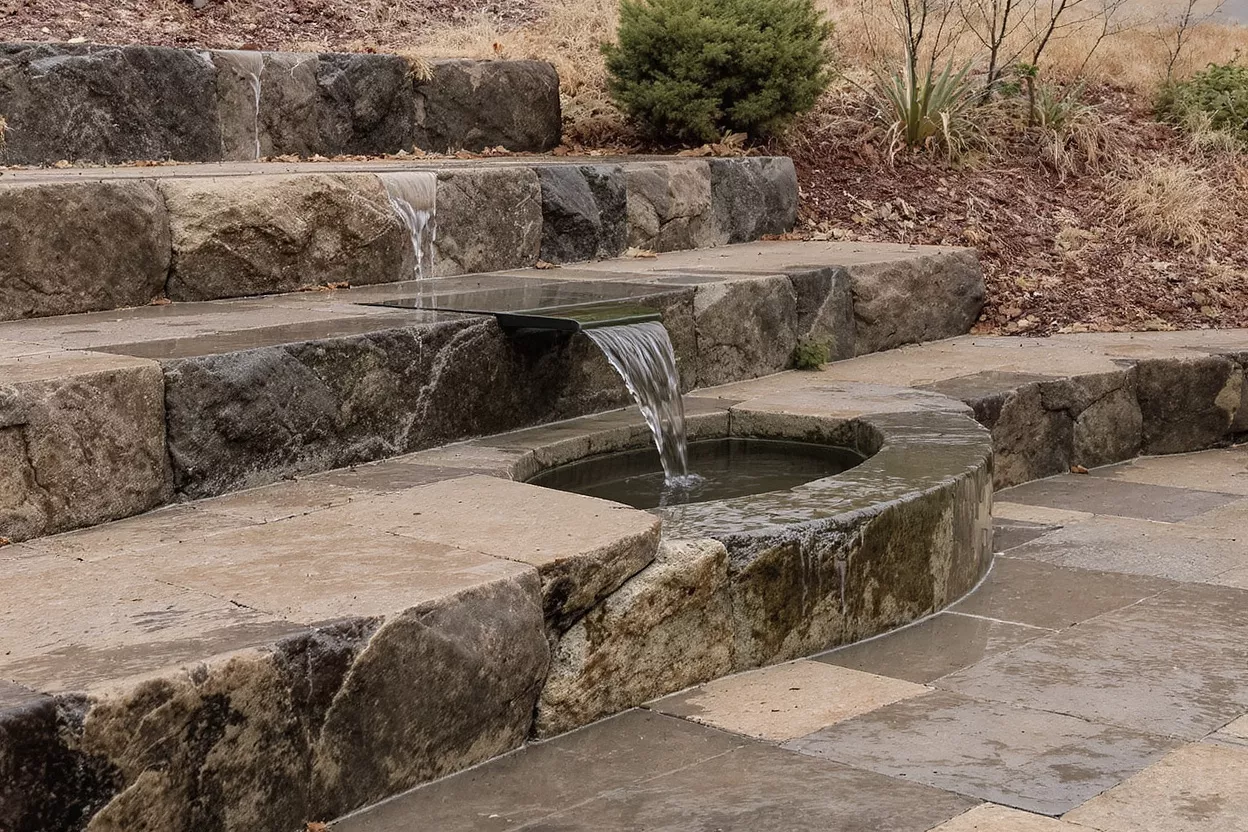
Types of Permaculture Systems for Cannabis
Permaculture is flexible enough to suit a balcony container garden or a multi-acre homestead. The scale and form of the system depend on your space, climate, and goals, but the underlying principles stay the same. Understanding the common formats helps you choose a starting point that fits your situation.
From containers to food forests: Small-space growers can build living-soil "no-till" beds in fabric pots or raised boxes, reusing the same soil season after season while it improves. Larger sites can develop full guilds and even cannabis food forests, where the plant grows alongside fruit trees, shrubs, and ground covers in a self-perpetuating ecosystem.
No-till is the thread connecting all permaculture systems. By never disturbing the soil structure, the grower protects the delicate fungal networks and microbial colonies that took months to establish. Each harvest, the roots are simply cut at the surface and left to decompose in place, feeding the next cycle.
- 🪴 No-till raised beds: Reusable living-soil beds that mature and improve over years with minimal added inputs.
- 🌳 Cannabis food forests: Layered plantings that integrate cannabis with perennials, trees, and ground cover for full self-sufficiency.
- 🏡 Container permaculture: Fabric pots with living soil suited to patios, balconies, and small urban spaces.
- 🌄 Hügelkultur mounds: Raised beds built over buried wood that slowly releases moisture and nutrients for years.
Is Permaculture Cannabis Better Quality
The question of quality is where permaculture earns its most passionate advocates. Many connoisseurs argue that cannabis grown in a balanced living-soil ecosystem expresses a fuller, more nuanced flavor and aroma than plants pushed with synthetic salts. The reasoning ties back to the soil food web, which makes a complete spectrum of nutrients and trace minerals available exactly when the plant needs them.
Terpene and cannabinoid expression: A plant's aromatic profile is shaped by genetics, but the growing environment determines how fully that potential is realized. Stress-free plants in biologically active soil tend to produce richer terpene blends and a more rounded high. Without the harsh salt buildup that can mute flavor, the smoke is often described as smoother and cleaner.
There is also the matter of what is absent. Permaculture flower carries no synthetic pesticide residue and no leftover mineral salts, which appeals to health-conscious consumers. While rigorous head-to-head studies remain limited, the consistency of grower reports and the logic of plant physiology make a compelling case for the living-soil approach.
How to Start a Permaculture Cannabis Plot
Starting your first permaculture cannabis plot is less about buying products and more about careful observation and patience. Begin by spending real time on your site, noting where the sun falls, how water drains, and which way the wind blows. This information shapes every decision that follows, from bed placement to companion selection.
Your first season checklist: Focus on building soil and establishing diversity rather than chasing a record harvest. The first year lays the groundwork for systems that pay dividends for many seasons to come. Start small enough that you can manage the whole plot attentively.
Source quality compost and a mycorrhizal inoculant, plant a cover crop to break up compaction, and introduce a handful of companion species around your cannabis. Mulch heavily, water deeply but infrequently, and resist the urge to till or spray. As the soil biology establishes itself, the garden will increasingly take care of itself.
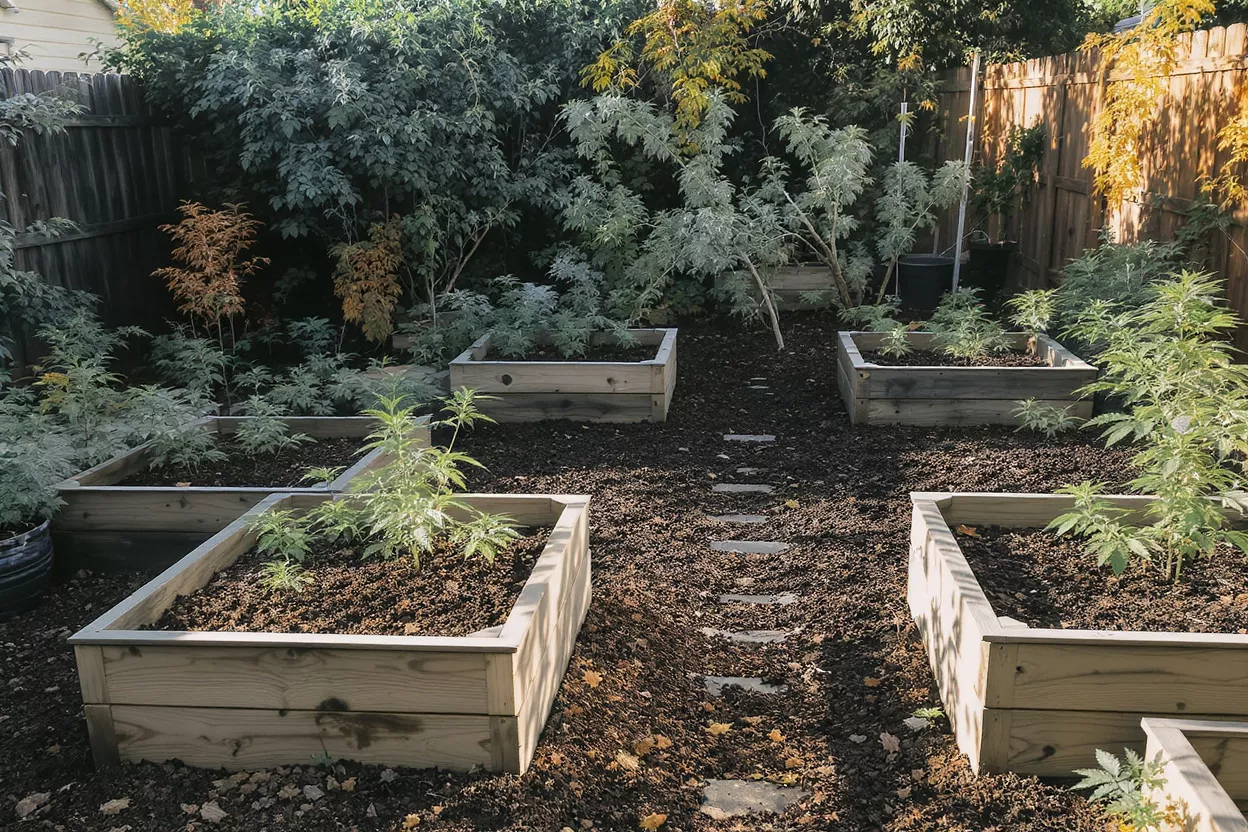
Even a modest beginning teaches the rhythms of the system. Each season you can add another guild, expand a bed, or integrate a new water feature, letting the design evolve organically alongside your experience.
Common Permaculture Mistakes to Avoid
The most common mistake new permaculture growers make is impatience. A living system takes time to mature, and expecting bottled-nutrient yields in the first season usually leads to disappointment. The soil biology needs a cycle or two to fully establish, and forcing the process with synthetic shortcuts undermines the very balance you are trying to build.
Skipping the observation phase: Diving into construction before understanding your site is a costly error. Beds placed in frost pockets, water features that ignore the natural contour, or sun-loving plants tucked into shade all stem from inadequate observation. Slowing down at the start saves seasons of correction later.
Other frequent pitfalls include planting a monoculture and calling it permaculture, neglecting to mulch, and tilling soil that should be left undisturbed. Diversity is not optional in this approach; a garden with only cannabis and one companion is far more vulnerable than a richly layered guild. Trust the principles, give the system time, and let nature do the work it does best.
Cannabis permaculture is ultimately a long game that rewards observation, diversity, and restraint. By designing a self-sustaining ecosystem rather than micromanaging individual plants, growers cut costs, shrink their environmental footprint, and often harvest flower with deeper flavor and cleaner character. Start small, build your soil, embrace diversity, and let the living system mature into a garden that grows richer with every passing season.





Comments